
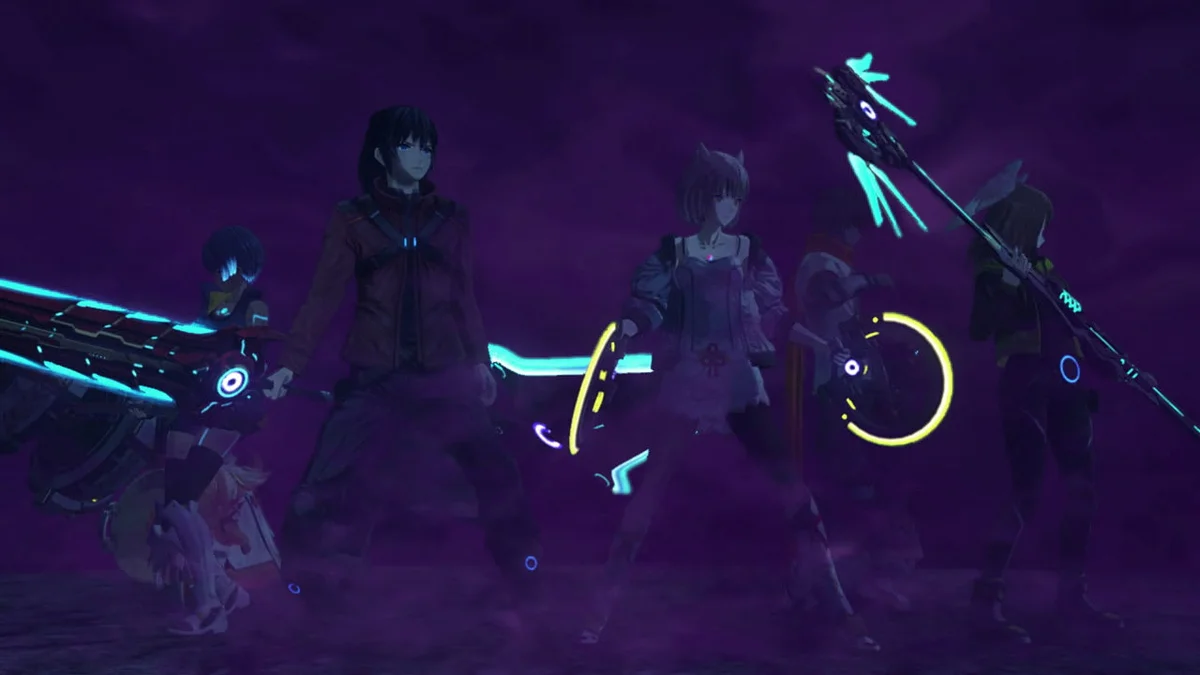
Monolith Soft used its moment in Nintendo’s June Direct to do something the Xenoblade series has never quite attempted before: start over. Xenoblade Genesis was unveiled as a new beginning for the long-running RPG franchise, ditching the sci-fi-tinged aesthetic that has defined the series since its original entry in favor of a high-fantasy setting, and it’s aiming squarely at Switch 2’s still-growing install base with a planned 2027 release.
A Fantasy World Turned Inside Out
Where previous Xenoblade entries built their worlds around colossal titans and mechanical landscapes, Genesis takes a stranger approach to its setting, constructing its world entirely within the interior of a massive inverted sphere. At the center of that world sits Leukos, a military academy that trains elemental warriors known as Vesselai, who channel their power through artifacts called Anima crystones. It’s a striking departure from the series’ established visual identity, and one that signals Monolith Soft is treating Genesis less as another numbered sequel and more as a genuine reset for the franchise’s creative direction.
New Heroine, Reworked Combat
The reveal introduced a new, as-yet-unnamed female protagonist at the center of the story, alongside combat mechanics built around the Anima and Vesselai systems teased in the world-building. Battles are shaping up to hinge on how effectively players wield elemental Anima through their chosen Vesselai, a framework that appears to be a meaningful evolution of the series’ traditionally party-based, skill-chaining combat rather than a wholesale replacement of it. Details remain limited at this stage, with Monolith Soft holding back extended gameplay footage even as the broader concept art and setting details continue to circulate.
Part of a Bigger Xenoblade Push on Switch 2
Genesis didn’t arrive in isolation. The same Direct that introduced the new entry also confirmed Switch 2 editions of the earlier mainline Xenoblade games, giving newcomers a natural path to catch up on the series’ dense, interconnected lore before Genesis arrives and, deliberately or not, resets much of that established continuity. Pairing a forward-looking new entry with accessible native versions of the earlier trilogy suggests Nintendo and Monolith Soft are treating this moment as an on-ramp for new players just as much as a reward for series veterans who have followed the story since the original game’s release.
With a 2027 launch window still a fair distance off, Xenoblade Genesis is shaping up to be one of the more ambitious swings Monolith Soft has taken with the franchise, betting that reinventing the series’ core identity will pay off more than another iteration on its established formula. For a studio that built its reputation on sprawling, densely layered RPGs, walking away from the titans and mechs that defined the series for over a decade is a genuine risk, and fans will be watching closely to see how much of Xenoblade’s DNA survives the transition into this stranger, more overtly fantastical new world.