
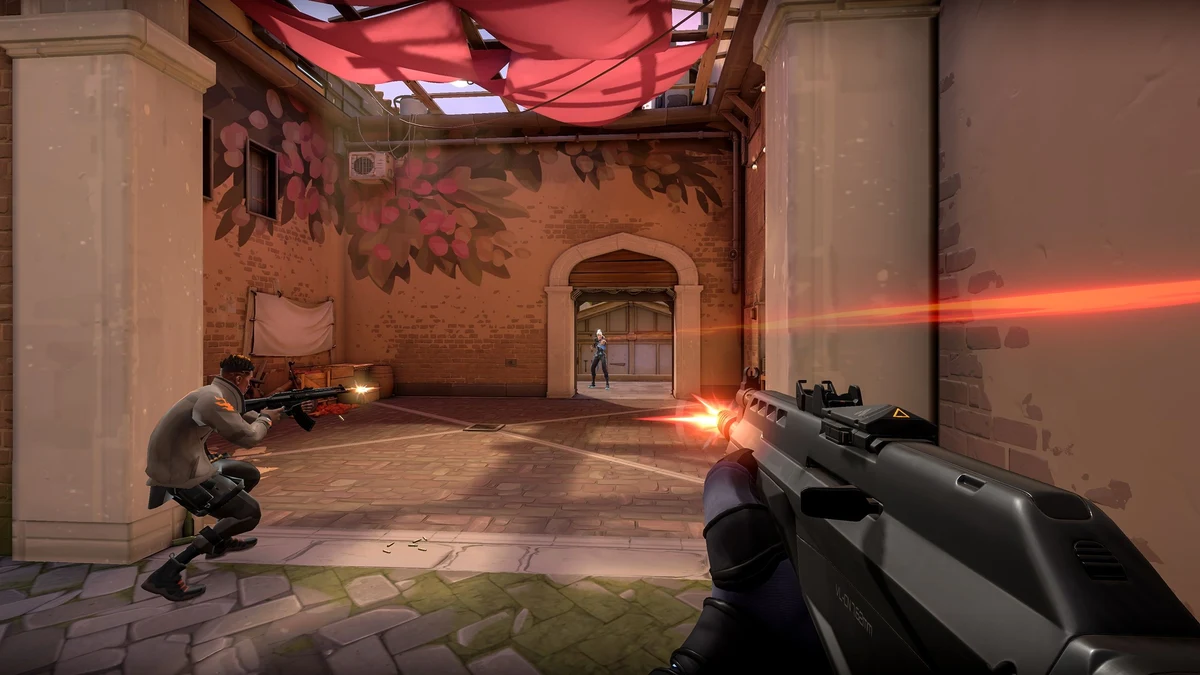
Valorant looks like a shooter at first glance, but the game underneath the gunplay is really an economy simulator wearing a tactical FPS costume. If you’ve just installed it and feel like everyone else already knows a secret language of “eco rounds,” “orbs,” and “half-defuse,” you’re not imagining things. This guide breaks down the mechanics that actually matter in your first few weeks so you can stop guessing and start improving.
What Kind of Game Is Valorant, Exactly?
Valorant is a 5v5 round-based tactical shooter from Riot Games. One team attacks, one team defends, and matches are decided first to 13 round wins across a 24-round regulation (12 rounds per half, with sides swapping at the halfway point). If the score is tied 12-12, the match goes to overtime, where teams keep trading two-round mini-sets until someone wins both rounds in a set.
Every round, you buy weapons and abilities with in-game credits, then either plant or stop the Spike (the game’s bomb equivalent). Whoever wins more rounds wins the match. Unlike free-for-all shooters, individual skill matters, but so does economy management, utility usage, and communication — which is exactly why new players often bounce off the game before they understand what’s actually happening.
For a full breakdown of every system in the game, our complete Valorant guide is the best starting point and links out to deeper resources like this one.
Understanding the Buy Phase and Economy
At the start of every round you get a 30-second buy phase (45 seconds on the very first round of each half, known as the pistol round) to spend credits on weapons, shields, and abilities. Credits carry over between rounds based on performance, so your decisions compound.
Here’s the framework almost every competent player follows:
| Situation | What to buy | Why |
|---|---|---|
| Pistol round (800 credits) | Classic + light shield, or save for abilities | Sets the tone for the next two rounds |
| Won pistol (bonus round) | SMG or shotgun + full shield | Cheap pressure while the enemy is broke |
| Lost pistol (eco round) | Sidearm only, save the rest | Preserve credits for a real buy next round |
| 3,900+ credits | Rifle (Phantom/Vandal) + full shield | Minimum viable “full buy” |
| 4,500+ credits | Rifle + full shield + full utility | Complete buy, ideal every round you can afford it |
A few rules of thumb: never half-buy a round unless you know exactly why, always communicate your team’s credit situation before the buy timer runs out, and don’t be afraid to eco (save) after a loss instead of throwing money away on a round you’re unlikely to win anyway.
Agents and Abilities 101
Every agent in Valorant belongs to one of four roles:
- Duelists — entry fraggers built to create space and get kills first
- Controllers — smoke and vision-denial specialists who shape the map
- Initiators — recon and setup agents who make entries safer for the team
- Sentinels — defensive anchors who lock down flanks and objectives
New accounts start with five agents unlocked: Jett, Sova, Brimstone, Phoenix, and Sage — one from most of the core roles, which is a genuinely good starter set. Every agent also has an ultimate ability that charges through orbs on the map, kills, plants, defuses, or spike actions, giving you a game-changing tool once it’s ready.
You don’t need to master all 29 agents currently in the game. Pick one duelist and one support-style agent (controller or sentinel) you enjoy and get comfortable with their kit before branching out. If you want a breakdown of who’s actually strong right now and who’s easiest to pick up, our Valorant agent tier list covers the current meta role by role.
The Spike: Plant, Defend, Defuse
The Spike is the objective both teams fight over. Attackers carry it, plant it at one of the bomb sites, and try to protect it until it detonates. Defenders try to stop the plant or defuse it afterward.
Key numbers worth memorizing:
- Planting takes about 4 seconds of standing still near a site
- Once planted, the Spike detonates in 45 seconds
- A full defuse takes 7 seconds, but it can be split into two 3.5-second “half-defuses” — you can start, stop, and resume later without losing your progress
- If a defuser hasn’t started by roughly the 38-second mark, there’s no longer enough time to finish before detonation
That half-defuse mechanic is huge for retakes: a defender can start the defuse, bait a peek from an attacker holding an angle, then finish it once the site is clear.
Unranked vs. Ranked: How Progression Works for New Accounts
Ranked mode isn’t available the moment you install Valorant. You need to reach Account Level 20 and complete 20 unranked matches before Competitive unlocks. Once you’re eligible, you’ll play 5 placement matches that set your initial rank based on your win rate, round differential, and individual performance.
This gating exists for a good reason: it gives the matchmaker enough data to place you somewhere reasonable instead of throwing you into games with wildly mismatched skill levels. Spend those unranked and early Deathmatch/Spike Rush games actually experimenting — try different agents, practice your aim, and learn a couple of maps before you start caring about rank. Once you’re in, our Valorant rank system guide explains exactly how RR, promotions, and act resets work.
Basic Strategy Tips for Brand-New Players
You don’t need pro-level aim to start winning more rounds. These fundamentals matter more early on:
- Hold angles with your crosshair already at head height. Pre-aiming where an enemy’s head will appear beats reacting after you see them.
- Don’t peek alone into the unknown. Trade kills with a teammate rather than dying solo for information.
- Use sound. Footsteps, reloads, and ability call-outs tell you where enemies are far more often than you’d expect.
- Communicate the basics. Even simple callouts like “one pushing A short” help your team far more than staying silent.
- Play for round wins, not just kills. A 1-for-1 trade that lets your team plant the Spike is more valuable than a flashy ace in a round you still lose.
- Learn one crosshair and one sensitivity, then stop tweaking it every day. Consistency builds muscle memory faster than constant fiddling. Our crosshair and settings guide walks through how to find a setup that actually sticks.
Common Beginner Mistakes to Avoid
Most new players lose rounds for a handful of repeatable reasons, not because the game is unfair. Watch for these patterns in your own play:
- Holding too many angles at once. Pick one position, commit to it, and let your teammates cover the rest. Splitting your attention between two doorways usually means you’re slow to react to both.
- Running full-tilt into unknown space. Corners, doorways, and site entrances should be checked with your crosshair leading the way, not your feet.
- Forgetting utility exists. New players default to pure gunfights and forget they’re holding a flash, smoke, or recon ability that could win the engagement before it starts. Get in the habit of asking “what does my kit do here?” every round.
- Buying inconsistently as a team. One player force-buying a rifle while four teammates save creates an uneven economy that helps no one. Talk about the buy before the timer runs out.
- Tilting after a lost pistol round. Losing the opening round of a half doesn’t decide the match. Eco properly, take the bonus round chances that come up, and the economy evens out fast.
None of these require better aim to fix — they’re decision-making habits, and they’re usually the fastest way to climb out of your first few ranks once you clean them up.
Frequently Asked Questions
Q: Do I need to buy Valorant? No, Valorant is free-to-play on PC. You only spend money on optional cosmetics like skins and the Battle Pass — none of it affects gameplay or gives a competitive advantage.
Q: How long does a typical Valorant match take? Most matches run 35-45 minutes, though close games that reach overtime can stretch past an hour.
Q: What’s the difference between Unrated and Competitive? Unrated uses the same rules and format as Competitive but doesn’t affect your rank, making it a lower-pressure way to warm up or test new agents before queuing ranked.
Q: Can I play Valorant with friends of different skill levels? Yes, though ranked queues restrict how large the rank gap between party members can be, especially at higher tiers, to keep matches fair.
Q: Should I focus on aim training or game knowledge first as a beginner? Both matter, but game knowledge (economy, map callouts, agent utility) improves your win rate faster early on since most new players lose rounds to decision-making mistakes, not just missed shots.
Q: How many maps should I learn before queuing ranked? You don’t need to master the full map pool immediately, but try to get comfortable on at least three or four before ranked feels less overwhelming. Knowing common callouts and site layouts matters just as much as mechanical skill in your early games.
The Bottom Line
Valorant rewards patience more than raw reflexes when you’re starting out. Learn the economy, understand what your agent’s abilities actually do, and focus on smart decisions over flashy plays, and the rank climb will take care of itself. For a deeper dive into every system covered here and more, check out our complete Valorant guide for the full picture.