
Table of Contents
- What Is Starfield?
- Setting and Lore: The Settled Systems
- Major Factions
- Character Creation: Backgrounds and Traits
- Ship Building and Combat
- Outpost Building
- Exploration and the 1,000 Planets Question
- Companions and Relationships
- Shattered Space DLC
- Platforms and Game Pass
- Critical Reception
- Tips for New Players
- Who Is Starfield For?
- FAQ
- Conclusion
- External Authority Sources
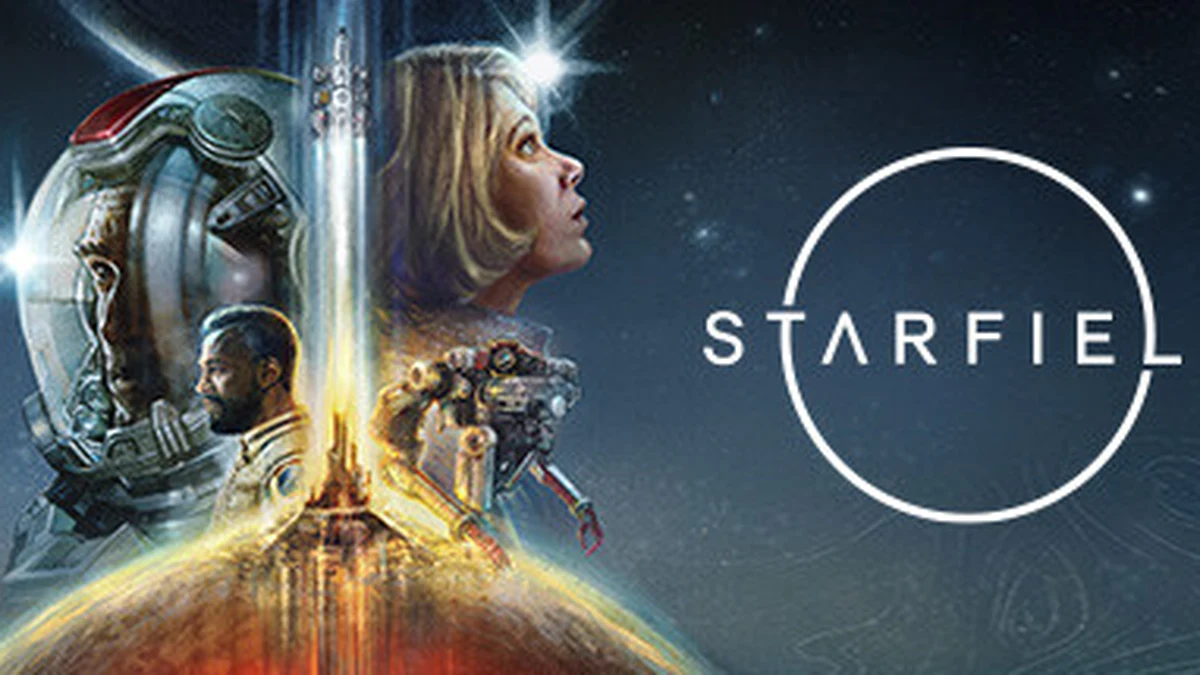
Bethesda Game Studios spent the better part of two decades teasing a game set among the stars before Starfield finally launched on September 6, 2023, following an early access window that opened September 1 for anyone who bought the Premium or Constellation editions. It arrived as the studio’s first new intellectual property in a generation, a follow-up to Skyrim and Fallout 4 built on an entirely new engine foundation and aimed squarely at the space exploration fantasy those earlier titles never touched. The pitch was enormous: a persistent galaxy called the Settled Systems, more than 1,000 explorable planets, full ship construction, a companion roster drawn from a found-family organization called Constellation, and the signature Bethesda formula of freeform choice layered over a main questline. The scale of the reception matched the scale of the pitch: Starfield reached six million players within a single day of release and crossed ten million within its first two weeks, numbers that made it one of the fastest-adopted titles in Bethesda’s history, driven heavily by its day-one availability on Xbox Game Pass. Three years on, with the Shattered Space expansion now part of the package and the base game continuing to receive updates, Starfield has settled into a clearer identity than it had at launch, equal parts ambitious and uneven, beloved by players who click with its systems and criticized by those who wanted a tighter, more handcrafted experience. This guide covers everything a new or returning player needs: the setting, the mechanics, the expansion, where to play it, and an honest read on what the game does well and where it falls short.
What Is Starfield?
Starfield is a single-player action role-playing game developed by Bethesda Game Studios and published by Bethesda Softworks, a division of Microsoft’s Xbox Game Studios. It is set roughly 300 years in the future, in the year 2330, after humanity has left a ruined Earth behind and colonized a region of the Milky Way known as the Settled Systems. Players create a custom character who joins Constellation, the last group of explorers still dedicated to uncovering the mysteries of the galaxy, and the opening hours revolve around the discovery of mysterious artifacts that trigger visions and set the main storyline in motion.
Structurally, Starfield blends the open-world RPG design Bethesda is known for, dialogue-driven quests, faction storylines, skill progression, loot, and player choice, with genre elements new to the studio: piloting and customizing spacecraft, engaging in ship-to-ship combat, building outposts on planetary surfaces, and traveling between star systems via grav jump. It is built on Creation Engine 2, an evolution of the engine used for Fallout 4 and Fallout 76, retooled to handle the scale of a space setting.
Setting and Lore: The Settled Systems
The game takes place within the Settled Systems, a region of space roughly fifty light-years across that represents the current reach of human colonization more than two centuries after Earth became uninhabitable. Humanity fled the homeworld and spread outward, and by the year 2330 that expansion has produced a patchwork of colonies, independent settlements, corporate outposts, and contested frontier space rather than a single unified civilization.
Roughly twenty years before the game begins, the two dominant powers in the Settled Systems, the United Colonies and the Freestar Collective, fought the Colony War, a brutal conflict whose scars still shape politics at the start of the game. The two sides now maintain an uneasy peace, but the wider region remains dangerous, populated by the Ecliptic mercenary company, the space pirates of the Crimson Fleet, violent raiders known as Spacers, and House Va’Ruun, a reclusive and fanatical faction built around religious worship tied to a mysterious cosmic force. The player enters this world as a newly recruited member of Constellation, an organization dedicated to exploration and the collection of Earth-era artifacts, and the main quest follows the fallout of that artifact hunt into questions about the nature of the universe itself.
Major Factions
Starfield’s political landscape is built around several distinct factions, each with its own questline, culture, and territory:
- United Colonies – The largest and most powerful government in the Settled Systems, modeled loosely on a technocratic federal republic, headquartered on the planet Jemison in New Atlantis. Players can join the UC Vanguard, its military branch, and pursue a questline involving alien creatures called Terrormorphs.
- Freestar Collective – A looser confederation of independent settlements built around personal liberty and self-determination, centered on the frontier city of Akila. Its questline runs through the Freestar Rangers, a law enforcement-meets-bounty-hunter organization.
- Crimson Fleet – A notorious pirate faction operating out of asteroid fields, offering a questline that can be played from either the pirate side or as an undercover UC SysDef agent infiltrating them.
- Ryujin Industries – A powerful, ethically murky megacorporation based in the arcology city of Neon, offering a corporate espionage and advancement storyline.
- House Va’Ruun – A secretive, zealous faction whose members worship a cosmic force known as the Great Serpent; their homeworld and culture became the focus of the Shattered Space expansion.
- Constellation – The group the player joins at the start of the game, a small band of explorers and scientists dedicated to uncovering the truth behind a series of mysterious artifacts, and the vehicle for the main story quest.
Character Creation: Backgrounds and Traits
Character creation begins shortly after a brief prologue sequence and covers physical appearance, including around 40 preset “Biometric ID” looks covering hairstyles, tattoos, jewelry, and body types, before moving into the mechanical choices that matter most for how the character plays.
Every character selects one background and up to three traits. Backgrounds represent a pre-game career or life path, options include roles like Bounty Hunter, Cyber Runner, Long Hauler, Ronin, and Space Scoundrel, and each one grants three starting skills relevant to that career, giving new players a head start in combat, tech, science, or social skill trees. Backgrounds also open unique dialogue options in certain quests, letting characters reference their past profession to solve problems in ways other builds cannot.
Traits are optional modifiers that reshape the run in more dramatic ways, and they can be a mix of beneficial and complicating. Examples include Alien DNA (slower health regeneration in exchange for faster overall stat regeneration), Dream Home (a free house on Neon with a mortgage to pay off), Kid Stuff (living parents who send care packages but require occasional financial support), Serpent’s Embrace (bonus experience while aligned with House Va’Ruun, at the cost of reputation with other factions), and Wanted (extra credits from combat encounters balanced against periodic bounty hunter attacks). Traits are meant to add roleplaying flavor and light difficulty trade-offs rather than simple stat boosts, and choosing zero or several is entirely viable depending on how a player wants their character to feel.
Progression from there follows Bethesda’s familiar skill-tree structure: experience earns levels, levels earn skill points, and skill points unlock or upgrade abilities across five broad categories, Physical, Social, Combat, Science, and Tech, each gated behind challenges that require actually using the relevant skill in play rather than simply spending points.
Skills, Research, and Crafting
Beyond combat and dialogue skills, Starfield layers in several supporting systems that shape how a character grows over a long playthrough. The Tech skill tree includes Security, which governs the game’s digipicking minigame, a puzzle-based lockpicking system used to access locked doors, safes, and containers throughout the Settled Systems, with difficulty tiers ranging from novice to master locks that require higher skill investment to attempt at all. The Science tree covers a research and crafting loop, where players unlock recipes at research stations using combinations of raw materials gathered from planets, then apply those recipes at outfitting stations, industrial workbenches, and cooking or pharmaceutical labs to produce weapon mods, spacesuit upgrades, aid items, and consumable buffs.
Persuasion, another Social skill, adds a structured dialogue minigame to certain conversations: rather than a single dice roll, players choose from several conversational approaches each turn to fill a persuasion meter before it runs out of attempts, giving social builds a distinct, skill-driven way to resolve conflicts without combat. Layered on top of all this is New Game Plus, unlocked after completing the main story quest “One Giant Leap” and passing through a cosmic event called the Unity. Doing so turns the player character into a Starborn, grants a new Starborn ship and spacesuit, and restarts the galaxy with most skills, credits, and Starborn powers retained, while introducing narrative variations each cycle through. The game includes 24 Starborn powers, drawn from Temples scattered across the Settled Systems, and each New Game Plus playthrough allows every power to be upgraded once, up to ten total upgrades per power across multiple cycles, giving long-term players a built-in reason to run through the game more than once.
Ship Building and Combat
Ships are one of Starfield’s signature systems and a meaningful departure from anything in Bethesda’s previous catalog. Every ship is built from modular parts, cockpits, reactors, grav drives, shield generators, weapons, cargo holds, landing gear, and habitation modules, that snap together in a dedicated ship builder accessible at outfitting shops in most major settlements. Parts affect a ship’s mass, power distribution, jump range, cargo capacity, and crew slots, and players can buy entirely new ships, modify existing ones piece by piece, or design a vessel from an empty hull.
Piloting happens in third-person or first-person from the cockpit, and combat is handled in real time with power management at its core: players redirect a ship’s limited reactor output on the fly between weapons, shields, engines, and grav drive systems to prioritize offense, defense, or an escape. Larger ships can be boarded and captured after their crew is defeated, adding captured vessels to the player’s fleet. Crew members assigned to a ship contribute passive skill bonuses tied to their own background and training, so ship performance is partly a function of who is staffed aboard it, not just what parts are installed. Combat outside of ships uses a more conventional first-person or third-person shooter model, with a wide range of ballistic, laser, and particle weapons, plus zero-gravity combat sequences on certain stations and derelict ships where gravity boots and momentum change how firefights play out.
Outpost Building
Outposts let players establish a permanent base on a planet’s surface, functioning as a resource-gathering and light base-building system layered on top of the exploration loop. After scanning a planet’s surface for flora, fauna, and mineable resources, players can place an outpost beacon and construct structures, extraction machinery, and defensive turrets using a snap-based building interface similar in spirit to Fallout 4’s settlement system but adapted for planetary terrain and resource nodes.
The system’s deeper purpose is supply chain automation: outposts placed near valuable resource deposits can extract materials automatically, and cargo links let players route resources between outposts across different planets and star systems without manually flying the goods themselves, feeding raw materials into crafting, research, and ship or spacesuit modification. Outposts can also house crew members, who provide skill bonuses to production, and can be decorated and expanded largely at the player’s discretion, making the system as shallow or as elaborate as an individual player wants it to be.
Exploration and the 1,000 Planets Question
Starfield’s most-quoted statistic is scale: the galaxy contains more than 1,000 explorable planets spread across over 100 star systems, making it by a wide margin the largest world Bethesda has ever built. That scale is achieved through procedural generation, planetary terrain, resource distribution, and points of interest on most worlds are generated algorithmically rather than placed by hand, layered with a smaller number of fully handcrafted locations: cities like New Atlantis, Akila City, and Neon, key questline settings, and major story-relevant points of interest that are designed and populated with unique detail.
This hybrid approach is also the source of the game’s most persistent criticism. The vast majority of the 1,000-plus planets are uninhabited, low-detail, and populated with a limited pool of repeating procedurally generated structures, meaning that after enough hours, players frequently encounter the same outpost layouts, the same abandoned research stations, or the same pirate camps recycled across entirely different star systems. Handcrafted cities and quest locations remain the strongest, most detailed content in the game, while the vast unpopulated stretches of the galaxy function more as a backdrop and resource-gathering space than as destinations with unique things to discover. Understanding this distinction going in, dense, authored content in the cities and main questlines, sparse and repetitive content on most individual planets, sets realistic expectations for what “over 1,000 planets” actually delivers.
Travel between locations relies on a layered fast-travel system rather than continuous flight. Players pilot their ship manually through a star system, but moving between star systems requires a grav jump, and landing on or leaving a planet’s surface, docking at a station, or entering most buildings triggers a loading screen rather than a seamless transition. A dedicated scanner tool helps players survey planets, tag flora, fauna, and resource deposits, and identify points of interest from orbit before landing, which is also how outpost site selection and the game’s exploration-based skill challenges are typically completed. For players chasing completionist goals, surveying every biome on a planet and cataloguing its full set of species rewards experience and credits, giving planetary scanning a light structure even on worlds that otherwise have little handcrafted content to find.
Companions and Relationships
Starfield features around twenty companion characters who can be recruited to join the player on missions, four of whom double as romance options: Sarah Morgan, Barrett, Sam Coe, and Andreja, all core members of Constellation. Sarah Morgan is Constellation’s leader, a former UC Navy ship navigator from the Colony War with a direct, no-nonsense personality; Barrett is an easygoing, wisecracking explorer who tends to see conflicts in shades of gray; Sam Coe is a rugged former Freestar Ranger whose devotion to his daughter, Cora, defines much of his personal questline; and Andreja is a guarded, secretive operative with ties to House Va’Ruun that unfold gradually as her trust in the player grows.
Relationships with romanceable companions build through an affinity system tied to dialogue choices and actions taken while they’re in the party, each companion responds differently based on their own values, so a choice that raises affinity with Barrett might lower it with Andreja. Sustained positive affinity unlocks personal companion questlines, deeper dialogue, and eventually the option to enter a committed relationship and marry, though the companions are written as expecting monogamy rather than an open arrangement once a relationship is established. Non-romanceable companions and recruitable crew still serve a mechanical role, assignable to the player’s ship or outposts to grant passive skill bonuses based on their own background and expertise.
Shattered Space DLC
Shattered Space is Starfield’s first major story expansion, released on September 30, 2024, priced at $29.99 on all platforms and included at no extra cost for owners of the Premium and Constellation editions of the base game. The expansion is centered entirely on Va’ruun’kai, the previously unseen homeworld of House Va’Ruun, giving players access to a single, densely handcrafted planet with more than 50 new locations to explore rather than another slice of procedurally generated space.
The story follows the fallout of the Vortex Incident, a catastrophic failed experiment with grav-drive technology that tore open a rift in space-time and devastated large portions of Dazra, the Va’Ruun capital city. Players investigate the incident’s cause and consequences while getting far deeper access to House Va’Ruun’s culture, religion, and internal politics than the base game ever provided, since the faction was one of the more mysterious, lightly detailed groups at launch. Because the expansion concentrates its entire budget on one planet instead of spreading content across the galaxy, it is widely regarded as some of the most detailed, handcrafted content Bethesda has produced for Starfield, directly addressing the “empty planet” criticism aimed at the base game by delivering the opposite: a small, dense, story-rich location.
Platforms and Game Pass
Starfield is available on Xbox Series X, Xbox Series S, and Windows PC, and it launched as a Game Pass title on day one, meaning any active Xbox Game Pass Ultimate or PC Game Pass subscriber can play the full game as part of their subscription without an additional purchase. This day-one Game Pass availability was a significant part of the game’s launch strategy, given Bethesda’s status as a first-party Xbox Game Studios property since Microsoft’s acquisition of ZeniMax Media.
Notably, Starfield did not release on PlayStation 5 or any other console platform, making it one of the more prominent Xbox and PC console exclusives of the current console generation. At launch, Metacritic listed the game at 87 on Xbox Series X and 88 on PC, reflecting a broadly positive but not universally glowing critical reception. Minimum system requirements on PC call for an SSD, a six-core CPU, 16GB of RAM, and a GPU roughly equivalent to an AMD Radeon RX 5700 or Nvidia GeForce GTX 1070 Ti, with recommended specs considerably higher for stable frame rates at higher resolutions.
For purchase outside of Game Pass, Starfield launched in three editions. The Standard Edition, priced at $69.99, includes the base game only. The Premium Edition, at $99.99, adds the Shattered Space expansion, a Constellation cosmetic skin pack covering a weapon, spacesuit, helmet, and boost pack, a digital artbook, and the original soundtrack, and it also grants five days of early access ahead of the September 6 launch. The Constellation Edition, a $299.99 collector’s tier, includes everything in the Premium Edition plus a steelbook case, a physical Chronomark watch prop, a Constellation patch, and a collectible credit stick with a laser-etched game code. Players who bought the Standard Edition can purchase a digital upgrade to unlock Premium Edition content, including Shattered Space, without repurchasing the base game.
Critical Reception
Starfield launched to reviews that were mostly positive but noticeably more mixed than Bethesda’s marketing build-up had suggested, and the game’s aggregate scores softened somewhat in the weeks after launch as more outlets and player reviews weighed in. Praise centered on the depth of the character-building systems, the quality of the handcrafted city and quest content, the flexibility of ship building, and the sheer scope of what Bethesda attempted. Several major outlets, including IGN and GameSpot, landed in the 7-out-of-10 range, citing a game that was broad but inconsistent rather than an outright disappointment.
The most consistent and widely repeated criticism targeted planetary exploration: reviewers and players alike found that the promise of 1,000-plus planets translated in practice to a large number of visually similar, sparsely populated worlds filled with repeating procedurally generated structures, in contrast to the far more detailed handcrafted cities and quest content. When this criticism became a major talking point in the weeks following launch, a Bethesda developer publicly responded that some planets are “empty by design” and that this emptiness was meant to evoke the isolation astronauts felt during the Apollo moon landings, a comparison that was not well received by much of the community, who saw it as an awkward justification for underdeveloped content rather than a defensible design choice. Beyond planet emptiness, other recurring critical notes included a loading-screen-heavy structure (traveling between locations, ships, and even some buildings triggers load screens rather than seamless transitions), a slower-paced early game, and character animations and facial performances that some reviewers felt lagged behind other high-budget RPGs of the era. Subsequent patches, quality-of-life updates, and the Shattered Space expansion have addressed some of these concerns, and player sentiment has generally stabilized as a solid, if imperfect, entry in Bethesda’s catalog rather than the generational classic some had anticipated.
Tips for New Players
Starting Starfield can be overwhelming given how many systems compete for attention early on. A few practical pointers help smooth the first several hours:
- Take your time with backgrounds and traits. They set the tone for your build and unlock specific dialogue and roleplay options, but none of them lock you out of respeccing skills later, so don’t over-optimize on a first playthrough.
- Follow the main quest far enough to unlock New Game Plus mechanics before making irreversible choices. Starfield’s story eventually opens up narrative options that reward finishing the campaign at least once, and knowing that going in changes how some players approach faction loyalty.
- Don’t ignore ship power management. Combat difficulty spikes noticeably once players understand how to reroute power to weapons, shields, and engines mid-fight; struggling in space combat is often a power-allocation problem, not a gear problem.
- Prioritize the handcrafted content over planet-hopping for its own sake. The most rewarding experiences are concentrated in the main questline, faction questlines, and named cities; scanning every procedurally generated moon for its own sake yields diminishing returns fast.
- Invest early in the Boost Pack and O2 management skills for surface exploration, since low-gravity movement and oxygen limits shape how comfortably players can explore rougher terrain.
- Build outposts with a purpose, ideally near valuable resource nodes you’ll actually use for crafting or ship parts, rather than constructing them everywhere out of habit.
- Consider starting Shattered Space at a level the game recommends rather than immediately after finishing the tutorial, since its content is tuned for a more experienced character.
- Level up Security before you start finding locked doors you care about. Many optional rooms, safes, and side-quest triggers sit behind digipicking puzzles gated by skill rank, and getting caught trying to pick a lock above your skill level can trigger hostile responses from nearby NPCs.
- Save often and use manual saves before major dialogue choices. Several questlines, particularly faction storylines, contain points of no return where siding with one group locks out another, and Starfield does not always warn players clearly before those moments.
- Don’t skip the Persuasion minigame practice. Investing early in Social skills pays off across nearly every questline, since many quests can be resolved, sped up, or made more profitable through successful persuasion checks instead of combat.
Who Is Starfield For?
Starfield is best suited to players who already enjoy Bethesda’s open-world RPG formula, Skyrim, Fallout 4, and Fallout 76, and want that same style of freeform, choice-driven questing applied to a science-fiction setting with space travel layered on top. Fans of deep character-building systems, ship customization, and base-building will find a lot to sink time into, and the faction questlines, particularly Ryujin Industries and the Crimson Fleet, are among the strongest writing in the game.
Players looking for a tightly paced, narratively focused space epic, or those expecting every planet to be a dense, handcrafted destination, are likely to be disappointed by how much of the galaxy is sparse filler between the good parts. Similarly, anyone put off by loading screens breaking up travel, or who wants console flexibility beyond Xbox, should weigh those factors before buying in, since Starfield remains an Xbox and PC exclusive with no PlayStation release. For the right player, though, Starfield delivers dozens if not hundreds of hours of character-driven space RPG content, especially once Shattered Space is factored into the picture.
FAQ
Is Starfield worth playing in 2026? Yes, for players who enjoy Bethesda-style RPGs and want a long-term project with deep character and ship customization. Several years of patches and the Shattered Space expansion have addressed some early complaints, and the handcrafted city and faction content remains the game’s strongest asset.
How many planets can you actually explore in Starfield? The galaxy contains more than 1,000 planets across over 100 star systems, but the large majority are procedurally generated and sparsely detailed. A relatively small number of planets, primarily those hosting major cities and quest content, are handcrafted with unique, non-repeating locations.
Is Starfield on PlayStation 5? No. Starfield is exclusive to Xbox Series X, Xbox Series S, and Windows PC. It has not released on PlayStation 5 or any other console platform.
Do I need to buy Starfield separately if I have Xbox Game Pass? No. Starfield launched as a day-one Game Pass title and remains included with an active Xbox Game Pass Ultimate or PC Game Pass subscription at no extra cost.
What is Shattered Space and do I need it to enjoy the base game? Shattered Space is Starfield’s first paid story expansion, released September 30, 2024, set entirely on the handcrafted planet Va’ruun’kai. It is not required to enjoy the base game, but it adds some of the most detailed content Bethesda has made for Starfield and is worth playing for anyone who wants deeper faction lore around House Va’Ruun.
Which companions can you romance in Starfield? Four Constellation companions are romanceable: Sarah Morgan, Barrett, Sam Coe, and Andreja. Building a relationship with any of them relies on an affinity system driven by dialogue choices and actions taken while they’re in your party, and each expects a monogamous relationship once it becomes serious.
Conclusion
Starfield is Bethesda Game Studios’ most ambitious project to date: a genuinely new IP that swaps fantasy dragons and post-apocalyptic wastelands for grav drives, faction politics, and a galaxy scaled to a size no other Bethesda game has attempted. It succeeds where the studio has always succeeded, character building, faction storytelling, and handcrafted city design, and it stumbles in the places its scale outran its content budget, most visibly in the sea of repetitive, procedurally generated planets that make up the bulk of its advertised 1,000-plus worlds. Understanding that split is the key to enjoying the game: the main questline, faction storylines, and named cities are where Starfield is genuinely excellent, while the wider galaxy functions more as texture and resource-gathering space than a destination in its own right. With the Shattered Space expansion adding a dense, handcrafted planet that plays directly to the game’s strengths, and continued post-launch support narrowing the gap between the game’s promise and its delivery, Starfield in its current state is a substantial, rewarding space RPG for players willing to meet it on its own terms.