
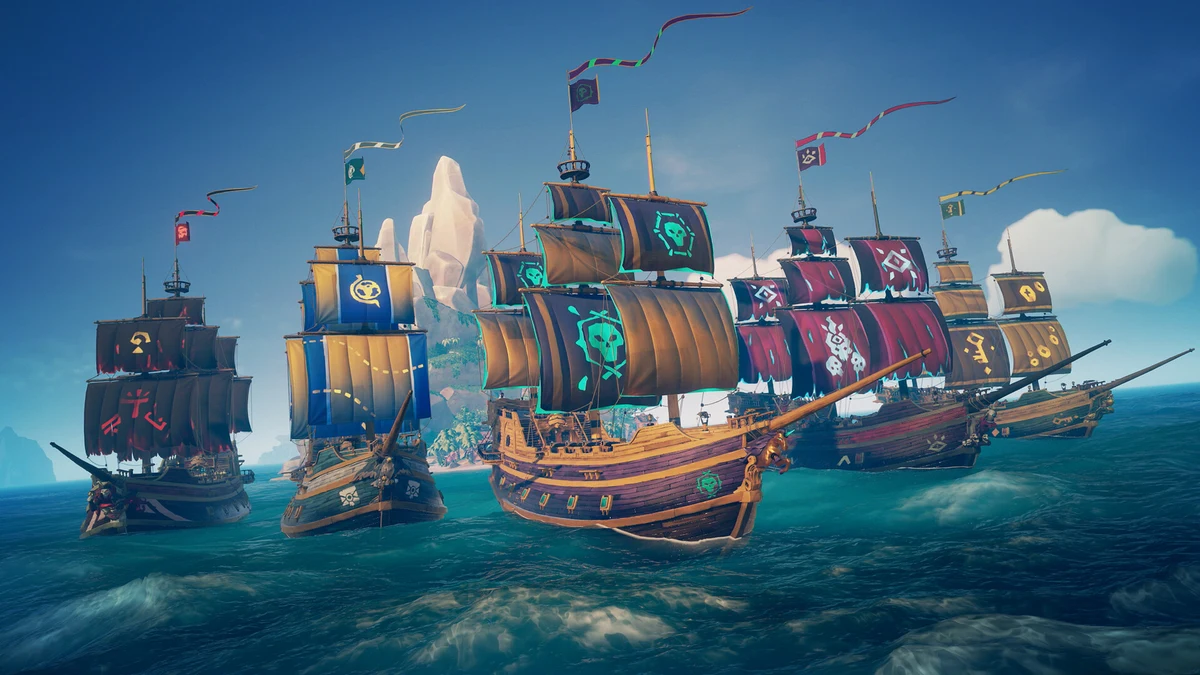
Stepping onto the deck of your first ship in Sea of Thieves can be overwhelming. There is a wheel to steer, sails to raise, a map table to read, cannons to load, and a hull that can flood in seconds if you ignore it. Unlike most multiplayer games, Sea of Thieves does not assign classes or roles automatically — your crew has to figure out who does what, and doing that well is often the difference between a smooth voyage and a ship at the bottom of the ocean. This guide breaks down the ships you can sail, the core jobs every crew needs, and how to divide them so your next trip to the Sea of Thieves feels less chaotic and more like a well-run pirate operation.
Choosing Your Ship: Sloop, Brigantine, or Galleon
Sea of Thieves offers three ship types, and the one you pick shapes how many crew roles you actually need to fill.
The Sloop is the smallest vessel, built for one or two pirates. It has a single mast, one deck, and two cannons — one on each side. It is nimble, quick to turn, and forgiving for solo players or duos still learning the ropes, since one person can reasonably handle steering, sails, and cannons in a pinch.
The Brigantine (Brig) sits in the middle, designed around a crew of two or three. It has two masts, four cannons total, and enough deck space that dedicated roles start to matter — one person on repairs while another handles sails and cannons becomes far more efficient than trying to do everything alone.
The Galleon is the largest ship, built for crews of three or four. It has three masts, eight cannons, and multiple deck levels, including a below-deck cannon row. Galleons are slower to turn and more vulnerable if roles are not divided clearly, but they can output far more damage and haul more cargo than either smaller ship.
Whichever ship you choose, matching your crew size to the vessel makes everything easier. An empty Galleon with only two players on board means someone is always running between stations instead of mastering one job.
The Helmsman: Steering and Reading the Wind
The helmsman stands at the wheel and is responsible for heading, general navigation calls, and reacting to threats in real time. Good helming means more than just holding a straight line — it means adjusting sail angle for wind direction, calling out obstacles like rocks or sandbars, and making split-second turns during combat to dodge cannon fire or line up a ramming attack.
A strong helmsman also communicates constantly. Calling out “hard to port” or “coming about” before executing a turn gives the rest of the crew time to brace, hold onto the wheel, or reposition for cannons. On smaller ships the helmsman often doubles as a lookout, since the wheel platform usually offers a clear view of the horizon.
The Navigator: Charts, Maps, and Voyage Tracking
On larger crews, one person is usually assigned to the map table. The navigator’s job is to plot the course, cross-reference voyage scrolls or treasure maps against the world map, and feed real-time directions to the helmsman — “turn to the reef ahead” or “we need to swing north around this island.”
This role matters more than new players expect. Sea of Thieves maps are often stylized or partial, especially treasure maps that show a rough shape of an island rather than exact coordinates. A navigator who is comfortable comparing landmarks, rock formations, and coastlines to the in-game map will save the crew from wasted trips and wrong turns, especially when island names are not labeled directly on certain voyage types.
Sail Handling: Speed, Angle, and Trim
Sails do more than just catch wind — their angle relative to the wind direction determines how fast the ship moves. A crew member assigned to sail duty adjusts the sails as the wind shifts or as the ship changes heading, reefs (partially raises) sails when approaching a dock or tight passage, and drops sails fully during combat to reduce the ship’s silhouette and turning radius.
This role is often shared with the helmsman on smaller crews, but on a Galleon it becomes a full-time job, since three masts each need attention when the wind changes or the ship changes course.
Repairs and Bailing: Keeping the Ship Afloat
Cannonballs, rocks, and even careless collisions punch holes in the hull. Water floods in through these holes and collects belowdecks, and if it is not managed, the ship will eventually sink regardless of how well the crew fights or sails.
The repair role covers two related tasks: patching holes with wooden planks (found in barrels around the ship or looted from other wrecks) and bailing out water with a bucket. On a Sloop, one person can often manage both jobs solo during a lull in combat. On a Brig or Galleon, this becomes its own dedicated station, especially during a firefight, since holes below the waterline can sink a ship in under a minute if ignored.
Keeping barrels of wood, bananas (for healing), and cannonballs stocked before you leave port is a simple habit that prevents a mid-voyage crisis when supplies run low during a fight.
Gunners: Cannons and Ship-to-Ship Combat
Cannons are the primary way ships damage each other, and a dedicated gunner (or two, on a Galleon) loads and fires them during encounters. Good cannon work means aiming ahead of a moving target, targeting the waterline to cause flooding rather than the deck, and coordinating with the helmsman so the ship presents its cannons rather than its bow or stern to the enemy.
Cannons can also be used offensively in other ways — firing yourself out of a cannon toward an enemy ship or a treasure-laden island is a Sea of Thieves staple, though it takes practice to land safely.
Communication and Role Flexibility
The single biggest factor in a smooth Sea of Thieves session is communication. Calling out incoming threats, confirming who is handling repairs, and agreeing on a plan before a fight starts all matter more than any individual skill. Voice chat, or even the game’s built-in quick-chat wheel, keeps everyone aligned.
It also helps to stay flexible. Roles are not fixed — the person on cannons one minute might be bailing water the next if the situation changes. New crews often assign roles at the start of a session and adjust naturally as everyone learns the ship. For a broader overview of everything else the game covers, from factions to endgame goals, check out our complete Sea of Thieves guide.
Practicing Before You Set Sail
Before heading into open water with a fresh crew, spend a few minutes docked at an outpost going over roles, checking cannonball and repair plank supplies, and agreeing on basic callouts. It feels unnecessary at first, but the habit pays off the moment a rival ship appears on the horizon or a storm rolls in unannounced. Sea of Thieves rewards coordinated crews far more than it rewards raw individual skill, and mastering these fundamental roles is the fastest way to start feeling like a real pirate captain rather than a passenger on your own ship.