
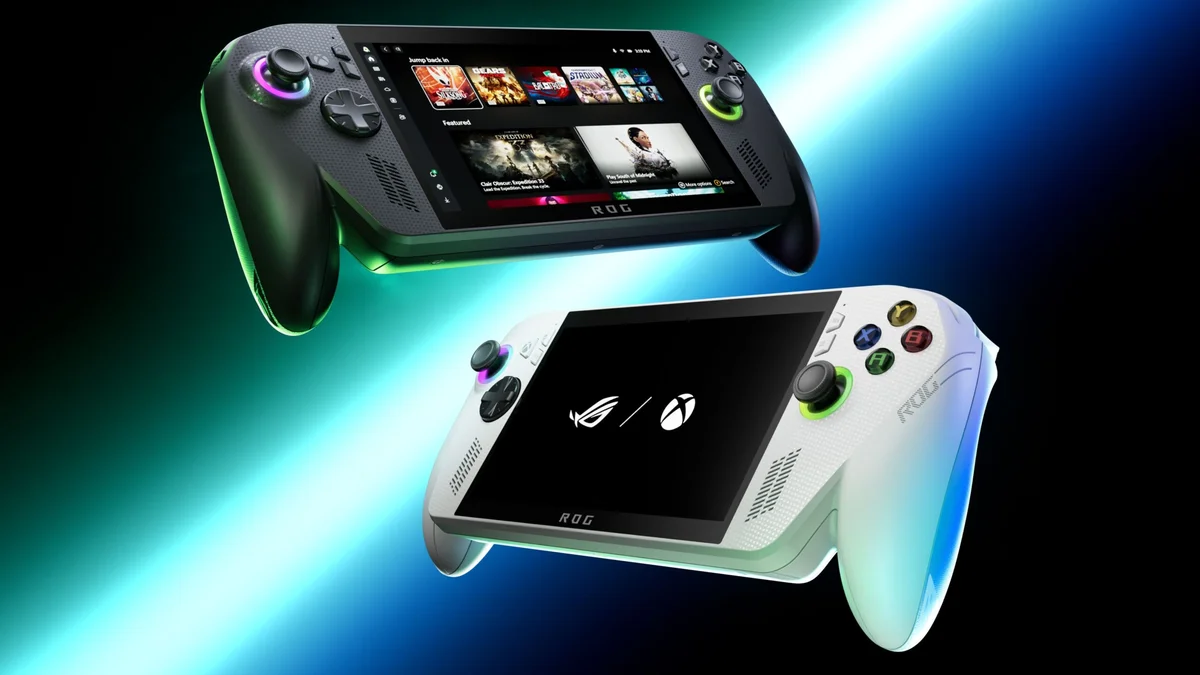
The handheld gaming PC race is proving harder to shake up than Microsoft and ASUS might have hoped. New market data indicates that sales of the ROG Xbox Ally lineup spiked in its debut month before falling off sharply, leaving Valve’s Steam Deck firmly in control of the category more than four years after it first kicked the form factor into the mainstream.
A Strong Debut That Didn’t Sustain Itself
The ROG Xbox Ally and its more powerful sibling, the ROG Xbox Ally X, launched to genuine enthusiasm, with ASUS executives previously highlighting strong demand, particularly for the premium models priced above $900, during earnings discussions. That early momentum was real, and reports at the time even suggested the higher-end Ally X sold out shortly after release. But according to Circana games-industry analyst Mat Piscatella, the surge did not hold. Sales spiked in month one and then fell away sharply, and by the account, the device has failed to meaningfully cut into Steam Deck’s dominant market share.
As of July 2026, Steam Deck still accounts for roughly half of every handheld gaming PC sold, a striking figure given how much attention and marketing muscle Microsoft has put behind positioning the Ally as a true Xbox experience in your hands. The device runs a customized version of Windows with an Xbox-first interface layered on top, an approach meant to blend PC gaming flexibility with console-like simplicity. That pitch resonated enough to drive a strong opening month, but sustaining that interest against Valve’s more established, Linux-based alternative has proven to be the harder challenge.
What’s Holding the Category Back
The broader handheld gaming PC segment, now four years removed from Steam Deck’s original launch, still has not achieved the kind of mainstream breakout some in the industry expected. High price points remain a persistent hurdle, with premium configurations sitting well above what casual buyers are typically willing to spend on a secondary gaming device. Windows-based handhelds in particular have also faced ongoing criticism over how well the traditional desktop operating system translates to a controller-first, on-the-go experience, even with Xbox’s custom interface smoothing over some of the rough edges.
For Microsoft, the Ally’s performance carries implications beyond a single hardware line. The device has effectively served as an early proving ground for the company’s broader ambitions around a more unified, cross-device Xbox ecosystem, one that leans on cloud gaming, Game Pass, and a consistent interface regardless of whether players are on a console, PC, or handheld. A stalled sales trajectory does not derail that strategy outright, but it does suggest the appetite for premium Windows handhelds specifically remains narrower than the enthusiasm around Steam Deck might have implied.
None of this means the ROG Xbox Ally is a failure by any conventional measure; it found a genuine audience and clearly satisfied a segment of players eager for a portable, native Xbox-branded experience. But the gap between its hot launch and the cooler months that followed is a useful reality check for a device that was, at least partly, framed as a potential Steam Deck rival.
Whether ASUS and Microsoft can reignite momentum through software updates, price adjustments, or new hardware revisions remains to be seen. For now, the numbers suggest Steam Deck’s early lead in the handheld space, and the loyalty it has built up since 2022, is not going away anytime soon.