
Table of Contents
- What Is PUBG: BATTLEGROUNDS
- Platforms and Crossplay
- Current Map Pool Explained
- Game Modes: Squad, Duo, Solo, and Ranked
- Ranked System Explained
- Looting and Circle Strategy Basics
- PUBG for Beginners
- Best Landing Spots and Loot Strategy
- Weapons and Attachments Basics
- The PUBG Esports Scene
- Hardware and Setup Tips
- Who PUBG Is Best For
- FAQ: PUBG BATTLEGROUNDS
- Conclusion
- External Authority Sources
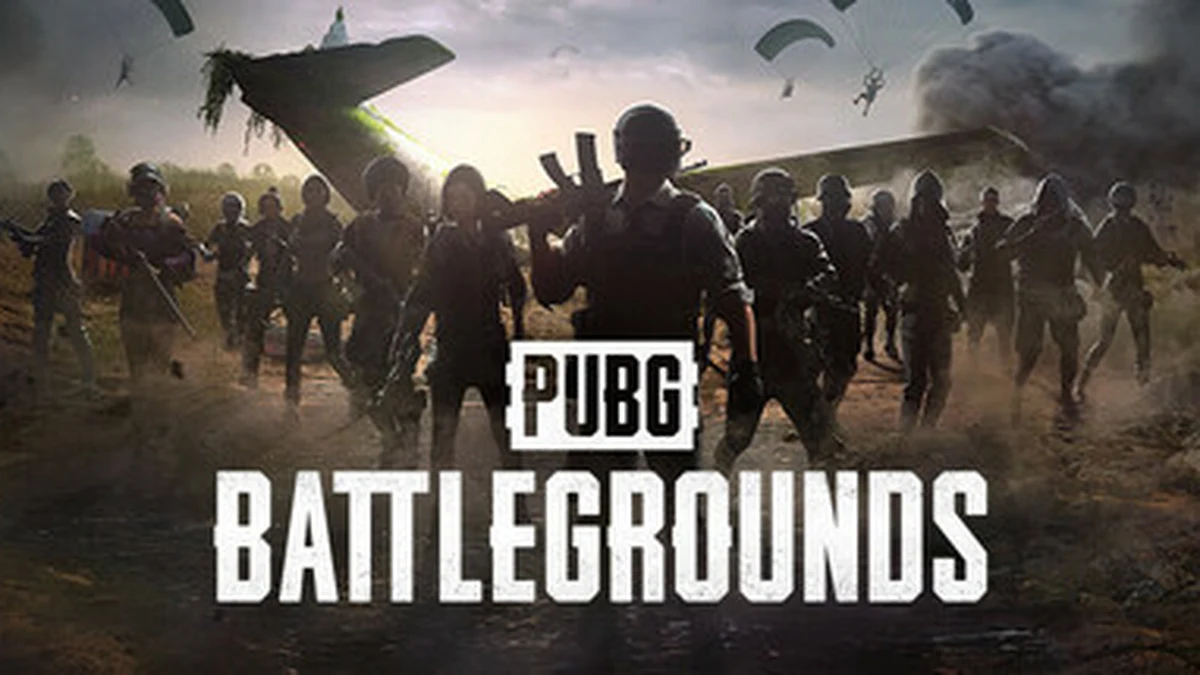
Nearly nine years after a modder-turned-designer named Brendan Greene strapped a hundred players onto a Croatian island and told them only one could walk away, PUBG: BATTLEGROUNDS is still one of the most-played shooters on the planet. It has survived the genre it created being copied, remixed, and in some cases outgrown by Fortnite, Apex Legends, and Warzone — and in 2026 it’s still pulling hundreds of thousands of concurrent players on Steam alone, running a global esports circuit with a multi-million-dollar prize pool, and shipping content updates roughly every five weeks. That’s a rare feat for a live-service shooter this old.
This guide is built for two kinds of readers: people who have never dropped from the plane and want to understand what they’re getting into, and long-time players who want a single, current reference for how the game actually works right now — maps, modes, ranks, crossplay, esports, and strategy. Everything below reflects the state of PUBG on PC and console as of August 2026. If you’re looking for PUBG Mobile specifically, that’s a different game with its own ranking curve and roadmap — we cover it separately on GameHux.
What Is PUBG: BATTLEGROUNDS
PUBG: BATTLEGROUNDS is the game that turned “battle royale” from a niche Arma and DayZ mod scene into the biggest genre in gaming. It launched into Steam Early Access in March 2017, hit full release that December, and by the time Krafton (then PUBG Corporation) took it free-to-play in January 2022, it had already sold roughly 75 million copies across PC and console, according to Krafton’s own press materials.
The core loop hasn’t changed since day one, and that’s part of the appeal: up to 100 players parachute onto a large map with nothing, scavenge weapons, gear, and vehicles, and fight to be the last person, duo, or squad standing while a shrinking blue zone forces the lobby into ever-tighter engagements. PUBG popularized nearly every convention the genre now takes for granted — the plane drop, the shrinking play zone, the loot-then-fight tension, the “Winner Winner Chicken Dinner” victory screen that’s become a gaming meme in its own right.
What separates PUBG from its descendants is its commitment to a grounded, tactical shooter feel. There’s no building, no wall-running, and no ability kits. Bullet drop matters, vehicles are a real strategic resource, and a fight can be decided as much by positioning and sound cues as by aim. That identity is exactly why PUBG still has a dedicated, hardcore player base even as flashier battle royales have come and gone — it plays like a military sim wearing a battle royale’s clothes, and nothing else on the market fully replicates that.
Krafton has also spent 2026 pushing what it calls “platformization” — expanding PUBG beyond a single battle royale mode into a broader platform with user-generated content tools, co-op modes, and experimental formats sitting alongside the classic 100-player drop. More on that in the game modes section below.
Why PUBG’s Legacy Still Matters
It’s easy to take the battle royale formula for granted now that it’s everywhere, but none of it existed in a mainstream, standalone form before PUBG. Brendan Greene had already prototyped the concept as a mod for Arma 2 and Arma 3 (the “Battle Royale” mod, named after the Japanese film) before Bluehole brought him on to build a standalone version. When PUBG launched, it didn’t just introduce a new mode — it proved an entire genre could carry a game on its own, without a traditional campaign, without class-based abilities, and without anything beyond “drop in, survive, win.” Fortnite’s battle royale mode, which launched later in 2017, openly borrowed the core structure; Apex Legends, Warzone, and nearly every subsequent battle royale trace their DNA back to decisions PUBG made first. That’s the context worth keeping in mind every time you land on Erangel: you’re playing the blueprint, not a clone of it.
Platforms and Crossplay
PUBG: BATTLEGROUNDS is available on PC (Steam and the Epic Games Store), PlayStation 5, PlayStation 4, Xbox Series X|S, and Xbox One. It is free-to-play on every one of those platforms.
Crossplay in 2026 is best described as “partial by design” rather than fully open:
- PC-to-PC crossplay works seamlessly between Steam and Epic Games Store, so a friend who bought the game years ago on Steam can squad up with someone who downloaded it fresh on Epic.
- Console-to-console crossplay is fully supported between PlayStation and Xbox, and it’s enabled by default with no extra setup.
- PC-to-console crossplay is not supported. PC and console players remain in separate matchmaking pools, primarily because Krafton has held the line on balancing mouse-and-keyboard precision against controller aim assist — a decision that mirrors what several competitive shooters have landed on rather than opening everything into one melting-pot queue.
Cross-progression (using one account across platforms) and cross-purchases for cosmetics are supported for players who link their Krafton account, but your matchmaking pool is still determined by input device family: PC players play PC players, and console players play console players.
Current Map Pool Explained
PUBG runs a genuinely large map roster now, spanning multiple sizes, biomes, and design philosophies. Map availability is not static — Krafton rotates the active pool by region on a multi-week schedule (recent updates have used 4-to-5-week rotation cycles), and the exact odds of landing on any given map shift with each patch. Erangel, the original map, has had its matchmaking weight increased in random-map regions specifically because it’s still the community’s most requested drop.
Here’s the full roster you’ll encounter across Normal and Ranked queues:
| Map | Size | Terrain | Best For |
|---|---|---|---|
| Erangel | 8×8 km | Balanced mix of fields, forests, and urban centers | New players, all-round fights, the “classic” PUBG experience |
| Miramar | 8×8 km | Desert canyons and long sightlines | Long-range engagements, vehicle play |
| Taego | 8×8 km | Korean-inspired terrain with a Comeback BR revival mechanic | Players who want a second chance after dying early |
| Vikendi | 6×6 km | Snow-covered with reduced visibility and ziplines | Ambush tactics, verticality |
| Deston | 8×8 km | Futuristic, highly vertical urban map | Aggressive, mobility-focused squads |
| Rondo | 8×8 km | Newest large map, mixed urban/rural Chinese-inspired setting | Players who want the freshest rotation content |
| Sanhok | 4×4 km | Dense jungle, compact | Fast-paced solo and duo queues, quick matches |
| Karakin | 2×2 km | Tiny desert island with destructible walls | High-kill, close-quarters chaos |
| Paramo | 2×2 km | Volcanic island, no vehicles | Close-range specialists |
Ranked matches typically pull from a curated subset of these maps rather than the full pool — recent seasons have balanced Ranked map probability roughly evenly across the core large maps to keep competitive integrity consistent. If you’re chasing a specific map for practice, check the in-game map rotation screen before queuing, since it updates weekly and differs by server region.
Image suggestion: A side-by-side comparison graphic of Erangel vs. Sanhok terrain, alt text “PUBG map comparison Erangel large map versus Sanhok small map 2026.”
Game Modes: Squad, Duo, Solo, and Ranked
At its foundation, PUBG offers the same team-size choices it always has, layered across Normal (casual) and Ranked (competitive) playlists:
- Solo — you against everyone else, no revives, no teammates to bail you out.
- Duo — two-player teams, a favorite for players who want coordination without a full squad’s logistics.
- Squad — four-player teams, the most popular format and the one PUBG’s esports scene is built around.
- Ranked — available in Duo and Squad (and in some seasons, Solo), matching you against players of similar skill and tracking a visible rank instead of just a KDA stat.
Beyond the classic battle royale drop, 2026’s roadmap has meaningfully expanded what “a mode” means in PUBG. Krafton has been shipping smaller, faster formats alongside the main battle royale to catch players who don’t always have 30 minutes for a full match:
- Team Deathmatch and Arcade modes offer quick, respawn-based shooting without the survival layer.
- Rumble, introduced in a recent update, is designed to give players a competitive experience without Ranked-tier pressure — a good on-ramp before you commit to climbing.
- Xenopoint, a cooperative looter-shooter roguelite mode, and Payday, a co-op heist mode built with Starbreeze, both launched in 2026 as part of Krafton’s push to diversify PUBG beyond pure battle royale.
- Extraction and Prop Hunt-style modes have also been introduced as limited or rotating formats.
| Mode | Team Size | Focus | Best For |
|---|---|---|---|
| Solo | 1 | Pure individual skill, no revives | Players who want maximum tension and full credit for wins |
| Duo | 2 | Coordinated pushes, shared resources | Friends who want teamwork without a full squad |
| Squad | 4 | Full tactical play, revives, coverage | The default competitive and social experience |
| Ranked (Duo/Squad) | 2–4 | Skill-matched lobbies, visible rank | Players who want progression and fair competition |
| Normal (Casual) | 1–4 | Relaxed, no rank impact | Practicing landings, weapons, and rotations |
| Arcade / TDM | Small teams | Fast respawn combat | Warming up aim before a BR session |
If you’re brand new, start in Normal Squad or Duo. It removes the rank-loss pressure while you learn spawn logic, sound cues, and looting speed — all things that matter more to your early survival than raw aim ever will.
Ranked System Explained
PUBG’s Ranked mode puts you into a tiered ladder built around Ranking Points (RP), which are earned primarily from your final placement each match, with additional points for kills, assists, and damage dealt. Survival counts more than most new players expect — a cautious eighth-place finish can net more RP than an aggressive early death with three kills.
The tier structure, from lowest to highest, currently runs:
Bronze → Silver → Gold → Platinum → Diamond → Master → Grandmaster
Each tier below Master is broken into divisions, and climbing through them requires banking RP above each division’s threshold. Grandmaster is reserved for a small pool of the very best players per region — often described as a top-500 leaderboard — rather than being a normal RP tier you level into.
A few mechanics worth knowing before you queue Ranked for the first time:
- Placement matters more than kills. RP rewards are weighted so that surviving deep into a match is consistently worth more than an aggressive, high-kill early death. A recent update specifically increased the weight of final placement in RP calculations to reinforce survival as core to the mode.
- Seasons reset progressively, not completely. At the end of a Ranked season, accounts typically drop by a set number of sub-divisions rather than resetting to zero, so the climb the following season is faster than your first.
- Ranked queues are squad- and duo-focused, with map pools curated from the larger maps to keep matches competitively consistent.
- Losing RP is real. Poor placements cost points, which is why flying into a hot drop with no plan can tank your rank just as fast as bad aim.
Because Krafton tweaks RP formulas and tier thresholds nearly every season, the exact point values are worth checking close to when you start climbing. For a full walkthrough of every tier, division breakpoints, and RP math, see our dedicated breakdown: PUBG Rank System Explained.
How Ranked Seasons Are Structured
Ranked seasons in PUBG typically run for around three months, aligning with the game’s broader content season rather than resetting independently. A season is usually split across two or three major updates (for example, Season 42 spans Update 42.1 through 42.3), which means the meta, weapon balance, and even RP formulas can shift mid-season as Krafton pushes balance patches. It’s worth checking patch notes before a serious Ranked grind — a mid-season change to placement weighting or a nerf to your go-to weapon can meaningfully change what a winning strategy looks like.
Matchmaking in Ranked also accounts for squad skill disparity, not just individual rank — queuing with a much higher- or lower-ranked friend affects the RP you gain or lose per match, which is worth knowing before you duo with a friend several tiers above or below you.
Looting and Circle Strategy Basics
PUBG’s moment-to-moment tension comes from balancing two competing needs: get geared up, and stay ahead of the circle. Get either wrong and you’re either fighting undergeared or you’re stuck in a death march to reach the safe zone in time.
Looting fundamentals:
- Prioritize a backpack upgrade, a helmet, and a vest before you worry about a perfect weapon loadout — survivability items reduce your risk in every fight that follows.
- Two weapons covering different ranges (an assault rifle plus a sniper or SMG) beats two overlapping weapons.
- Don’t loot every building in a compound. Grab what’s efficient, especially meds and ammo, and keep moving — static looters are easy kills for rotating squads.
- Vehicles are loot too. A functioning car or buggy can save you from a lethal late rotation far more reliably than a gunfight would.
Circle strategy fundamentals:
- Watch the blue zone timer, not just the white circle. Knowing how long you have left tells you whether you can afford one more loot stop or need to move now.
- Position on the edge of the safe zone closest to where you expect the next circle to land, using high ground where possible — edge play gives you rotation options that center players don’t have.
- The circle’s shrink accelerates as the match progresses. Early circles are forgiving; by circle six or seven, a few seconds of hesitation can mean taking blue-zone damage in the open under fire.
- Don’t fight for loot you don’t need. The safest players in the mid-game are often the ones who avoided fights entirely, not the ones who won them.
Circle discipline is genuinely the single biggest skill gap between new and experienced players — more than aim, more than game sense in fights. Master your rotations before you worry about anything else.
A simple rule that saves most new players a lot of frustration: if you’re not sure whether you have time to loot one more building before the zone starts closing, you probably don’t. Rotate early, rotate often, and treat every extra second spent looting deep in the safe zone as a small bet against the clock — one that experienced players win far less often than they think.
PUBG for Beginners
If everything above feels like a lot, that’s normal — PUBG has a real learning curve compared to faster, more forgiving shooters. The good news is that the fundamentals compound quickly once they click: where to land, how to loot efficiently, when to fight and when to rotate away.
We’ve put together a full walkthrough covering first-match settings, control basics, healing item priority, and the mental habits that separate a player who survives their first ten matches from one who gets knocked out in the first three minutes. If you’re starting from zero, read our PUBG Beginners Guide before your next drop — it’ll save you dozens of frustrating matches.
Best Landing Spots and Loot Strategy
Where you land determines almost everything about how your first five minutes go. Hot drops like the Pochinki cluster on Erangel or Paradise Resort on Miramar guarantee fast action and high loot density, but also a real chance of dying before you’ve picked up a single gun. Quieter edge-of-map landings trade loot quality for a safer window to gear up before the lobby thins out.
The right landing spot depends on your goals for the match — are you practicing fights, or trying to survive to build rank points? We break down the best drops per map, loot routes, and how to read the flight path to pick a spot with the right risk-to-reward ratio in our dedicated guide: Best Landing Spots and Loot Strategy.
Weapons and Attachments Basics
PUBG’s weapon sandbox is large — assault rifles, DMRs, bolt-action snipers, SMGs, shotguns, LMGs, and throwables — and unlike faster shooters, gunfights here are won as much by attachment choices and recoil control as by raw reflexes.
A few basics that apply regardless of which gun you pick up:
- Muzzle attachments matter early. A Compensator reduces both vertical and horizontal recoil, making it one of the most forgiving early-game attachments for players still learning spray patterns.
- Foregrips flatten vertical kick. A vertical foregrip is often recommended as a beginner’s best friend because it makes recoil predictable, which matters more than raw damage stats while you’re still building muscle memory.
- Match your loadout to your range. Carrying two weapons that both excel at the same range wastes an inventory slot — pair a close-range option with something effective at 100+ meters.
- Use the Training Ground. PUBG’s firing range lets you test attachment combinations against real recoil patterns before you’re relying on them in a live match, which is the fastest way to learn what actually works for your playstyle.
For a full breakdown of tier-by-tier weapon strengths, the best attachment combos per gun class, and loadouts for each map size, see our complete Best Weapons Guide.
The PUBG Esports Scene
PUBG’s esports scene is one of the longest-running in the battle royale genre, and 2026 brought its biggest structural overhaul in years. Krafton rebuilt the entire competitive circuit into the PUBG Global Series (PGS), organized into four Circuits per year, each made up of three Series — 12 total events across the season. PGS Circuit 1 kicked off in March 2026 with 24 teams per event: 12 Global Partner Team organizations plus 12 regionally invited squads. The season’s total prize pool across all four circuits sits at roughly $2 million, and the top 8 teams by cumulative PGS points earn automatic qualification into the season-ending world championship.
That world championship is the PUBG Global Championship (PGC) — still the crown jewel of the competitive calendar. PGC 2025, held in Bangkok as part of the broader “PUBG United” event from November 28 to December 14, 2025, drew 33 of the world’s best teams competing over a $1.5 million prize pool, with $500,000 going to the champion. Thailand’s FULL SENSE took the title with 155 points, becoming the first Thai organization to win PUBG’s biggest trophy — and the event itself pulled in 7.5 million hours watched, PUBG’s best viewership since the 2021 Global Championship, according to Esports Charts.
What makes PUBG’s competitive format distinct from most other battle royale esports is its squad-based, points-and-placement scoring system across multiple matches per day — closer in spirit to a motorsport points table than a single-elimination bracket. Teams accumulate points from both kills and final placement across a full day’s worth of matches, which rewards consistency over a single lucky win far more than most shooter esports formats do.
If you’re getting into PUBG competitively, watching PGS and PGC VODs is genuinely one of the fastest ways to absorb rotational strategy, since top teams telegraph zone reads and fight decisions far more cleanly than you’ll see in a solo-queue Ranked match.
A Scene Built From the Ground Up
PUBG’s esports history stretches back further than most battle royale competitive scenes — early leagues like the PUBG Global Invitational and the PUBG Global Series (an earlier iteration under the same name) date back to 2018, making it one of the first shooters to prove a battle royale could support a stable, recurring competitive calendar rather than one-off invitationals. That long track record is part of why organizations were willing to commit to the Global Partner Team program in the first place — multi-year investment only makes sense in a scene with a real audience, and PUBG has consistently delivered one, even through years when overall viewership dipped as newer battle royales launched. The 2026 restructure into a tighter four-Circuit, twelve-Series calendar was explicitly designed to fix pacing complaints from older, more sprawling formats, concentrating storylines into three-week blocks that build toward each Circuit’s finale instead of spreading results thin across a full year.
Hardware and Setup Tips
PUBG’s tactical, long-range-heavy gunfights reward precision more than most shooters — a lot of engagements are decided at distances where a shaky flick or an unresponsive click costs you the fight before you even land a shot. A few setup basics genuinely move the needle:
- Frame rate consistency beats raw resolution. PUBG’s engine benefits more from stable, high frame rates than from maxed-out visual settings — most competitive players run reduced settings for clearer target visibility and smoother tracking, especially in Erangel and Miramar’s long sightlines.
- A mouse that matches your grip and sensitivity habits matters more than its price tag. Since so many PUBG fights are won on flick accuracy at range, an ill-fitting mouse can quietly cost you fights you should win. If you’re shopping for an upgrade, our guide on how to choose a gaming mouse that actually fits your playstyle walks through grip styles, sensor considerations, and weight preferences specifically for shooters like PUBG.
- Audio matters as much as visuals. Footsteps, vehicle engines, and gunfire direction cues are a core part of PUBG’s information game — a decent headset is arguably a bigger competitive advantage here than in faster twitch shooters.
- Console players should prioritize input latency settings where available, since PUBG’s ballistics model still rewards precise aim even with controller assist active.
A monitor with a higher refresh rate (144Hz or above) is another upgrade that pays off specifically in PUBG, since the game’s open sightlines mean you’re often tracking a target for a full second or more before you get a clean shot — smoother frame delivery makes that tracking noticeably easier than it is on a standard 60Hz panel. If you’re building a setup from scratch, prioritize in this order: a stable, high frame rate, a mouse that fits your grip and sensitivity, then a higher refresh-rate monitor. Chasing cosmetic upgrades before those three fundamentals are dialed in is the most common setup mistake new competitive players make.
You don’t need an elite setup to enjoy PUBG casually, but if you’re grinding Ranked seriously, your peripherals are worth the same attention you’d give your in-game loadout.
Who PUBG Is Best For
PUBG isn’t the right battle royale for everyone, and it’s worth being honest about that before you commit hours to it.
PUBG is a great fit if you:
- Enjoy tactical, grounded shooters over building mechanics or superpowers
- Like long matches with real tension building toward a final fight, not fast respawn action
- Want a genuinely deep vehicle and ballistics system
- Are drawn to a large, structured esports scene you can follow and learn from
- Play on PC or console and don’t mind a real learning curve
PUBG might not be for you if you:
- Want instant action — early-match downtime (looting, rotating) can feel slow compared to Fortnite or Apex
- Prefer mobility-heavy movement mechanics like wall-running or grappling hooks
- Get frustrated by high-variance deaths from third-party squads or late-circle RNG
- Want cross-platform play between PC and console specifically
Pros and Cons
| Pros | Cons |
|---|---|
| Deep, tactical gunplay with real ballistics | Steeper learning curve than most battle royales |
| Large, varied map roster (small to massive) | No PC-to-console crossplay |
| Free-to-play on all platforms | Matches can feel slow early on |
| Strong, well-funded esports scene (PGS/PGC) | Circle RNG and third-partying frustrate new players |
| Genuinely unique identity vs. its imitators | UI and menu polish still trail some competitors |
| Frequent content updates and new modes | Vehicle and looting learning curve takes real reps |
FAQ: PUBG BATTLEGROUNDS
Is PUBG free to play in 2026? Yes. PUBG: BATTLEGROUNDS has been free-to-play on PC and console since January 12, 2022, when Krafton switched the entire game off its original paid model. An optional one-time BATTLEGROUNDS Plus upgrade exists for players who want extra cosmetic and account perks, but it isn’t required to play any mode.
Is PUBG cross-platform between PC and console? No. PC players (Steam and Epic Games Store) can crossplay with each other, and PlayStation and Xbox players can crossplay with each other, but PC and console remain separate matchmaking pools due to input-device balancing.
How many players are in a PUBG match? Up to 100 players per match, dropped from a plane onto the chosen map and narrowed down by a shrinking blue zone until one player, duo, or squad remains.
What is the best map for beginners? Erangel is generally considered the most balanced and beginner-friendly map — it offers a mix of open and urban terrain without the extreme long-range punishment of Miramar or the frantic close-quarters chaos of Karakin.
How does PUBG’s ranked system work? Ranked mode uses Ranking Points (RP) earned mainly from your placement each match, plus bonus points for kills and damage. Players climb through Bronze, Silver, Gold, Platinum, Diamond, and Master tiers, with a small Grandmaster leaderboard reserved for top regional performers. See our full rank breakdown for tier thresholds.
What’s the difference between PUBG and PUBG Mobile? PUBG: BATTLEGROUNDS is the original PC and console version built for mouse-and-keyboard or controller play with full-scale graphics. PUBG Mobile is a separate, mobile-optimized title with its own progression systems, seasons, and roadmap — the two are not cross-compatible.
Is PUBG still worth playing in 2026? Yes, particularly if you want a tactical shooter experience distinct from build-heavy or ability-driven battle royales. The game still averages hundreds of thousands of concurrent Steam players, runs a well-funded esports circuit, and ships new modes and maps on a regular cadence.
What’s new in PUBG for 2026? Krafton’s 2026 roadmap has focused on “platformization” — adding new modes like the co-op roguelite Xenopoint and the Starbreeze-developed heist mode Payday, revamping the Ranked RP formula, adding in-game Basic Training for new players, and continuing the Global Series esports circuit rebuild.
Conclusion
Nine years in, PUBG: BATTLEGROUNDS is still doing what it did first and arguably still does best: dropping a hundred strangers onto an island and letting tension, terrain, and a shrinking circle write the story. It’s free to play, it’s actively supported with new maps and modes, and it has one of the most established esports ecosystems in the genre it built. Whether you’re chasing your first chicken dinner or grinding toward Grandmaster, the fundamentals in this guide — map knowledge, circle discipline, smart loot priorities, and a ranked system that rewards patience — are the foundation everything else builds on.
Ready to go deeper? Start with our PUBG Beginners Guide to get your first matches right, then work through Best Landing Spots, the Weapons and Attachments Guide, and the Rank System breakdown as you build toward competitive play. Drop in, loot smart, and watch that circle.
Image suggestion: A tactical squad rotating along a ridge line under a shrinking blue zone, alt text “PUBG squad rotating away from blue zone circle 2026 gameplay.”
Image suggestion: PGC 2025 grand finals stage shot with team logos on screen, alt text “PUBG Global Championship 2025 esports finals stage Bangkok.”