
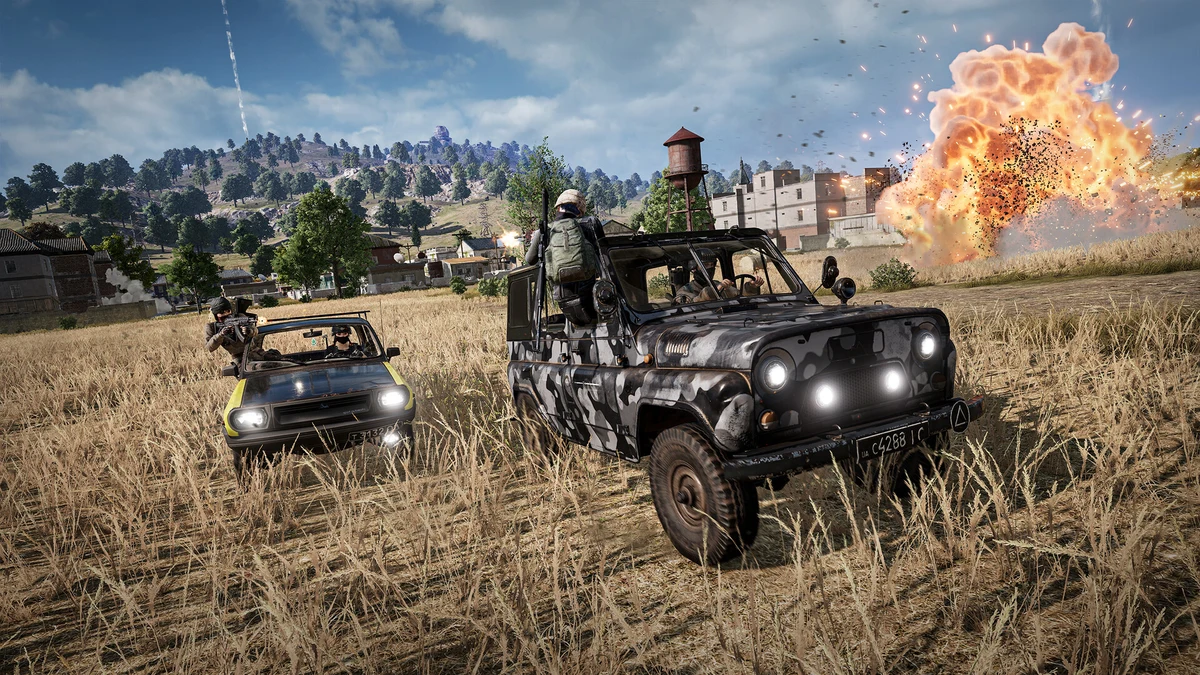
Dropping into your first match of PUBG: BATTLEGROUNDS can feel like being thrown out of a plane with no instructions — because, technically, that’s exactly what’s happening. A hundred players land on one map, and only one team walks away with the chicken dinner. It’s overwhelming at first, but the core loop is simpler than it looks once you understand the four pillars: looting, positioning, the shrinking play zone, and knowing when to fight versus when to run.
This guide breaks down everything a new player needs to survive their first week of matches, from the moment the plane takes off to the final circle. If you want the bigger picture of everything PUBG has to offer, our complete PUBG guide rounds up maps, weapons, and ranked play in one place. But if you’re brand new, start here.
How a Match of PUBG Actually Flows
Every PUBG match follows the same basic shape regardless of which map you land on.
Pre-game and the plane. Up to 100 players (in squads, duos, or solo) load into a lobby, then board a plane that flies a randomized line across the map. You choose when to jump — early jumpers land near the plane’s start point, late jumpers can glide much further across the map.
The drop and early game. Once you jump, you free-fall and then open your parachute automatically at a set altitude (you can also open it early to glide further or dive faster to land quicker). This is where you pick your landing spot, which matters more than almost any other decision in the match. Landing in a contested area means an early fight is almost guaranteed. Landing on the map’s edge means a safer loot phase but a longer, riskier drive into the zone later.
Mid-game rotations. Once you’re geared up, the blue zone (the storm) begins closing in, forcing everyone toward a smaller safe area. This is where map awareness, vehicle use, and positioning become just as important as gunskill.
Late game. By the final few circles, the player count has thinned dramatically, and fights become about zone control, sightlines, and utility (grenades, smoke, and flashes) rather than pure aim. The last circle is almost always decided by whoever has better positioning going in, not whoever pushes hardest.
Landing and Looting: Your First 60 Seconds
New players tend to make one of two mistakes: they either land in the busiest city on the map and get gunned down in the first thirty seconds, or they land somewhere so remote they have no gear by the time the zone forces them into a fight.
A better approach for your first few dozen games:
- Pick a mid-sized, off-route compound. Somewhere with 8-15 buildings, a little away from the flight path, gives you enough loot to gear up without a guaranteed early firefight.
- Loot with purpose, not completeness. You don’t need to open every drawer. Prioritize a weapon, a backpack, a helmet and vest, and some healing items (bandages or a first aid kit) before you worry about anything else.
- Grab a backpack upgrade early. Your starting inventory space is tiny. A Level 2 or 3 backpack lets you actually carry the loot you find instead of leaving it on the ground.
- Don’t ignore armor. A Level 1 vest and helmet might not seem like much, but they meaningfully reduce damage and can be the difference between surviving a surprise shot and dying instantly.
- Listen while you loot. Footsteps, gunfire, and vehicle engines are some of the best information in the game. Keep your volume up and your ears open, especially in buildings.
Once you’ve got a weapon and some basic survival gear, you’re in playable shape. Everything after that is a bonus. For a deeper breakdown of exactly where to land on each current map, check out our guide to the best PUBG landing spots.
Understanding the Blue Zone, Circle, and Zone Mechanics
The blue zone (often just called “the circle”) is PUBG’s core pacing mechanic. It’s a slowly advancing storm wall that damages anyone caught outside it, and it exists to force players together as the match progresses so the game doesn’t stall out with everyone hiding in separate corners of the map forever.
Here’s what new players need to know about how it behaves:
| Phase | What Happens | What You Should Do |
|---|---|---|
| Early phases | Zone shrinks slowly, damage is minor | Loot efficiently, rotate toward the zone’s general direction |
| Mid phases | Zone shrinks faster, damage increases | Commit to a rotation plan, use vehicles if the distance is large |
| Late phases | Zone shrinks rapidly, damage becomes lethal fast | Be inside the zone well before it closes — don’t gamble on outrunning it |
| Final phases | Tiny play area, damage ticks are severe | Prioritize cover and high ground over aggression |
A few zone habits worth building early:
- Never plan to “make it” right at the edge. The safe zone timer is unforgiving, and getting caught in the open as it closes is one of the most common ways new players die. Aim to be inside the new circle with time to spare.
- Watch the white circle, not just the blue. The white line on your map shows where the next zone will be once it’s revealed. Rotating early toward the center of the white circle, rather than just anywhere inside it, sets you up better for the following phase too.
- High ground matters more than being dead center. A slightly elevated position near the edge of the safe zone often beats a flat, exposed spot in the middle.
Vehicles: Getting Around Without Getting Killed
PUBG’s maps are large, and rotating on foot late in a match is often a death sentence. Cars, motorcycles, boats, and even the occasional ATV or buggy are scattered around every map, and using them well is a core survival skill.
A few basics every new player should know:
- Vehicles are loud. Driving announces your position to everyone nearby. Great for covering distance fast, risky if you’re trying to stay hidden.
- Engine sound carries further than you think. If you hear a car in the distance, you can often use that information to predict where enemies are heading.
- Don’t stop in the open. If you have to get out to loot, fight, or rotate on foot, try to park behind cover first.
- Boats matter on water-heavy maps. Maps like Erangel, Miramar, and Deston have significant water crossings where a boat is the only sane way to rotate.
- Fuel runs out. Keep an eye on your gauge, especially before a long rotation — running dry in the open zone is a bad time to discover you’re empty.
Vehicles are also a legitimate weapon. Running over an enemy at speed can down them instantly, though it’s a high-risk play that leaves you exposed if you miss or get shot mid-charge.
Combat Basics for New Players
You don’t need to be a mechanical wizard to win fights in PUBG — smart positioning wins more engagements than raw aim does. A few starting principles:
- Peek from cover, don’t stand in the open. Use walls, rocks, and terrain to expose as little of yourself as possible while shooting.
- Crouch and prone reduce your hitbox and recoil. They’re slower, but they make you a much harder target and improve your accuracy at range.
- Don’t fight fights you don’t need to. Especially early on, the best move is often rotating away from a fight rather than engaging it. Every kill you don’t need to get is a fight you can’t lose.
- Reload before you’re empty, not after. Getting caught mid-reload in a firefight is one of the most common (and most avoidable) ways to lose a fight you were otherwise winning.
- Use your ears and your map equally. Gunfire markers on your map, footstep audio, and visual cues all combine to tell you where the danger is.
If you want a head start on which weapons to actually prioritize when you’re looting, our best PUBG weapons and attachments guide breaks down the current meta pick by pick.
Tips for a Faster Learning Curve
A short list to keep in mind as you rack up games:
- Play a handful of matches in Training Mode or Camp Jackal first to learn recoil patterns without the pressure of real elimination.
- Stick with squads or duos early — having teammates to revive you and share information makes the learning curve far more forgiving than solo queue.
- Don’t over-loot. A fully kitted gun with your first attachments beats an empty inventory full of “just in case” items.
- Check the minimap constantly, not just when you hear something.
- Accept that you will die a lot in your first week. Every experienced PUBG player has hundreds of embarrassing early deaths behind them.
Once the basics click, it’s worth learning the ranked ladder too — our PUBG rank system explained guide covers how tiers and RP work if you’re ready to queue competitively.
Frequently Asked Questions
Q: Is PUBG hard to learn for a first-time battle royale player? It has a steeper learning curve than some competitors because of its realistic ballistics, larger maps, and heavier emphasis on looting and positioning. That said, the fundamentals in this guide will get you comfortable within your first ten to twenty matches.
Q: Should I play solo, duo, or squad as a beginner? Duo or squad is generally friendlier for new players. You get information sharing, revives, and someone to split map knowledge with while you’re still learning callouts and rotations.
Q: What’s the single biggest mistake new PUBG players make? Looting too long in one spot instead of tracking the zone. Getting caught outside a closing circle because you wanted “one more building” is one of the most common early-game deaths.
Q: Do I need a headset to play PUBG well? It’s not required, but audio cues (footsteps, gunfire direction, vehicle engines) carry a lot of tactical information. A decent headset noticeably improves situational awareness.
Q: How long does an average PUBG match last? Most matches run somewhere between 25 and 35 minutes from the plane to the final circle, though early deaths obviously end your match sooner.
The Bottom Line
PUBG rewards patience and awareness more than twitch reflexes, which is actually good news for new players — you can improve fast just by making smarter decisions about where you land, when you rotate, and which fights you actually need to take. Put in a few dozen matches with these fundamentals in mind and the game will start to feel a lot less chaotic. For everything else — maps, weapons, and the ranked grind — our complete PUBG guide is the best next stop to keep leveling up your game.