
Table of Contents
- What Is Marvel Rivals
- Platforms and Crossplay
- Roles Explained: Vanguard, Duelist, Strategist
- Current Hero Roster
- Team-Up Abilities Explained
- Current Map Pool
- Ranked System Explained
- Marvel Rivals for Beginners
- Best Heroes for Beginners by Role
- Battle Pass and Progression
- Hardware and Setup Tips
- Who Marvel Rivals Is Best For
- FAQ
- Conclusion
- External Authority Sources
Marvel Rivals has gone from “surprise December 2024 launch” to one of the biggest live-service shooters on the planet, and by August 2026 it isn’t slowing down. NetEase Games is now shipping content on a roughly six-week cadence, the roster has swelled past 50 heroes, and a genuine professional esports scene — Marvel Rivals Ignite — is handing out seven-figure prize pools. If you’re arriving late, coming back after a break, or just trying to make sense of a game that adds new mechanics almost every season, the sheer volume of information out there can be overwhelming.
This guide exists to fix that. We’ve pulled together everything you need in one place: what Marvel Rivals actually is, how the Vanguard/Duelist/Strategist role system works, the full current hero roster, the Team-Up ability system that makes this game genuinely unique among hero shooters, the map pool, the ranked ladder, the Battle Pass economy, and practical setup advice. Where a detail is season-specific — hero counts, map names, ranked distribution — we’ve noted it so you know it reflects the state of the game as of Season 9.5 in August 2026, not a launch-day snapshot that’s since gone stale.
Whether you’re deciding if this is worth installing, trying to understand why your friends won’t stop talking about Team-Ups, or looking for the fastest path to climbing out of Bronze, you’re in the right place.
What Is Marvel Rivals
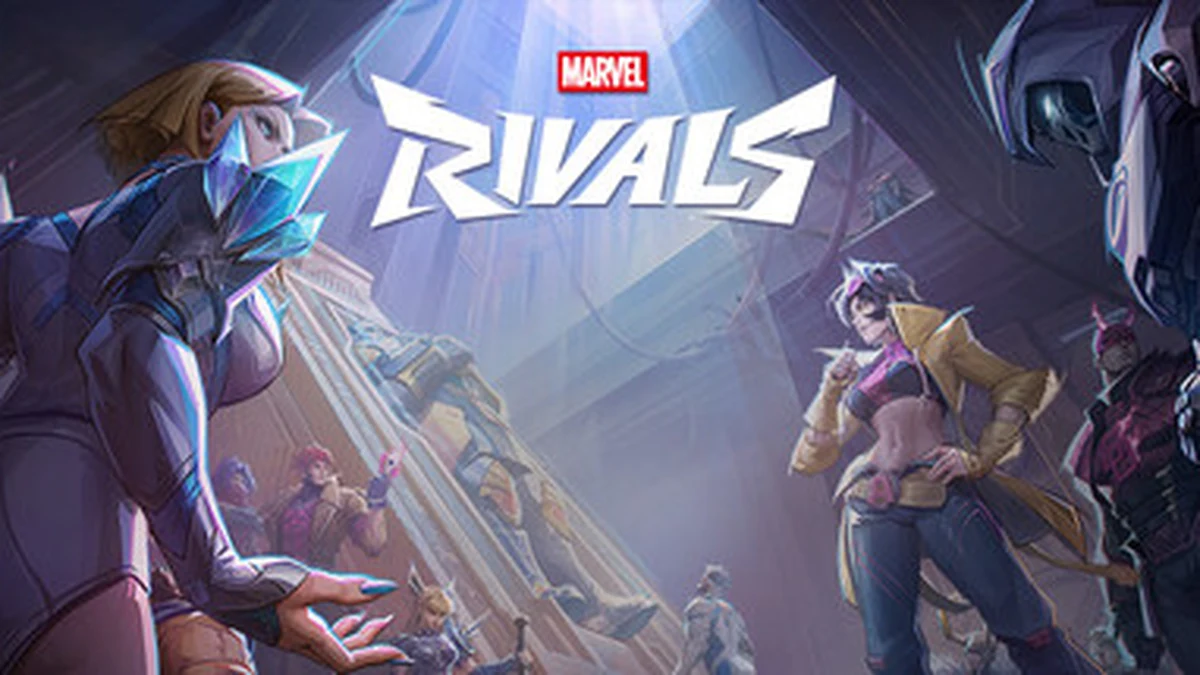
Marvel Rivals is a free-to-play, third-person team-based hero shooter developed by NetEase Games in close collaboration with Marvel Games. Two teams of six players pick from a growing roster of Marvel heroes and villains and fight over objectives — pushing a payload, capturing zones, or fighting through a hybrid escort-and-control map — in matches that typically run 10 to 15 minutes.
If that sounds like Overwatch, that’s not a coincidence critics have been shy about pointing out. PC Gamer and other outlets have repeatedly framed Marvel Rivals as a direct rival to Blizzard’s shooter, and the genre DNA — six-player teams, ultimate abilities, a role-locked composition, seasonal content drops — is unmistakably from the same family tree. What separates Marvel Rivals from its inspirations is twofold: the license and the mechanics.
On the license side, this isn’t a handful of licensed skins bolted onto generic archetypes. NetEase has genuine access to the full breadth of Marvel’s roster, and it shows — you’re not just playing “a tank,” you’re playing Hulk, Thor, Magneto, or Doctor Strange, each with kits built around their actual comic-book powers. Destructible environments let Hulk smash through walls Iron Man just built a barrier out of. Storm can whip up localized weather. The Sanctum Sanctorum, Tokyo 2099, Wakanda, and Asgard aren’t reskinned generic maps — they’re the actual Marvel Universe rendered at a scale few licensed games have attempted.
On the mechanics side, the standout feature is the Team-Up ability system (covered in full detail below), which rewards players for picking heroes that have canon relationships or thematic synergy — Rocket Raccoon riding on Groot’s shoulder, or the Fantastic Four combining powers — with genuine gameplay bonuses, not just cosmetic flourishes.
The game launched in December 2024 to a strong reception and has kept a large, active player base through 2025 and into 2026, helped by NetEase’s aggressive content cadence: a new hero (sometimes two) roughly every three weeks, new maps, new modes, and crossover events tied to Marvel storylines like the current Season 9 arc, “The Mystery of Thebes.”
Image suggestion 1: A wide screenshot of a six-vs-six team fight on a Marvel Rivals map like Tokyo 2099 or Wakanda, showing multiple hero abilities firing at once. Alt text: “Marvel Rivals 6v6 team fight showing hero abilities on a destructible map.”
Platforms and Crossplay
Marvel Rivals is available on:
- PC — via Steam, the Epic Games Store, and NetEase’s own Loading Bay launcher
- PlayStation 5
- PlayStation 4 (added later, running at reduced resolution/frame rate but with full content parity)
- Xbox Series X|S
There’s no Xbox One or Nintendo Switch version — the game’s visual fidelity and destructible environments are built around current-generation hardware (plus the PS4, which gets a scaled-down but complete experience).
Crossplay is turned on by default across PC, PlayStation, and Xbox for casual modes, Quick Match, and custom lobbies, so you can squad up with friends regardless of platform. Console players can disable crossplay in their platform settings if they’d rather stick to a single-platform lobby.
Competitive (Ranked) play is where things get more nuanced: NetEase separates the ranked queue by input method rather than by platform. Mouse-and-keyboard players — whether on PC or using M&KB on console — are pooled together, while controller players across PC, PlayStation, and Xbox share their own ranked pool. This keeps aim-assist and precision-input balance fair without fragmenting the player base by hardware.
Cross-progression has also rolled out, letting you link your PC, PlayStation, and Xbox accounts so cosmetics, currency, and unlocks carry over to a linked primary account — handy if you’ve bought a Battle Pass on console but mostly play on PC. Ranked standing itself, however, stays tied to your input pool rather than following you across every platform.
Minimum and Recommended PC Specs
If you’re on PC, here’s what you’ll need:
| Requirement | Minimum | Recommended |
|---|---|---|
| OS | Windows 10 64-bit (1909+) | Windows 10 64-bit (1909+) |
| CPU | Intel Core i5-6600K / AMD Ryzen 5 1600X | Intel Core i5-10400 / AMD Ryzen 5 5600X |
| RAM | 16 GB | 16 GB |
| GPU | GTX 1060 / RX 580 / Arc A380 | RTX 2060 Super / RX 5700 XT / Arc A750 |
| Storage | 70 GB (SSD recommended) | 70 GB (SSD recommended) |
| DirectX | Version 12 | Version 12 |
The bar for entry is low by 2026 standards — this is a game most mid-range gaming PCs from the last five years can run comfortably, though you’ll want an SSD given the 70 GB footprint and load times.
Roles Explained: Vanguard, Duelist, Strategist
Every hero in Marvel Rivals belongs to one of three roles (plus one flexible outlier). Understanding what each role is supposed to do is the single most important thing for a new player to internalize before queuing into a match.
| Role | Job on the Team | Health Pool | Example Heroes |
|---|---|---|---|
| Vanguard | Frontline tank — absorbs damage, creates space, initiates fights, protects Strategists | High | Hulk, Magneto, Venom, Captain America, Doctor Strange |
| Duelist | Primary damage — eliminates enemies, applies pressure, wins duels and picks | Low to medium | Spider-Man, Hela, Iron Man, Black Panther, Hawkeye |
| Strategist | Support — healing, buffs, crowd control, battlefield utility | Low to medium | Luna Snow, Mantis, Rocket Raccoon, Cloak & Dagger |
| Multi-Role | Flexible kit that can shift between roles mid-match | Varies | Deadpool |
Vanguards are your shield. They soak up damage, hold chokepoints, and use crowd control to peel enemies off your healers. A team with no Vanguard usually folds the instant a fight starts, because there’s nothing standing between the enemy Duelists and your squishier heroes.
Duelists are the largest role category by hero count and the most mechanically diverse — everything from hitscan snipers to melee assassins to area-denial specialists falls under this umbrella. Their job is simple in theory (kill things faster than the other team) and hard in practice, since they usually have the least room for error defensively.
Strategists keep everyone else alive. Healing output in Marvel Rivals is generally strong compared to some rival shooters, which makes coordinated Strategist play — landing heals under pressure, timing defensive ultimates, using crowd control to save a teammate — one of the highest-impact and most underrated skills in the game.
The standard competitive and Quick Match composition is a flexible 6-player team without a strict role lock, though most functional teams naturally converge on something like 2 Vanguards, 2 Duelists, and 2 Strategists — a comp NetEase’s own matchmaking and team-composition prompts nudge you toward if your team is wildly unbalanced.
Current Hero Roster
As of Season 9.5 (live from August 7, 2026), the Marvel Rivals roster sits at roughly 53 playable heroes, split approximately as follows:
- Vanguard: around 14 heroes
- Duelist: around 26 heroes
- Strategist: around 12 heroes
- Multi-Role: 1 hero (Deadpool)
That’s a substantial jump from the 33 heroes available at launch in December 2024 — NetEase has essentially added a new hero every three to six weeks without exception, which is one of the fastest content cadences of any hero shooter currently live.
Recent additions leading into August 2026 give a good sense of the pace and variety NetEase is aiming for:
- Deadpool (Season 6, “Night at the Museum”) — the game’s first true multi-role hero, wielding dual guns and katanas with the ability to shift roles mid-match
- White Fox (Season 7) — a Strategist added as the season kicked off
- Cyclops (Season 8.5) — an X-Men Duelist with precision beam attacks
- Jubilee (Season 9, “The Mystery of Thebes”) — a Strategist joining the X-Men contingent
- The Hood (Season 9.5) — a Vanguard villain arriving alongside the “Creed of Akkaba” event
The roster spans virtually every major Marvel sub-franchise: Avengers mainstays (Iron Man, Captain America, Thor, Black Widow, Hawkeye), X-Men (Magneto, Storm, Wolverine, Psylocke, Cyclops, Jubilee), Guardians of the Galaxy (Star-Lord, Rocket Raccoon, Groot), Spider-Man’s corner of the universe (Spider-Man, Venom, Peni Parker), street-level heroes (Moon Knight, Punisher, Daredevil), and cosmic and mystical characters (Doctor Strange, Scarlet Witch, Loki, Hela). Villains are playable alongside heroes, which is part of what makes the roster feel distinct from most comic-book games — you can queue up as Magneto or Ultron just as easily as Captain America.
Because the roster changes so frequently, we keep a dedicated, constantly-refreshed breakdown of every hero, their kit, and how they play at Marvel Rivals Best Heroes for Beginners — that’s the better destination if you want blow-by-blow ability details rather than a season snapshot.
Image suggestion 2: A hero-select screen screenshot showing the roster filtered by role (Vanguard/Duelist/Strategist tabs visible). Alt text: “Marvel Rivals hero select screen showing Vanguard, Duelist, and Strategist role tabs.”
Team-Up Abilities Explained
This is the mechanic that makes Marvel Rivals feel genuinely different from every other hero shooter on the market, and it’s worth understanding in detail even if you never plan to touch ranked play.
A Team-Up ability is a bonus effect that activates based on canonical or thematic relationships between specific heroes — Rocket Raccoon and Groot, the core Fantastic Four, Cloak & Dagger’s shared abilities, Loki disguising himself as an ally. Historically, these required you to actually have the paired hero on your team to unlock the effect at all. As of the Season 9 overhaul, that’s changed significantly.
Here’s how the current system works:
- Every hero now has two Team-Up abilities instead of one, roughly doubling the strategic options available at hero select.
- You can equip and use a Team-Up ability regardless of whether your specific partner hero is on your team. The ability has a functional base effect on its own.
- If the paired hero is on your team, the ability gets an enhanced effect — stronger numbers, an added utility component, or a modified behavior that rewards the synergy pick.
- Only one Team-Up ability can be equipped at a time, but you can freely swap between your two options from the spawn room between rounds or after dying, letting you adapt to how the draft is shaping up.
Practically, this means Team-Ups went from a “build your comp around this specific combo or don’t bother” system to a flexible layer that rewards synergy without punishing you for not drafting perfectly around it. A Doctor Strange player, for example, can still get value from a Team-Up ability tied to a Sorcerer Supreme combo even if that specific partner isn’t picked — but locking in the partner turns a solid ability into a genuinely powerful one.
This is also where a lot of the game’s highest-skill-ceiling plays live. Coordinated Team-Up combos — timing an enhanced ultimate, chaining a crowd-control Team-Up into a burst window — are frequently the difference between a good team and a top-500 team, and it’s a major reason Marvel Rivals Ignite matches look so different from a casual Quick Match once you know what to watch for.
Because this system is deep enough to deserve its own deep dive, we’ve written a full breakdown of every current Team-Up pairing, base versus enhanced effects, and which combos are worth building a draft around at Marvel Rivals Team-Up Abilities Guide.
Current Map Pool
Marvel Rivals’ map pool has grown past 17 maps as of mid-2026, spread across the game’s core objective types plus limited-time Arcade and event maps. The three standard competitive map types are:
- Convergence — a hybrid push/point map type where teams fight over an escalating series of objectives
- Convoy — an escort-style mode where the attacking team pushes a payload to its destination while the defenders try to stall it out
- Domination — a control-point mode where teams fight to hold and defend a central zone
Notable maps in the current rotation include Tokyo 2099’s Shin-Shibuya district (a neon-lit Convergence map), locations across Wakanda, Asgard, the Sanctum Sanctorum, and Intergalactic Empire of Wakanda-themed environments, plus newer additions like Alchemax Headquarters, which debuted in Season 8 built specifically around the large-scale 18v18 Doom Match arcade mode rather than standard 6v6 play.
Not every map is available in every mode — some newer or event-specific maps are Arcade or limited-time-event exclusives and rotate out of Quick Match and Competitive pools, so the exact map list you see in ranked queue will be smaller than the full 17+ count. NetEase typically adds one new map per season and periodically retires or rotates older ones out of competitive rotation for balance or freshness reasons, so treat any specific map list as a snapshot rather than a permanent roster.
Ranked System Explained
Marvel Rivals’ Competitive mode uses a nine-tier ranked ladder, ordered from lowest to highest:
| Rank | Tiers | Notes |
|---|---|---|
| Bronze | III–I | Entry tier, roughly a quarter of the ranked population |
| Silver | III–I | |
| Gold | III–I | |
| Platinum | III–I | |
| Diamond | III–I | |
| Grandmaster | III–I | |
| Celestial | III–I | Top-tier bracket below the leaderboard cutoff |
| Eternity | No sub-tiers | Points-based; inactivity can cause rank point decay |
| One Above All | No sub-tiers | Reserved for the top 500 ranked players |
That’s 23 total rank steps from Bronze III up to One Above All. Once you clear Celestial, the sub-tier system disappears entirely and your position is determined by a raw points score — the top 500 players on a platform’s leaderboard hold the One Above All title, while everyone else at that skill level sits in Celestial.
A few structural details worth knowing before you queue:
- Placement and promotion works on a standard rank-points system — win to gain points, lose to drop them, with bigger swings for lopsided results.
- Party size restrictions scale with rank. Bronze through Gold allow flexible group sizes (duos, trios, four-stacks, or full six-stacks), but five-player parties are banned at every rank to prevent unbalanced matchmaking against a single solo player. At Eternity and One Above All, restrictions tighten further — you’re limited to solo queue or duo queue only, which keeps the highest tier of competitive play honest and prevents coordinated six-stacks from farming rating.
- Rank distribution is heavily weighted toward the lower-middle tiers, as you’d expect from any large population: roughly a quarter of ranked players sit in Bronze, with the population thinning out steadily through Silver, Gold, Platinum, Diamond, and Grandmaster, before narrowing sharply at Celestial and above, where Eternity and One Above All combined make up a small single-digit percentage of the ranked base.
If your goal is climbing rather than just understanding the ladder, we’ve built a dedicated strategy guide covering rank-up tactics, when to duo versus solo queue, and common mistakes that stall players out in Gold and Platinum at Marvel Rivals Rank System Explained.
Marvel Rivals for Beginners
If you’re installing Marvel Rivals for the first time in 2026, walking into a 53-hero roster and a nine-tier ranked ladder can feel like being handed a phone book and told to memorize it. The good news is you don’t need to.
The fastest on-ramp looks roughly like this: spend your first several hours in Quick Match, not Competitive — there’s no rank pressure, and it’s the best environment to get a feel for how fights actually flow in a 6v6 hero shooter versus a traditional FPS. Pick one hero per role you genuinely enjoy rather than trying to learn all 53 at once; role flexibility matters far more at higher skill levels than hero mastery does at lower ones. Pay attention to your ultimate charge and cooldown timers, since coordinating ultimates is one of the biggest swing factors in any given fight. And don’t underestimate Strategist play — new players gravitate toward Duelists because dealing damage feels satisfying, but a competent Strategist is often the single highest-impact role you can play while you’re still learning game sense.
We go much deeper on all of this — practice tools, training range tips, common beginner mistakes, and a suggested first-20-hours plan — in our full Marvel Rivals Beginners Guide, which is worth bookmarking alongside this page if you’re just getting started.
Best Heroes for Beginners by Role
You don’t need to know all 53 heroes to start winning games — you need one or two reliable picks per role that forgive mistakes while you’re learning positioning, cooldown management, and team fight timing.
As a general rule for new players:
- For Vanguard, look for heroes with straightforward, high-health kits and simple shielding or blocking mechanics rather than heroes that rely on precise mobility combos.
- For Duelist, prioritize heroes with forgiving hitboxes or area-effect damage over pure hitscan snipers, which punish aim mistakes far more harshly.
- For Strategist, start with heroes whose healing is a targeted, reliable beam or projectile rather than heroes whose kit revolves around complex positioning or timing windows.
Exactly which heroes fit those criteria shifts a little every season as balance patches land, so rather than list specific picks here that might be outdated by the time you read this, we maintain a continuously updated breakdown — with full reasoning, not just a name-drop — at Marvel Rivals Best Heroes for Beginners.
Battle Pass and Progression
Marvel Rivals is completely free to play — there’s no purchase required to access the full hero roster, all maps, or Competitive mode. Every hero is unlocked for every player from the moment they release, which is a meaningful departure from older hero-shooter monetization models that gated characters behind grind or payment.
Monetization instead runs through cosmetics and a seasonal Battle Pass, structured around two currencies:
- Lattice is the premium currency, purchasable with real money (or earned in small amounts through gameplay), used to buy the Battle Pass itself, cosmetic bundles, and to directly exchange for Chrono Tokens if you’re in a hurry.
- Chrono Tokens are what you actually spend to unlock individual Battle Pass rewards — cosmetics, currency, and other items — earned primarily by completing Daily Missions, Challenges, and Event Missions rather than by paying directly.
Each season’s Battle Pass comes in a couple of tiers. The standard Luxury Battle Pass runs around 990 Lattice (roughly $9.99), while an upgraded tier — historically around 2,100 Lattice (roughly $19.99) — grants an immediate lump sum of Chrono Tokens (around 2,800) plus a season-long boost (around 20%) to how many Chrono Tokens you earn from missions. Most individual reward unlocks cost around 200 Chrono Tokens, rising to roughly 400 for full hero costumes, and you need to accumulate a cumulative total (around 1,200 Chrono Tokens) to unlock each successive page of rewards.
There’s also a free track that anyone can progress through missions alone, though it offers a smaller subset of the season’s total rewards compared to the paid tier. Because seasons run roughly six to seven weeks with mid-season updates, an actively-playing free user can realistically clear a meaningful chunk of free-tier content without spending anything, while the paid pass is aimed at players who want the season’s skins, sprays, and cosmetic bundles on top of the core game.
Hardware and Setup Tips
Marvel Rivals isn’t a game that demands enthusiast-grade hardware — the minimum spec list above will run on plenty of five-year-old PCs — but a few setup choices genuinely affect how well you play, especially once you start taking Competitive mode seriously.
Frame rate matters more than resolution. Because this is a fast-paced hero shooter with mobility-heavy Duelists and split-second Team-Up windows, prioritize a stable high frame rate over maxed-out graphics settings if you’re forced to choose. Dropping shadow quality and effects density is usually a better trade than dropping resolution scale.
Input choice affects your ranked pool. Since ranked matchmaking splits by input method (mouse-and-keyboard versus controller) rather than by platform, your choice of input device is a genuine competitive decision, not just a comfort preference — it determines who you’re matched against.
Mouse fit matters if you’re playing hitscan Duelists on PC. Heroes like Hawkeye, Black Widow, or Punisher reward precise, sustained tracking, and playing that style comfortably for long ranked sessions comes down to a mouse that actually fits your grip and sensitivity range — not just whatever came bundled with your PC. If you’re serious about climbing on M&KB and haven’t given real thought to your mouse setup, our guide on how to choose a gaming mouse that actually fits your playstyle walks through grip styles, sensor considerations, and weight preferences specifically for shooters like this one.
Beyond that, the practical basics apply: a wired connection over Wi-Fi if you can manage it, keeping your GPU drivers current given how frequently NetEase patches the game, and clearing that 70 GB of SSD space before a big seasonal update lands, since patch downloads can briefly spike well above the base install size.
Who Marvel Rivals Is Best For
Marvel Rivals isn’t the right fit for every player, and it’s worth being honest about who gets the most out of it before you sink hours into learning a 53-hero roster.
Pros:
- Completely free to play with every hero unlocked from day one — no pay-to-win character gating
- Team-Up ability system adds real strategic depth beyond a standard hero-shooter formula
- Extremely fast content cadence, with new heroes, maps, and events arriving roughly every three to six weeks
- Genuine Marvel license depth — destructible environments, faithful character kits, and iconic locations rather than surface-level branding
- Crossplay by default across PC, PlayStation, and Xbox, so friend groups on different platforms can play together
- A growing, well-funded esports scene (Marvel Rivals Ignite) for players who enjoy watching or eventually competing at a high level
Cons:
- The roster’s size and rapid growth create a steep learning curve for new players trying to understand matchups
- Balance shifts frequently given the pace of new hero releases, which can be frustrating if you get attached to one main
- Ranked’s input-based matchmaking split means controller and M&KB players never directly compete, which some players see as a plus and others as an odd design choice
- Cosmetic monetization, while optional, follows a fairly aggressive live-service Battle Pass structure typical of the genre
Best for: players who enjoyed Overwatch’s team-fight rhythm but want deeper build-around synergy mechanics, Marvel fans who want their favorite characters to actually feel mechanically distinct rather than reskinned, and anyone looking for a genuinely free (not free-to-start) competitive shooter with a content cadence that rewards checking back in every few weeks.
Less ideal for: players who dislike frequent balance patches and evolving metas, or anyone who wants a smaller, easier-to-fully-learn hero pool.
FAQ
Is Marvel Rivals free to play? Yes. Marvel Rivals is completely free, and every hero is unlocked for all players at release — there’s no currency or grind required to access any character. Monetization is limited to cosmetics and the seasonal Battle Pass.
How many heroes are in Marvel Rivals right now? As of Season 9.5 in August 2026, the roster sits at roughly 53 heroes, split across Vanguard, Duelist, Strategist, and one Multi-Role hero (Deadpool). NetEase has added a new hero roughly every three to six weeks since launch, so this number continues to climb each season.
Is Marvel Rivals crossplay? Yes, crossplay is enabled by default across PC, PlayStation, and Xbox for casual and custom modes. In Competitive mode, matchmaking splits by input method (mouse-and-keyboard versus controller) rather than by platform, so you’ll only face players using the same input type in ranked.
What are Team-Up abilities in Marvel Rivals? Team-Up abilities are bonus effects tied to canonical or thematic hero relationships. As of the Season 9 overhaul, every hero has two Team-Up abilities that work on their own, but they get an enhanced effect if the paired partner hero is also on your team. Only one can be equipped at a time, though you can switch between spawns.
What’s the highest rank in Marvel Rivals? One Above All is the top rank, reserved for the top 500 players on each platform’s leaderboard. Below that is Celestial, and below Celestial the ladder runs through Grandmaster, Diamond, Platinum, Gold, Silver, and Bronze, each with three sub-tiers.
What platforms is Marvel Rivals on? PC (Steam, Epic Games Store, NetEase Loading Bay), PlayStation 5, PlayStation 4, and Xbox Series X|S. There is no Xbox One or Nintendo Switch version.
Does Marvel Rivals have esports? Yes. Marvel Rivals Ignite is the game’s official competitive circuit, run by NetEase and Marvel Games, with a prize pool exceeding $3 million across the 2026 season and live events including a Mid-Season Finals held in Los Angeles.
What’s the difference between Vanguard, Duelist, and Strategist? Vanguards are frontline tanks that absorb damage and create space; Duelists are damage dealers focused on eliminations; Strategists are support heroes providing healing and utility. A balanced team typically runs a mix of all three rather than stacking one role.
Conclusion
Marvel Rivals in August 2026 is a genuinely different game from the one that launched in December 2024 — bigger roster, deeper Team-Up system, a mature ranked ladder, and a real esports circuit backing it all up. That growth is exactly why a guide like this needs to exist: the game rewards players who understand its systems, not just its shooting mechanics, and those systems have only gotten more layered with every season.
If you’re just starting out, don’t try to absorb all of it at once. Get comfortable in Quick Match, pick a couple of heroes per role you enjoy, and work through our companion guides as you go — the Marvel Rivals Beginners Guide for your first hours in the game, Best Heroes for Beginners for picks that forgive mistakes, the Team-Up Abilities Guide once you’re ready to build real synergy into your drafts, and the Rank System Explained guide when you’re ready to climb for real. Bookmark this page as your home base — we’ll keep it updated as new seasons, heroes, and systems land.