Table of Contents
- What Is Honor of Kings?
- The Numbers: Revenue, Players, and Global Scale
- Global Launch History: From China to the World
- How the Game Is Played: Map, Objectives, and Match Flow
- Hero Roles Explained
- The Hero Roster
- The Ranked System
- Esports: King Pro League and the Honor of Kings World Cup
- Platforms and How to Download
- Critical Reception
- Tips for New Players
- Who Is Honor of Kings For?
- FAQ
- Conclusion
- External Authority Sources
Ask which video game makes the most money on the planet and most people will guess a console blockbuster or a PC juggernaut. The real answer is a mobile game most Western players have barely heard of: Honor of Kings. Developed by TiMi Studio Group and published by Tencent, this 5v5 multiplayer online battle arena has quietly generated more revenue than any other game in history, powered almost entirely by a Chinese player base that has treated it as a national pastime since 2015. For years it stayed a domestic phenomenon, largely invisible outside China because Tencent kept it there while pushing other titles internationally. That changed with a staged global rollout that brought the game to Brazil, the Middle East, South Asia, and eventually North America and Europe under the international “Honor of Kings” brand. This guide breaks down everything worth knowing: how the game actually plays, its hero roles and roster, the ranked ladder, the King Pro League esports circuit, where to download it, what critics think, and practical advice for anyone starting out. Whether you are a League of Legends veteran curious about the mobile equivalent or a newcomer wondering why this game keeps topping revenue charts, this is the complete picture.
What Is Honor of Kings
Honor of Kings, known in Chinese as Wangzhe Rongyao, is a free-to-play 5v5 multiplayer online battle arena built for touchscreen devices. It was developed by TiMi Studio Group, the Tencent-owned studio also responsible for titles like Call of Duty: Mobile, and published domestically by Tencent Games. The core structure will feel immediately familiar to anyone who has played League of Legends, Dota 2, or Mobile Legends: Bang Bang: two teams of five players each control a single hero, farm gold and experience, level up abilities, and fight to destroy the opposing team’s base while defending their own.
What separates Honor of Kings from its PC ancestors is that it was designed from the ground up for touchscreens rather than adapted afterward. Matches are shorter, typically running 12 to 16 minutes rather than the 30-to-45-minute grind common in Dota 2 or League of Legends. Controls are streamlined into a virtual joystick and skill buttons positioned for thumb access. Itemization is simplified compared to PC MOBAs, and gold income is tuned to be more aggressive, which keeps games moving and reduces the odds of a stalemate.
The game launched in China in November 2015 and grew into a cultural fixture, with hundreds of thousands of Chinese celebrities, brands, and even government tourism boards partnering with it over the years. Its hero roster draws heavily on Chinese history, mythology, and folklore, alongside original characters and licensed crossovers, which gives it a distinct visual and narrative identity compared to Western MOBAs built around original fantasy universes.
The Numbers: Revenue, Players, and Global Scale
The scale of Honor of Kings is difficult to overstate. Industry analytics firms have repeatedly ranked it as the highest-grossing mobile game of all time, and it has held the title of the world’s top-grossing game for multiple consecutive years, with market researchers citing a combined total of roughly seven years at the top across its history. Annual revenue figures vary depending on the analytics firm and methodology used, with widely cited estimates for the most recent full year landing in the range of 1.7 billion dollars, the vast majority of that still generated in China, though some broader estimates that include additional revenue streams have placed total annual figures considerably higher.
Player numbers are just as staggering. During celebrations marking the game’s tenth anniversary, publisher Level Infinite disclosed that combined global monthly active users had surpassed 260 million, a figure that would make it the most-played video game in the world by that measure. On the Chinese server alone, daily active users have topped 139 million, a new record that eclipsed the previous peak of around 100 million daily users set the prior year. For context, that single-server daily figure is larger than the entire population of most countries.
This financial dominance is built almost entirely on a free-to-play, cosmetics-driven monetization model. Heroes can typically be unlocked through gameplay currency earned by playing matches, while the primary revenue driver is skins: alternate visual appearances for heroes that range from simple recolors to elaborate, animated, voice-acted transformations tied to seasonal events, esports sponsorships, and collaborations with other entertainment franchises. Limited-time and premium skins are where the overwhelming majority of the game’s revenue originates, a model that has proven durable enough to sustain a decade of continuous growth.
Global Launch History: From China to the World
Honor of Kings’ journey from a China-only sensation to a genuinely global title took the better part of a decade and unfolded in deliberate stages.
2015: China launch. The game debuted in China in November 2015 under its original name and quickly became the country’s dominant mobile game, a position it has never really relinquished.
2017: Arena of Valor. Rather than exporting the same game worldwide, Tencent initially released an adapted international version called Arena of Valor, which launched in various markets including North America, Europe, and parts of Southeast Asia. Arena of Valor shared core mechanics and some heroes with Honor of Kings but was treated as a distinct product with its own balance changes and roster.
2022: Global ambitions announced. In June 2022, publisher Level Infinite announced plans to bring the actual Honor of Kings brand and game to international markets, with beta testing slated to begin later that year. The initial timeline slipped.
March 2023: Brazil. Honor of Kings launched its first full international release in Brazil on March 8, 2023, making it the first market outside China to receive the genuine global version of the game rather than the Arena of Valor adaptation.
February 2024: MENA, South Asia, CIS, and Turkey. The rollout expanded to the Middle East, North Africa, South Asia, the CIS region, and Turkey on February 22, 2024, growing the international footprint significantly ahead of the full worldwide launch.
June 20, 2024: Global launch. Honor of Kings officially launched worldwide on June 20, 2024, bringing the game to North America, Europe, Japan, Singapore, and remaining regions that had not yet received it. During this rollout period, the game reportedly reached the number one download spot on app store charts in several markets, including Indonesia, the Philippines, Malaysia, and Singapore, underscoring how strong its reception was across Southeast Asia in particular.
That staged approach, letting the game prove itself in secondary markets before a full Western launch, is a big part of why Honor of Kings arrived internationally as a polished, mature product rather than an unfinished beta, and it explains why a game with a global audience of hundreds of millions can still feel like a relatively recent discovery to many Western gamers.
How the Game Is Played: Map, Objectives, and Match Flow
Honor of Kings uses the same fundamental structure as most MOBAs: two teams of five, one map, three lanes, and a race to destroy the enemy’s base. The map is divided into three lanes connecting each team’s base, with a jungle area between them containing neutral monster camps that grant gold, experience, or buffs when defeated.
In Honor of Kings, the lanes carry their own terminology rather than the generic top, mid, and bottom labels used in Western MOBAs. The top lane is referred to as the “clash” lane, typically home to durable fighters who trade damage in extended duels, while the bottom lane is the “farm” lane, generally where the marksman and support pair up to accumulate gold safely. The middle lane and jungle keep more familiar naming and roles: mid lane hosts burst-damage mages or assassins, while the jungle is patrolled by a mobile hero who clears neutral camps and looks for opportunities to ambush enemies in other lanes.
Each lane is defended by a series of towers that must be destroyed before a team can push deeper toward the enemy base. Towers deal significant damage and are the primary defensive structure protecting each team’s territory; toppling enough of them opens a path to the enemy’s core structures, and destroying the final structure ends the match. Along the way, teams contest jungle objectives, including smaller camps that a single hero can solo and larger, more dangerous camps that typically require the whole team to take down safely, both of which grant powerful buffs that can swing a fight.
Because matches are built for shorter mobile play sessions, the pacing is markedly faster than PC MOBAs. Gold income ramps up quickly, item builds are more streamlined with fewer components to manage mid-fight, and the simplified interface means players spend less time navigating menus and more time in actual combat. A typical ranked match runs 12 to 16 minutes, compact enough to fit into a commute or a lunch break, which is a core part of the game’s appeal and a deliberate design decision distinguishing it from its 30-to-45-minute PC counterparts.
Hero Roles Explained
Every hero in Honor of Kings belongs to one of six core roles, each suited to a particular job on the map and in team fights. Understanding these roles is the fastest way to make sense of the roster and to figure out what kind of player you want to be.
Tank. Tanks are the team’s frontline. They carry high health pools, strong defensive stats, and crowd control abilities designed to disrupt enemies and protect squishier teammates. A good tank initiates fights, soaks up damage, and creates the space that lets the rest of the team operate.
Fighter (Warrior). Fighters are durable, damage-capable heroes who thrive in extended skirmishes, particularly in the clash lane. They blend some of the survivability of a tank with meaningfully more offensive output, making them flexible picks who can both initiate and finish fights.
Assassin. Assassins specialize in eliminating high-value targets, usually the enemy’s mage or marksman, in a matter of seconds. They typically operate from the jungle, rely on mobility tools like dashes or blinks to close distance quickly, and deal heavy burst damage but tend to be fragile if caught out of position.
Mage. Mages are ranged spellcasters who deal damage from a distance, often with area-of-effect abilities that punish grouped-up enemies. They generally hold down the mid lane and provide much of a team’s crowd control and burst damage in coordinated fights.
Marksman. Marksmen are the primary sustained damage dealers, relying on basic attacks that scale heavily with items purchased over the course of a match. They are usually the frailest heroes early on but become the most dangerous damage source in the late game, and they are essential for destroying towers efficiently.
Support. Supports provide healing, shields, crowd control, and vision for the team, typically pairing with the marksman in the farm lane early in the match before roaming to assist other lanes. They rarely rack up kills themselves but are frequently the deciding factor in whether a team fight is won or lost.
The Hero Roster
Honor of Kings launched with a modest hero count in 2015 and has expanded steadily ever since, now featuring a roster well into the hundreds of playable heroes, one of the largest in the MOBA genre. New heroes are released on a regular cadence, often tied to major content updates, esports seasons, or collaborations with other entertainment properties.
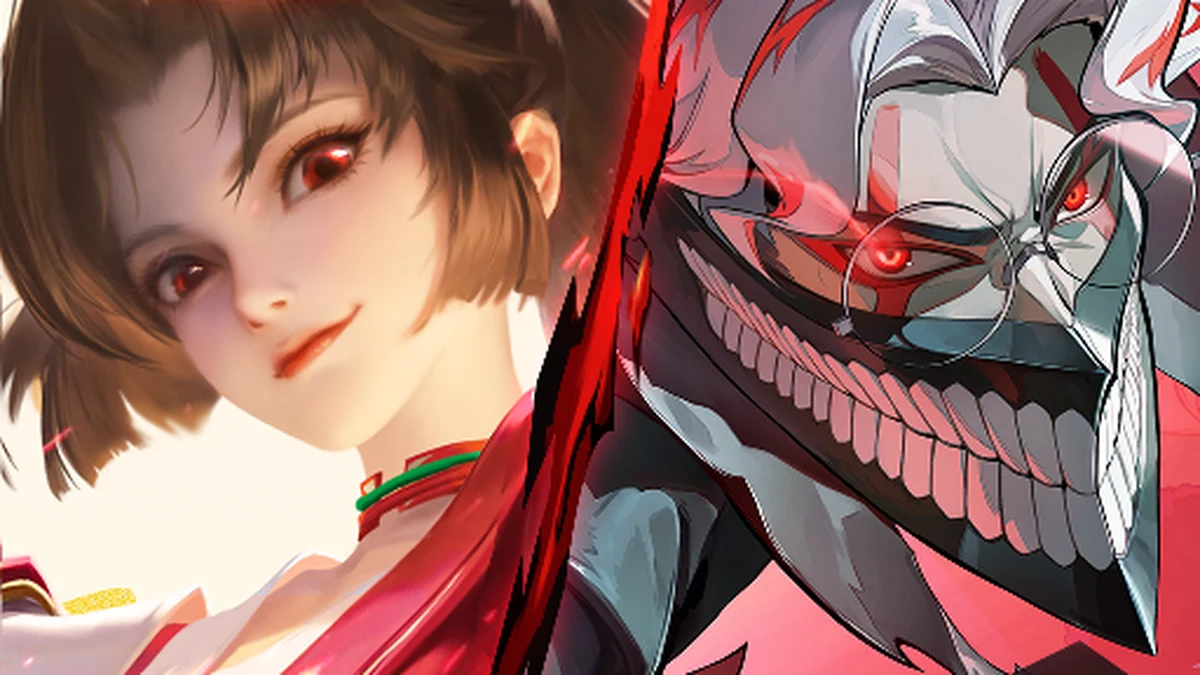
A defining feature of the roster is its heavy use of Chinese history, mythology, and classical literature as source material. Historical figures, legendary generals, and characters drawn from classics like Journey to the West appear alongside original fantasy characters, giving the game a visual and thematic identity distinct from the Nordic, Greek, or generic high-fantasy aesthetics common in Western MOBAs. This has also made the game a vehicle for cultural promotion in China, with several heroes and skins created in partnership with museums, tourism boards, and heritage sites.
New and returning players typically start by unlocking a handful of heroes through the tutorial and beginner rewards, then gradually expand their pool using in-game currency earned from matches, weekly challenges, and events. Because the roster is so large, most competitive players specialize in a handful of heroes across one or two roles rather than attempting to master the entire pool, a strategy that mirrors how high-level players approach League of Legends or Mobile Legends: Bang Bang.
The Ranked System
Honor of Kings uses a tiered ranked ladder that governs competitive matchmaking, similar in structure to the ranked systems found in League of Legends and Mobile Legends: Bang Bang. There are seven core tiers: Bronze, Silver, Gold, Platinum, Diamond, Master, and Grandmaster.
The lower tiers are built for players still learning fundamentals. Bronze and Silver, each split into three sub-divisions, are where new players get comfortable with lane mechanics, itemization, and basic teamwork before facing tougher competition. Gold and Platinum, each split into four sub-divisions, is where matches start to demand a firmer grasp of strategy, positioning, and objective control. Diamond and Master, the most granular tiers with five sub-divisions each, are reserved for players who have moved past basic mechanics and are competing at a genuinely high level. Grandmaster sits at the top as a single tier for the strongest players in a given server or region.
Beyond Grandmaster, the game layers on additional star-based milestone labels, Mythic, Epic, and Legend, to distinguish among the very best players once they have already reached the highest formal rank. Progression through the ladder is driven by a combination of match outcomes, individual performance scoring within each match, and an in-game currency system often referred to as Bravery Points, which rewards consistent play and can offset the impact of an occasional loss.
As with most competitive MOBAs, climbing the Honor of Kings ladder rewards players who specialize in a small hero pool, understand role responsibilities, and communicate with teammates, rather than players who simply log the most hours.
Esports: King Pro League and the Honor of Kings World Cup
Honor of Kings supports one of the largest competitive mobile esports ecosystems in the world, anchored by two major properties.
King Pro League (KPL). The King Pro League is the premier domestic Chinese league for Honor of Kings and is widely regarded as the most prestigious competition in the game’s competitive scene. It runs in a franchised, multi-season format similar to other major Chinese esports leagues, featuring rosters of professional teams competing across regular seasons for substantial prize pools funded largely through sponsorship and Tencent’s own esports investment. KPL matches regularly draw enormous viewership figures on Chinese streaming platforms, reflecting the game’s outsized domestic popularity.
Honor of Kings World Cup (KWC) / World Champion Cup. On the international side, the Honor of Kings World Cup brings together top teams from China and the growing list of international regions where the game is now live, functioning as the game’s answer to a world championship. The tournament has grown substantially alongside the game’s global expansion, with recent editions carrying multimillion-dollar prize pools and a growing footprint at large multi-game esports events, including an appearance within the Esports World Cup program, where the Honor of Kings tournament has featured prize pools reported in the multiple millions of dollars with dozens of competing teams.
Beyond these two flagship competitions, regional leagues and qualifiers have sprung up across the game’s newer markets, including tournaments across the Middle East, North Africa, and Southeast Asia, feeding into international events and giving the international scene its own path toward major competitions rather than relying solely on Chinese teams. As the game’s international player base matures, expect this competitive infrastructure to keep expanding, mirroring the trajectory that League of Legends and Mobile Legends: Bang Bang both followed in their own regions.
Platforms and How to Download
Honor of Kings is available on iOS and Android, downloadable for free through the Apple App Store and Google Play, and it is also playable on HarmonyOS devices in markets where that operating system has adoption. The global version is published outside China by Level Infinite, Tencent’s international publishing label, with regional servers and dedicated community management teams for each major market rather than a single unified worldwide server.
Because the game is entirely free to play, there is no purchase required to download or start playing. Progression, including unlocking most heroes, can be achieved through gameplay without spending money, while the store offers optional cosmetic purchases and convenience items. Players in regions where the global version has launched, including North America, Europe, Latin America, Southeast Asia, South Asia, the Middle East, and North Africa, can find the game listed directly on their local app store. Players outside the game’s officially supported regions have at times used emulators or region-switching workarounds to access the game, though official support is limited to launched markets.
It is also worth distinguishing the mobile MOBA covered in this guide from Honor of Kings: World, a separate, more recently announced project from the same publisher aimed at cross-platform play across PC, mobile, and cloud gaming, which is a related but distinct title still in earlier stages of rollout.
Critical Reception
Reviewers covering the global launch have generally described Honor of Kings as a polished, accessible, and highly competent mobile MOBA rather than a groundbreaking reinvention of the genre. Coverage has repeatedly praised its approachability for newcomers, noting that new players are not immediately overwhelmed thanks to guided tutorials, a forgiving early ranked experience, and controls that are well suited to touchscreens. The moment-to-moment gameplay has been called addictive and well balanced, with matches that stay engaging across their relatively short runtime.
Criticism has tended to focus on two areas. First, several reviewers noted that Honor of Kings does not significantly differentiate itself from established mobile MOBA competitors, particularly Mobile Legends: Bang Bang, which had already built a large audience in many of the same Southeast Asian and Latin American markets before Honor of Kings arrived. Second, reviewers have flagged the density of monetization systems and menus as a friction point, with some describing the interface and store structure as cluttered relative to competitors. On aggregator sites, critic and user reception has landed in the solid-but-unspectacular range typical of long-running live-service games, reflecting a title that executes its formula extremely well without reinventing it.
Taken together, the critical consensus is that Honor of Kings earns its massive audience through genuine quality and refinement rather than hype alone, even if it arrived in most Western markets facing an uphill battle against incumbents that had already captured mobile MOBA fans.
Tips for New Players
Starting a MOBA with a hero roster in the hundreds and a decade of accumulated systems can be intimidating. A few practical steps make the ramp-up much smoother.
Play through the tutorial and early bot matches fully. The onboarding sequence teaches lane assignments, basic combat, and the recall and shop mechanics that underpin everything else. Rushing past it just means relearning the same lessons the hard way in a live match.
Pick one role first. Rather than trying every hero, commit to a single role, support and tank are typically the most forgiving for beginners, since they focus more on positioning and utility than mechanical precision, and get comfortable with two or three heroes in that role before branching out.
Learn the lane names and objectives. Because Honor of Kings uses its own terminology, clash lane, farm lane, understanding what is expected in each lane before jumping into ranked avoids early confusion with teammates who assume that knowledge.
Prioritize objectives over kills. As in most MOBAs, towers, jungle buffs, and coordinated pushes win games more reliably than individual kills. New players often overvalue eliminations and undervalue map pressure.
Use practice mode against bots to learn item builds. Because itemization is simplified compared to PC MOBAs, it is quick to learn correct builds for a given hero, and practicing combos against a stationary or predictable bot target builds muscle memory before taking it into a competitive match.
Don’t chase every skin. The monetization model is built around cosmetics, and while skins are entirely optional, it’s easy to get pulled into spending on limited-time releases. Most heroes are fully competitive using their base appearance, so treat skins as a discretionary purchase rather than a requirement.
Communicate, even briefly. The in-game ping and quick-chat systems are there for a reason. Coordinating jungle objectives and rotations with teammates, even without a microphone, meaningfully improves win rates at every rank.
Who Is Honor of Kings For?
Honor of Kings is aimed squarely at players who want the depth and team-based strategy of a traditional MOBA without the time commitment or hardware requirements of a PC setup. It suits commuters and players looking for matches that fit into short windows of free time, thanks to its 12-to-16-minute average match length. Fans of League of Legends, Dota 2, or Mobile Legends: Bang Bang will find the transition intuitive, since the core mechanics, roles, and objectives translate directly, with the main learning curve being touchscreen controls and the game’s own lane terminology.
It is also a strong fit for players interested in esports viewership, given the scale and production value of King Pro League and the Honor of Kings World Cup, and for anyone curious about a hero roster built around Chinese history and mythology rather than the more familiar Western fantasy tropes found elsewhere in the genre. Players who dislike free-to-play monetization structures or who strongly prefer PC and controller play over touchscreen input are likely to be better served by a traditional PC MOBA instead.
FAQ
Is Honor of Kings the same game as Arena of Valor? No, though the two are closely related. Arena of Valor was an earlier international adaptation of the same core game published by Tencent starting in 2017, with its own separate roster balancing and rollout. Honor of Kings’ global release, which began in Brazil in 2023 and expanded worldwide in June 2024, is the actual global version of the original Chinese game rather than a re-skinned adaptation.
Is Honor of Kings pay-to-win? The core competitive elements, heroes, abilities, and stats, can be unlocked and upgraded through gameplay without spending money, and most heroes are earnable using in-game currency. Paid content is concentrated in cosmetic skins, which change a hero’s appearance but do not grant a direct stat advantage in ranked play.
Why is Honor of Kings so much more popular in China than elsewhere? The game launched in China in 2015 and had nearly a decade to build a dominant domestic position before receiving a true global release in 2023 and 2024. Its hero roster, cultural partnerships, and marketing were also built specifically around Chinese audiences from the start, giving it a head start and cultural resonance that newer international markets are still catching up to.
How does Honor of Kings compare to Mobile Legends: Bang Bang? Both are 5v5 mobile MOBAs with comparable match lengths, role structures, and free-to-play monetization built around cosmetics. Mobile Legends: Bang Bang had already established a large player base in Southeast Asia and Latin America before Honor of Kings arrived in those regions, making the two direct competitors in several global markets, while Honor of Kings retains a substantially larger and more established base in China.
What esports events should I watch to see high-level Honor of Kings play? The King Pro League is the top domestic Chinese league and the most competitively prestigious circuit in the game. Internationally, the Honor of Kings World Cup brings together top teams from China and the game’s newer global regions, and recent editions have appeared at large multi-game events including the Esports World Cup.
Do I need a powerful phone to run Honor of Kings? The game is built to run on a wide range of mobile hardware, including mid-range devices, since accessibility across a large device base has always been central to its design. Higher-end devices will render effects and skins at higher visual fidelity, but competitive performance is achievable on modest hardware.
Conclusion
Honor of Kings occupies a strange position for a Western audience: it is simultaneously one of the most financially successful entertainment products ever created and, for many players outside Asia, a relatively new discovery. A decade of dominance in China, built on accessible touchscreen MOBA gameplay, a massive and culturally distinctive hero roster, and a cosmetics-driven monetization model, gave the game an enormous foundation before it ever launched internationally. Its staged global rollout, from Brazil in 2023 through the full worldwide release in June 2024, has now brought that experience to players across Latin America, the Middle East, Southeast Asia, Europe, and North America, backed by a competitive infrastructure in King Pro League and the Honor of Kings World Cup that rivals any esport in the mobile space. Whether the appeal is competitive ranked play, the roster’s roots in Chinese history and mythology, or simply a MOBA that fits into a short break rather than a 45-minute session, Honor of Kings has earned its position as the world’s highest-grossing mobile game through genuine depth and polish, not novelty alone. For anyone who enjoys team-based strategy games and hasn’t tried it yet, it is worth a look, especially now that the global version is fully live and actively supported.