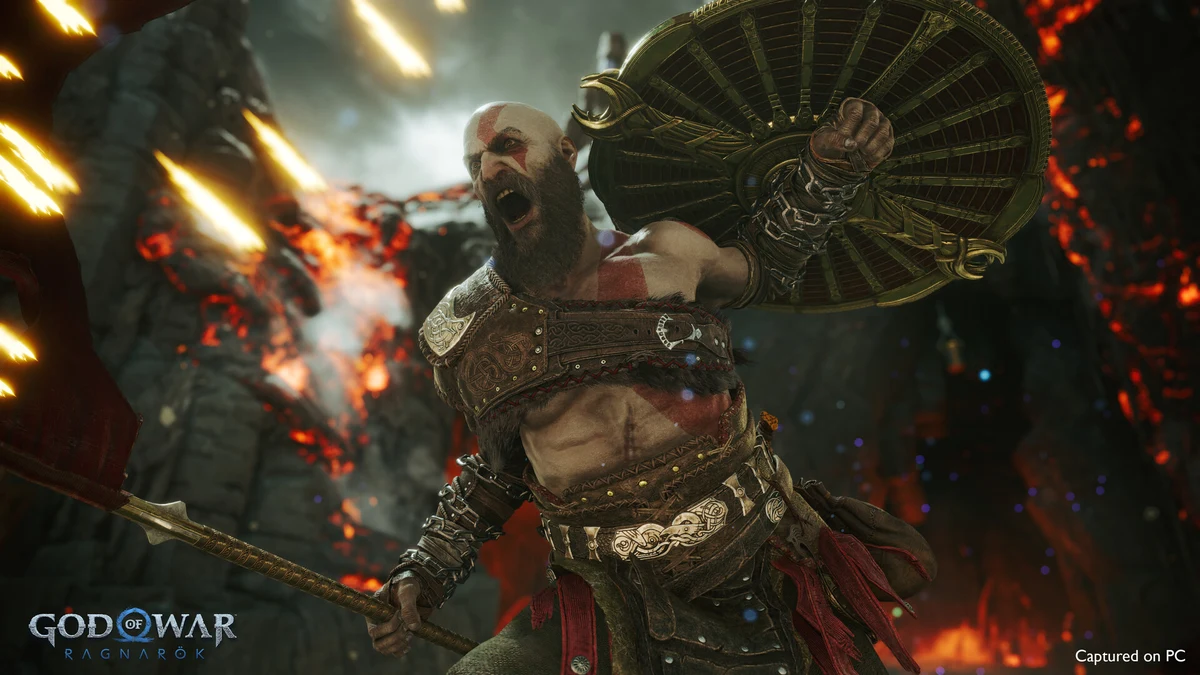
God of War Ragnarök doesn’t just borrow the names and settings of Norse mythology, it actively reinterprets them, weaving Kratos and Atreus into a cosmology that already has its own fixed endings, prophecies, and family dramas thousands of years old. Understanding where the game follows the old myths closely and where it deliberately breaks from them makes the story land differently, and it’s worth exploring on its own terms outside of a straightforward walkthrough. This article stays away from major late-game story twists and instead focuses on the mythological framework the game builds from.
The Nine Realms as a setting
The cosmology of Norse mythology is built around nine interconnected realms, all connected by Yggdrasil, the immense world tree sometimes described as the realm between realms and treated as the center of the Norse cosmos. Ragnarök lets players visit all nine: Midgard, the human-inhabited realm and largest of the nine, is where Kratos and Atreus have made their home; Alfheim is split between light elves and dark elves; Niflheim is a realm of ice and mist; Muspelheim is a realm of fire; Jötunheim belongs to the giants; Svartalfheim is home to the dwarves and dark elves; Vanaheim is ruled by the Vanir gods; Asgard is the seat of the Aesir gods; and Helheim is the realm of the dead.
Both the 2018 God of War and Ragnarök take real liberties with how these realms look and function compared to how they’re described in the actual mythological sources, blending environmental storytelling and gameplay needs with the broad strokes of the old cosmology rather than reproducing it literally. The realms in-game are treated more like distinct biomes and gameplay spaces than the more abstract, loosely described planes found in the source texts, but the core idea of nine realms bound together by Yggdrasil is drawn directly from the mythology.
Fimbulwinter and the road to Ragnarök
The title itself points to the central mythological event driving the plot. In the old sources, Fimbulwinter is a brutal, unrelenting winter said to precede Ragnarök, the prophesied end of the world in which many of the major gods die in a final confrontation. Ragnarök picks up a few years after the 2018 game with Fimbulwinter already underway, and much of the early story is shaped by the world reacting to this endless winter as a sign that the mythological endgame is approaching on its own timeline, whether the characters are ready for it or not.
This framing gives the game a built-in sense of dread that doesn’t rely purely on plot twists: players familiar with the mythology know Ragnarök is coming in some form, and the tension comes from watching how Kratos and Atreus try to navigate, delay, or reshape an ending that mythology treats as fixed.
Kratos, Loki, and a mythology-breaking premise
The single biggest structural change the series makes to Norse mythology is its central premise: that Kratos, a character from Greek mythology, is the father of Atreus, who is revealed across the two games to be Loki. In the actual Norse myths, Loki’s parentage is different, and he’s a trickster figure entangled with the Aesir gods rather than the son of an outsider god from another pantheon entirely. By making Loki the son of Kratos, the games recontextualize a character mythology already treats as unpredictable and dangerous, layering a father-son relationship drama on top of a mythological figure who, in the old stories, plays a direct role in triggering Ragnarök itself.
Atreus’s abilities in the game, including shapeshifting into forms like a wolf and a bear, echo the shapeshifting reputation Loki holds throughout Norse mythology, where he’s frequently depicted taking on animal forms for various schemes. The game uses these abilities as a way to visually and mechanically tie Atreus to his mythological identity well before the story spells it out directly.
Familiar figures reinterpreted
Several other major mythological figures appear in the game reshaped for its narrative needs. Freya, tied to the goddess Frigg’s mythological role as Baldur’s protective mother, casts a protective spell over her son in the game rather than extracting oaths from all of creation as in the original myth, and that spell carries the same double edge the myths hint at: invulnerability that comes at the cost of Baldur’s ability to feel anything at all. Angrboða, who in the myths exists mainly as the mother of three of Loki’s monstrous children, becomes a fully developed character in the game grappling directly with questions of fate and prophecy rather than existing solely to fulfill a mythological function.
Fenrir, one of Loki’s mythological offspring destined to play a major role in Ragnarök itself by killing Odin, appears in the series as one of Atreus’s companions and meets his fate earlier in the story than the myths would suggest, an example of the series deliberately front-loading or restructuring events that traditionally belong at the very end of the mythological timeline. Jörmungandr, another of Loki’s mythological children, is handled differently still: rather than being born in a conventional sense, the character’s soul is transferred into a smaller serpent body over the course of the story, again reworking a mythological relationship into something built around the games’ own themes of fate, choice, and identity.
Odin, the Aesir, and the shape of the conflict
The tension between the Aesir gods, led by Odin, and the wider cast reflects mythology’s own framing of Odin as a figure obsessed with knowledge, prophecy, and forestalling his own foretold death during Ragnarök. The games lean into this obsession as Odin’s core motivation, giving a mythological trait, his relentless pursuit of knowledge to avoid or control his fate, a direct dramatic throughline rather than treating it as background lore. The relationship between Loki and Odin in the myths, where Loki is at times an ally or blood-brother to Odin before eventually opposing the gods at Ragnarök, is also reworked substantially, with the games building an entirely different dynamic between Loki and Odin’s household from the outset.
Why the reinterpretation works
None of these changes are accidental, and the series has been fairly open about treating Norse mythology as a flexible framework rather than a script to be followed exactly. Prophecy, fate, and whether the future can actually be changed are the thematic backbone of Ragnarök’s story, and reworking mythological relationships, like making Loki the son of an outsider god or restructuring when key mythological deaths occur, lets the writers explore those themes with characters players already care about rather than purely abstract mythological figures. If you want the full story walkthrough alongside this mythological context, check out our complete God of War Ragnarök guide, which covers the game’s plot, realms, and side content from start to finish.
Approaching the myths yourself
For players curious to go deeper, the original Norse mythological sources, primarily the Poetic Edda and Prose Edda, offer a very different tone from the game: sparser, more fragmented, and often contradictory between sources, since Norse mythology was recorded from oral traditions well after the fact. Reading them alongside the game highlights just how much interpretive work Santa Monica Studio did to turn a loosely connected set of myths into a coherent, emotionally driven story about fathers, sons, fate, and the cost of trying to change what’s already been foretold.