
Table of Contents
- What Is God of War Ragnarök?
- Story and Setting: Fimbulwinter, Kratos, and Atreus
- Combat and Gameplay Systems
- Exploration and the Nine Realms
- Gear, Skills, and Difficulty Settings
- Valhalla: The Free 2023 DLC
- Platforms: PS5, PS4, and the 2024 PC Release
- Critical Reception and Awards
- Tips for New Players
- Who Is God of War Ragnarök For?
- FAQ
- Conclusion
- External Authority Sources
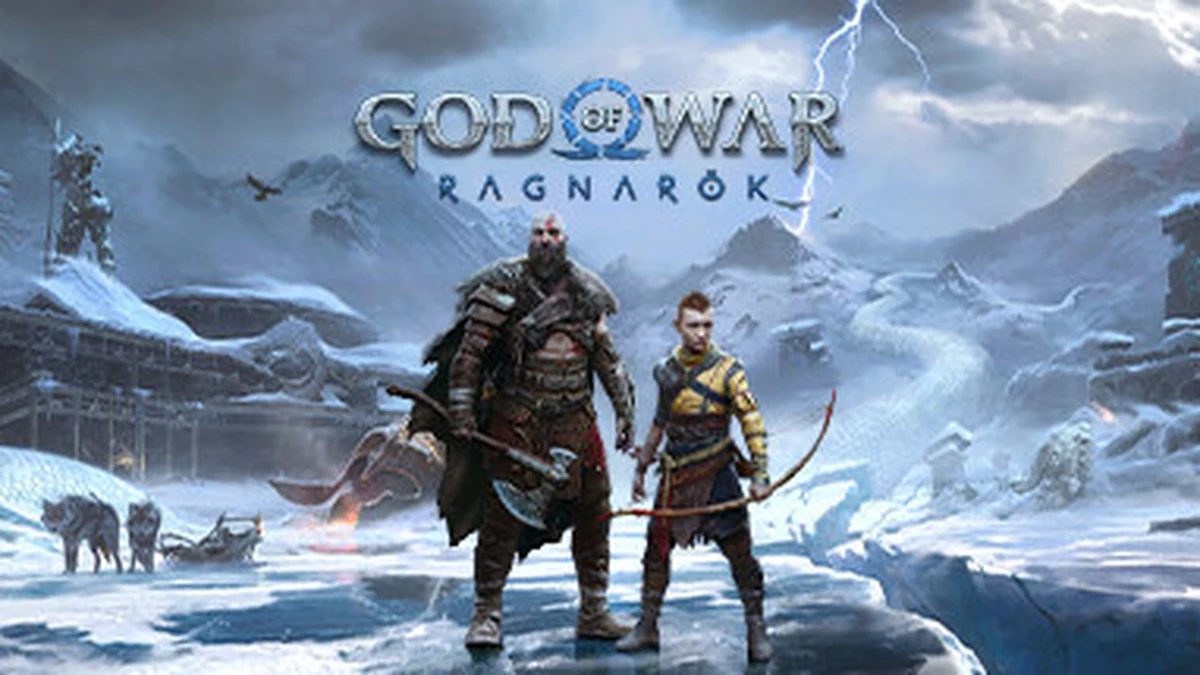
Few sequels arrive under as much pressure as God of War Ragnarök did in November 2022. Its predecessor, 2018’s God of War, had reinvented a franchise once defined by button-mashing spectacle into something quieter, sadder, and more personal — a story about a monstrous father trying to become a better one. Ragnarök had to pay off every thread that game planted: the prophecy of Kratos’s death, Atreus’s slow discovery that he is Loki, and the looming, world-ending winter called Fimbulwinter. Santa Monica Studio didn’t just meet that bar; it closed out the Norse saga with one of the most decorated action-adventure games of the decade, sweeping six awards at The Game Awards 2022 and landing a 94 on Metacritic. Whether you’re deciding whether to buy it, picking it up years later on PC, or just want to understand where it fits in the God of War timeline, this guide covers the story, the combat systems, the Nine Realms, the free Valhalla expansion, and everything you need to know before you press start.
What Is God of War Ragnarök? {#what-is-god-of-war-ragnarok}
God of War Ragnarök is a 2022 action-adventure game developed by Santa Monica Studio and published by Sony Interactive Entertainment. It is the ninth installment in the God of War series and the direct sequel to 2018’s God of War, continuing the Norse mythology saga that began when former Greek god of war Kratos relocated to the world of the Nine Realms. The game launched on November 9, 2022, for PlayStation 5 and PlayStation 4, and arrived on Windows PC on September 19, 2024, via a standalone Steam and PlayStation-published release.
Structurally, Ragnarök is a single-player, story-driven action-adventure title built around third-person melee combat, environmental puzzle-solving, and light RPG progression through skill trees and gear. It plays out over roughly 20 to 25 hours for the main story, with 40-plus hours of content if you pursue full completion, including optional superboss fights, collectibles, and side quests known as Favors. The game is widely regarded as the narrative and mechanical culmination of the Norse era of God of War, resolving the prophecy of Ragnarök that the 2018 game spent its entire runtime building toward.
It’s worth understanding the shape of the broader series before diving in. The original God of War trilogy (2005–2010) followed a Spartan warrior named Kratos through Greek mythology, culminating in the death of nearly every Olympian god at his hands. The 2018 soft-reboot, simply titled God of War, transplanted an older, more weathered Kratos to Norse mythology’s Midgard, introduced his son Atreus, and rebuilt the combat and camera systems from the ground up. Ragnarök is the direct continuation of that reboot — not a new trilogy starter, but the back half of a two-part story that Santa Monica Studio has said closes out the Norse saga, at least for this particular chapter of Kratos’s life. Understanding that context matters because it shapes what kind of game Ragnarök is: less an introduction to a new world and more a payoff for one that’s already been carefully built.
Story and Setting: Fimbulwinter, Kratos, and Atreus {#story-and-setting}
Ragnarök picks up roughly three years after the 2018 game, deep into Fimbulwinter — the endless, magically induced winter that began when Kratos killed the god Baldur at the climax of the previous story. In Norse mythology, Fimbulwinter is the harbinger of Ragnarök, the prophesied battle that brings about the death of the gods and the destruction of the cosmos. That prophecy hangs over every scene: Kratos has glimpsed a mural depicting his own death in the coming war, and he knows it, yet he chooses not to tell Atreus directly, instead trying to prepare his son for a future Kratos may not be part of.
The game centers on Kratos and his now-teenage son, Atreus, as they prepare for the war they believe is inevitable. Atreus is consumed by two intertwined obsessions: understanding what it means that he is Loki, a figure of Norse prophecy in his own right, and tracking down the remaining Giants of Jötunheim, who may hold answers about how to stop — or survive — Ragnarök. This search for the giants, and for a mysterious giant named Angrboda in particular, drives much of the game’s first half and introduces some of its richest new relationships and world-building.
Their journey pulls in the returning cast from 2018, including the exiled dwarven brothers Brok and Sindri, whose partnership fractures in ways that give the game some of its most emotionally raw side content; the disembodied but endlessly talkative head of Mimir, who continues to serve as guide, historian, and comic relief; and Freya, the Vanir goddess whose son Baldur died at Kratos’s hands and who now has her own reasons to hunt Kratos down, transforming her from ally to antagonist to something more complicated as the story unfolds. Thor also gets substantial screen time this time around, portrayed as a broken, alcoholic shadow of the hammer-wielding god of legend, caught between loyalty to his father Odin and a growing disgust with what that loyalty has cost him.
Standing opposite them is Odin, the All-Father of Asgard, who spends the game manipulating events from the shadows rather than confronting Kratos directly — a slow-burn, unsettling antagonist performance that critics singled out as one of the game’s strongest narrative choices. Odin is written less as a raging tyrant and more as a calculating, needy, image-obsessed ruler who genuinely believes he’s the hero of his own story, which makes him considerably creepier than a straightforward villain would have been. The story sends Kratos and Atreus across all Nine Realms in search of Týr, the imprisoned Norse god of war believed to hold the key to averting mass casualties, and toward the construction of an army capable of standing against Odin and Asgard when the final battle comes.
At its core, though, Ragnarök remains what its predecessor was: a story about a father learning to let his son become his own person, and a son learning what kind of person he wants to be. The tension between Kratos’s instinct to protect and control, and Atreus’s need for independence and purpose, drives nearly every major story beat, right up through an ending that resolves the Ragnarök prophecy while leaving Kratos and Atreus’s paths meaningfully changed. Christopher Judge’s performance as Kratos anchors all of it — a portrayal that earned him Best Performance honors at multiple award shows for finding new registers of grief, restraint, and, occasionally, warmth in a character once defined almost entirely by rage.
Combat and Gameplay Systems {#combat-and-gameplay-systems}
Ragnarök keeps the over-the-shoulder camera and weighty, physical combat that defined the 2018 reboot, then expands nearly every system attached to it. Kratos wields two primary weapons throughout the campaign, and — unlike 2018, where the Blades of Chaos were a late-game unlock — both are available from early in the story, which lets the combat design lean on weapon-switching almost from the outset.
The Leviathan Axe is a magical, ice-imbued throwing weapon that can be recalled to Kratos’s hand mid-combo, frozen enemies, and used for both melee strikes and ranged attacks. It has its own skill tree with roughly two dozen unlockable abilities, split across Technique, Ranged, and Melee categories, and can be upgraded through nine levels using Frozen Flame items earned from major boss encounters, applied at Brok’s or Sindri’s forge. The axe’s freezing properties make it particularly effective for crowd control, locking enemies in place so Kratos can follow up with heavier attacks or let Atreus soften them up from range.
The Blades of Chaos are chain-linked, fire-imbued blades better suited to fast, wide-arcing attacks against groups of enemies, and they’re especially effective against frost-based foes the Leviathan Axe can’t easily finish off. Like the axe, they have a dedicated skill tree covering technique, ranged, and melee options, letting players build very different playstyles depending on which weapon they favor. Their reach and speed make them the go-to option against swarms, while the axe tends to shine in single-target, stagger-focused encounters.
Beyond the two core weapons, Kratos gains the Draupnir Spear, a mid-game weapon well-suited to close-quarters bursts of damage and precision counters, and eventually the Guardian Shield system, which offers multiple shield types (parry-focused, ranged, or damage-absorbing) that can be swapped depending on the encounter. Each shield type changes how blocking and parrying feel, so players who find one shield too passive or too risky can switch to a variant that better matches their playstyle. Atreus is playable in select sections and fights alongside Kratos as a companion for most of the game, using his bow and shapeshifting abilities in tandem with Kratos’s attacks — a “Family Business” mechanic lets players trigger devastating combo finishers between the two characters, and Atreus’s AI-controlled contributions in regular combat (arrow volleys, enemy staggers, elemental infusions) make him feel like an active participant rather than a passive tag-along.
Combat is deliberately punishing at higher difficulties and rewards learning enemy tells, parrying with the shield, and rotating between weapons rather than mashing a single combo. Enemy variety expands considerably compared to 2018, with new draugr variants, Asgardian soldiers, and mythological creatures each demanding slightly different approaches — some are vulnerable to freeze, others to fire, others only to sustained melee pressure. Spartan Rage, a temporary berserker state that increases damage and grants unique attacks, returns as a resource-management tool for tough fights, filling as Kratos takes and deals damage, and it plays a central role in the post-game Valhalla content, where committing to it becomes a structural requirement of each run rather than an optional panic button.
Exploration and the Nine Realms {#exploration-and-the-nine-realms}
Where the 2018 God of War mostly kept players within Midgard and a handful of connected realms, Ragnarök opens up all nine realms of Norse cosmology for exploration: Midgard, Alfheim, Svartalfheim, Jötunheim, Niflheim, Muspelheim, Helheim, Vanaheim, and Asgard. Several of these — Vanaheim and Asgard in particular — are new to this installment, while returning realms have been reworked with new regions, quests, and secrets tied to the Ragnarök storyline.
Midgard remains the game’s largest and most frequently revisited hub, now buried under snow and reshaped by Fimbulwinter, with new areas like the town of Sindri opens up as the story progresses. Vanaheim, home to Freya’s people, introduces swampy, overgrown environments and its own political tensions tied to a civil war among the Vanir. Alfheim, the realm of light elves, continues its light-and-dark dualism from 2018 with new puzzle mechanics layered on top. Svartalfheim, the dwarven realm, expands into industrial, mining-focused environments that tie directly into Brok and Sindri’s personal stories. Jötunheim, previously only glimpsed at the very end of the 2018 game, becomes fully explorable and central to Atreus’s search for answers about the giants and his own identity. Asgard, the realm of the Aesir gods and Odin’s seat of power, is reserved for a late-game story sequence and stands apart aesthetically from every other realm in the game, all gold and imperial grandeur layered over rot.
Traversal is handled through Kratos’s boat, piloted by Atreus or Sindri depending on the story beat, which doubles as a loading-free transition between explorable hub areas and as a vehicle for environmental puzzles involving the Leviathan Axe’s ice powers and the Blades of Chaos’s grappling capabilities. Each realm is built around a mix of main-story critical path content and substantial optional material: hidden chambers, collectible artifacts (Odin’s Ravens return, alongside new collectibles like Lore Marks and Nornir chests), armor and resource caches, and self-contained side stories called Favors that flesh out the world and its supporting cast — including a fan-favorite string of quests involving the dwarves Brok and Sindri, and another built around the traveling merchant Sigrun, a Valkyrie who becomes a recurring character.
The realms also host the game’s most demanding combat content. Muspelheim and Niflheim, holdovers from the 2018 game’s endgame trial rooms, return with new challenge arenas that scale in difficulty as players clear them, offering some of the toughest optional gauntlets in the game. Each realm hides at least one optional Valkyrie — a superboss-tier enemy considerably tougher than anything in the main story, designed for players who have fully built out their gear and skill trees, and collectively they form one of the most respected “true endgame” challenges in modern action games.
Gear, Skills, and Difficulty {#gear-skills-and-difficulty}
Ragnarök’s progression systems sit on top of three interlocking pillars: skill trees, armor, and difficulty, all of which interact closely enough that a build focused purely on one tends to underperform against the game’s toughest content.
Skill trees exist independently for the Leviathan Axe, the Blades of Chaos, the Draupnir Spear, and Kratos’s own general Talents, plus a separate tree for Atreus. Experience points earned in combat and from completing objectives unlock new moves, combo extensions, and passive upgrades, letting players lean into a preferred combat style — heavy stagger-focused axe play, fast multi-target blade combos, or a hybrid approach that swaps weapons mid-fight to exploit elemental weaknesses. Because respeccing costs nothing beyond the resource to re-unlock abilities, players are free to experiment with builds across a playthrough rather than committing early and living with the consequences.
Armor in Ragnarök is built from three equipment slots — chest, wrist, and waist — that combine into full sets with sizable stat bonuses when worn together. Gear can be found in chests scattered through the realms, dropped by powerful enemies, purchased from Brok, Sindri, or the traveling merchant Lúnda, or crafted using realm-specific resources gathered through exploration. Different sets emphasize different stats: Strength (raw damage), Defense, Runic (magic damage for special attacks), Vitality (health pool), and Luck (critical hit and status effect chance), which lets players tailor Kratos toward tanky, aggressive, or elemental-focused builds. High-level content, particularly the Valkyries and New Game Plus, effectively demands a fully upgraded, deliberately chosen armor set rather than whatever gear happened to drop most recently.
Difficulty settings run across five tiers, from a very forgiving “Give Me Story” mode aimed at players who want the narrative experience, up through “Give Me God of War” (the intended balanced challenge) and the unforgiving “Give Me Chaos,” which sharply increases enemy aggression, damage, and the need to use dodging and blocking rather than pure offense. Difficulty can be changed at almost any time from the menu, so players aren’t locked into a choice made before they understood the combat — a design decision praised for removing the anxiety of picking “wrong” at the start. Ragnarök also carries forward the accessibility suite the 2018 game was praised for, including audio cues for gameplay events, high-contrast visual options, and combat accessibility settings that adjust auto-targeting, button-hold-to-tap conversions, and more — a body of options that has itself won industry accessibility awards and is frequently cited as a benchmark for other big-budget action titles.
A New Game Plus mode was added via a free update in spring 2023, letting players restart the story with their full skill trees, armor, and gear carried over, an increased level cap for both Kratos and enemies, and “Plus” upgrade tiers for previously maxed-out equipment — giving completionists a reason to revisit the campaign after the credits roll, and giving the Valkyrie fights a second life against a tougher enemy scaling curve.
Valhalla: The Free 2023 DLC {#valhalla-free-dlc}
At The Game Awards in December 2023, Sony and Santa Monica Studio surprised the community with Valhalla, a free downloadable epilogue released on December 12, 2023, for both PS4 and PS5 owners of the base game — no purchase required, and no separate listing to track down. Rather than extending the main campaign with more traditional story missions, Valhalla is a roguelike-inspired mode: Kratos is drawn to the mysterious realm of Valhalla, accompanied only by Mimir, to confront trials and echoes of his violent past stretching back through the Greek era of the series.
Each run strips Kratos of his equipped armor and gear, though he retains access to all of his weapons and his fully unlocked skill trees from the main game, and each attempt requires committing to the Spartan Rage mechanic in new, more central ways than the main campaign does. Runs are built from procedurally arranged combat encounters and challenge rooms; dying doesn’t end the mode permanently but instead sends Kratos back to try again, with resources earned along the way funding permanent upgrades that make subsequent attempts more manageable, in the classic roguelike sense of long-term progression layered over short-term failure.
The mode was explicitly framed by its developers as a celebration of the entire God of War franchise, and it folds in thematic and enemy callbacks spanning the series’ Greek and Norse eras, along with narrative material that gives Kratos’s arc a quiet, reflective coda after the bombast of the main campaign’s ending. Critics responded warmly to Valhalla as a free coda — outlets including Kotaku praised it as a meaningful, low-stakes way to spend more time in Kratos’s world after a story that had otherwise closed its major arcs, and its existence as a no-cost addition nearly a year after launch was widely seen as a goodwill gesture rather than a monetization play.
Platforms: PS5, PS4, and the 2024 PC Release {#platforms-and-how-to-start}
God of War Ragnarök launched simultaneously on PlayStation 5 and PlayStation 4 on November 9, 2022, a rarer approach by that point in the PS5’s life cycle, when most first-party Sony titles had already gone PS5-exclusive. Buying either version grants a free upgrade to the other, and the PS5 version supports higher resolutions, faster load times, haptic feedback and adaptive trigger support through the DualSense controller, and a choice between Performance and Resolution graphics modes, later joined by a Performance-Favored mode that balances the two for players who want a middle ground between visual fidelity and frame rate.
Nearly two years later, Sony brought the game to Windows PC, releasing it on September 19, 2024, through Steam and the Epic Games Store, following the same pattern established by prior PlayStation ports like God of War (2018), Horizon Zero Dawn, and Marvel’s Spider-Man Remastered. The PC version requires linking a PlayStation Network account to play, consistent with Sony’s other PC ports. It supports ultrawide monitors, uncapped frame rates, and upscaling technology across all three major vendors: NVIDIA DLSS, AMD FSR, and Intel XeSS, giving PC players considerably more control over performance and image quality than the console versions ever offered.
Published PC system requirements break down across three target experiences:
- Minimum (1080p, 30 FPS, Low settings): Intel Core i5-4670K or AMD Ryzen 3 1200, NVIDIA GTX 1060 or AMD RX 5500 XT, 8GB RAM, roughly 190GB of storage.
- Recommended (1080p, 60 FPS, Medium settings): Intel Core i5-8600 or AMD Ryzen 5 3600, NVIDIA RTX 2060 Super or AMD RX 5700, 16GB RAM.
- Ultra (4K, 60 FPS): Intel Core i5-11600K or AMD Ryzen 7 3700X, NVIDIA RTX 4070 Ti or AMD RX 7900 XT.
The nearly 190GB storage footprint is worth planning around before installing, particularly on smaller SSDs, since it’s among the larger single-player game installs on PC.
How to start: if you’re new to the series, Ragnarök is designed to be approachable without having played the 2018 God of War, thanks to an in-game “Previously On” recap and Mimir’s narration filling in backstory as needed — though the emotional weight of the father-son relationship lands considerably harder if you’ve played the prior game first, since so much of Ragnarök’s writing assumes familiarity with what Kratos and Atreus went through together. On any platform, the game opens directly into the story with no meaningful setup beyond choosing a difficulty, which, as noted above, can be freely changed later, so there’s no wrong way to begin.
Critical Reception {#critical-reception}
God of War Ragnarök was one of the most acclaimed releases of 2022. It holds a Metascore of 94 on Metacritic based on reviews from 248 critics, and a “Mighty” rating on OpenCritic with a similarly high average, placing it among the highest-reviewed PlayStation exclusives of the generation. Reviewers consistently praised its performances — Christopher Judge’s Kratos and the supporting cast, particularly Sunny Suljic as Atreus and Danielle Bisutti as Freya — its refined combat systems, its handling of the Odin/Freya/Thor subplots, and its willingness to give major side characters, including Freya and Thor, substantial arcs of their own rather than treating them as obstacles for Kratos to work around.
The game backed up its critical praise with hardware to match. At The Game Awards 2022, it led all nominees with eleven nominations and won six awards, including Best Narrative, Best Action/Adventure Game, Best Performance (Christopher Judge), and Best Score and Music. At the BAFTA Games Awards, it won six of its fourteen nominations, again including recognition for both Judge and co-star Laya DeLeon Hayes, who voices Angrboda. Some of the more measured criticism focused on the game’s pacing in its middle act and a story structure that, for some critics, occasionally sidelined Kratos and Atreus in favor of supporting characters — but the overwhelming consensus was that Ragnarök is a rare big-budget sequel that fully justifies its existence, closing out its trilogy-within-a-franchise arc rather than simply repeating what worked in 2018.
Tips for New Players {#tips-for-new-players}
- Don’t skip Favors. Optional side quests aren’t filler in Ragnarök — several flesh out fan-favorite characters like Brok, Sindri, and Sigrun, and a few unlock some of the best armor and cosmetic rewards in the game.
- Rotate your weapons. The Leviathan Axe and Blades of Chaos are built for different enemy types (frost versus fire-resistant, single-target versus crowd control). Leaning on only one weapon makes late-game fights unnecessarily hard.
- Upgrade before you push forward. Frozen Flames and armor resources are easy to hoard. Spend them regularly at Brok’s and Sindri’s shops rather than stockpiling — undergeared players will struggle against optional bosses.
- Use the shield actively, not just defensively. Different shield types support parries that stagger enemies and open up damage windows; treating the shield purely as a “hold to block” tool leaves a lot of damage on the table.
- Pick a difficulty that matches what you want. If you’re here for the story, “Give Me Story” is a completely legitimate way to play. Save “Give Me God of War” or higher for a second run or for players who specifically want a combat challenge.
- Save the Valkyries for last. These optional superbosses are meaningfully harder than anything in the main story and are best approached after finishing the campaign with a fully built-out skill tree and top-tier gear.
- Invest in Atreus’s skill tree too. It’s easy to focus entirely on Kratos, but a well-built Atreus adds significant sustained damage and crowd control that makes tough fights noticeably more manageable.
- On PC, link your PSN account before launch to avoid a startup blocker, and check your GPU driver is current — the upscaling suite (DLSS/FSR/XeSS) performs best on up-to-date drivers, and make sure you have enough free disk space given the roughly 190GB install size.
Who Is God of War Ragnarök For? {#who-its-for}
Ragnarök is best suited to players who want a cinematic, story-forward action game with weighty, satisfying combat rather than a fast-twitch character-action title in the vein of Devil May Cry or Bayonetta. Its pacing — long stretches of dialogue and exploration punctuated by intense combat encounters — rewards players who enjoy character-driven writing as much as they enjoy fighting, and its production values, from performance capture to environmental art, are consistently held up as some of the best in the medium. Fans of the 2018 God of War will get the most out of it, since it directly continues that story, but newcomers can follow the plot without prior knowledge thanks to its recap systems.
Its scalable difficulty and extensive accessibility options also make it one of the more welcoming big-budget action games for players who might otherwise bounce off punishing combat design, while its five-tier difficulty ceiling and optional Valkyrie superbosses give hardcore action fans plenty to chase after the credits roll. Parents and family-oriented players should note the game retains a Mature rating for blood, violence, and strong language consistent with the rest of the series — it is not aimed at younger audiences despite the father-son framing of its story. For anyone who values narrative ambition alongside mechanically satisfying combat, Ragnarök is close to a genre benchmark.
FAQ {#faq}
Do I need to play the 2018 God of War before Ragnarök?
No. Ragnarök includes a “Previously On” recap and in-game narration that fills in the necessary backstory, so newcomers can follow the plot. That said, the emotional payoff of Kratos and Atreus’s relationship lands harder if you’ve played the 2018 game first, since Ragnarök is a direct continuation of that story rather than a fresh starting point.
How long does it take to beat God of War Ragnarök?
The main story runs roughly 20 to 25 hours. Players pursuing side content, Favors, collectibles, and optional Valkyrie bosses can expect 40-plus hours for full completion, and New Game Plus adds further replay time on top of that.
Is the Valhalla DLC free, and do I need the base game?
Yes, Valhalla is completely free and was released on December 12, 2023, for both PS4 and PS5 owners of God of War Ragnarök. You need to own the base game to access it; it is not sold separately and is not currently a standalone product on PC.
What platforms is God of War Ragnarök available on?
The game launched on PlayStation 5 and PlayStation 4 on November 9, 2022. It later came to Windows PC on September 19, 2024, via Steam and the Epic Games Store, requiring a linked PlayStation Network account to play.
What are the Valkyries in God of War Ragnarök?
The Valkyries are a set of optional superboss encounters scattered across the Nine Realms, considerably harder than any story boss. Defeating all of them, including the Valkyrie Queen Gná, unlocks unique rewards such as the Zeus armor set, and they’re generally recommended only after finishing the main campaign with strong gear and a developed skill tree.
Can I change the difficulty after starting the game?
Yes. God of War Ragnarök offers five difficulty settings, ranging from the story-focused “Give Me Story” to the demanding “Give Me Chaos,” and players can switch between them at almost any point from the game’s menu rather than being locked in from the start.
Conclusion {#conclusion}
God of War Ragnarök earns its place among the defining action-adventure games of its generation by doing something sequels rarely manage: it resolves everything its predecessor set in motion without losing the intimacy that made the 2018 reboot work in the first place. The Nine Realms are bigger, the combat systems built around the Leviathan Axe and Blades of Chaos are deeper, and the free Valhalla epilogue gives the story a graceful, low-pressure send-off rather than tacked-on paid content. With the game now available across PS5, PS4, and PC, there’s no wrong platform to experience Kratos and Atreus’s journey through Fimbulwinter and into the final battle — only a question of whether you’re ready for how personal, and how punishing, that journey gets.