
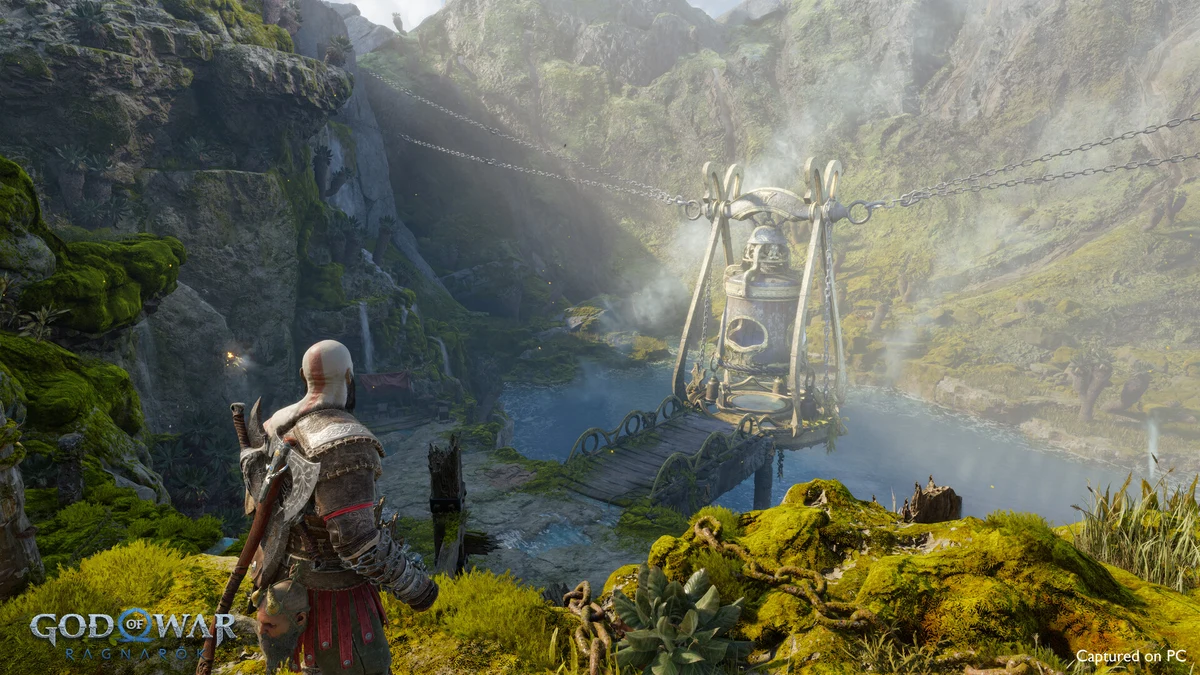
Gearing up Kratos in God of War Ragnarök is a deep, layered system built around armor sets, enchantments slotted into the Amulet of Yggdrasil, talismans, and weapon-specific pommels. Getting the most out of it means understanding not just which items are strongest on paper, but how their perks work together. This guide focuses on the endgame side of that system: the armor sets worth chasing, the enchantment combinations that actually matter, and loadouts built for the fights that push Kratos hardest.
How the gear system fits together
Every piece of armor Kratos wears contributes base stats across categories like Strength, Defense, Runic, Vitality, Cooldown, and Luck, and most armor sets also carry set bonuses called perks that activate once you’ve equipped multiple pieces from the same set. On top of armor, the Amulet of Yggdrasil holds enchantments, which are smaller passive effects you find or craft that can be swapped freely, letting you fine-tune a build without committing to a whole new armor set. Talismans add another layer, offering an active or triggered effect, such as a damage buff or elemental burst, that operates independently of your armor and enchantment choices.
Sindri and Brok’s shops, spread across Midgard and reachable through their portal system, are where most crafting and upgrading happens, and resources like Aegir’s Gold, Dragon Tears, and various ores are the bottleneck for pushing gear to its highest levels rather than gold itself in the late game. Prioritizing resource farming in Muspelheim’s crucible and Niflheim’s survival mode becomes necessary once you’re chasing max-level endgame armor.
The Berserker armor set
For many players, the Berserker armor is the strongest overall set in the game, largely because of how its Strength and Defense stats scale at higher levels alongside a genuinely useful set perk. At level nine, the set reaches roughly 145 Strength and 104 Defense, with solid secondary stats in Runic, Vitality, Cooldown, and Luck as well, making it a well-rounded choice rather than a specialist set that sacrifices survivability for offense.
Its signature perk, Soulless Warrior, rewards aggressive relic use by boosting damage output right after a relic is activated, while its companion perks, Soulless Assault and Soulless Rebuke, can trigger Soul Explosions. These explosions deal area damage and refund some of your relic’s cooldown, and they can proc from landing hits, taking damage, blocking, or parrying, which means an aggressive, parry-heavy playstyle keeps the whole perk loop feeding itself. Each piece of the Berserker set is obtained by defeating one of the game’s optional Berserker bosses, so building the full set doubles as a natural difficulty ramp: by the time you’ve beaten every Berserker, including the final one, King Hrolf Kraki, you’re already equipped with one of the best endgame sets available for what comes next.
Other strong armor options
While Berserker armor is a favorite for its balance, it isn’t the only viable endgame choice. Some players prefer sets that lean harder into Runic stats for spellcasting-heavy builds centered on runic attacks and companion abilities, or sets that push Luck to maximize status effect procs like Burn, Frost, or the Berserker perk’s own Soul Explosions. Because armor can be swapped freely outside of combat, it’s worth keeping two or three fully upgraded sets on hand rather than committing to just one, since different optional bosses and Valkyrie fights reward different priorities. A defense-heavy set might be the safer pick for a long war of attrition against a superboss, while a Luck-and-Runic set can shred through Muspelheim’s timed trials faster.
Choosing enchantments for your build
Enchantments are where individual playstyles really take shape, since the Amulet of Yggdrasil offers up to nine total slots once fully upgraded, and each enchantment can be leveled up independently by feeding it materials. Rather than chasing whichever enchantment has the single highest number, the strongest builds usually combine enchantments that reinforce the same triggers. If your build revolves around parrying, prioritize enchantments that boost stun damage or trigger effects on a successful parry. If it revolves around runic attacks, look for enchantments that reduce runic cooldown or add elemental damage to runic strikes specifically.
A common approach for endgame content is to build around Burn or Frost status stacking, since both effects deal significant damage over time and can stagger or even instantly defeat weaker enemies once fully applied. Pairing an amulet loadout that boosts status buildup with a Berserker armor set that already procs Soul Explosions from combat actions creates a build that keeps dealing damage even during the moments you’re playing defensively.
Talismans worth prioritizing
Talismans function differently from enchantments in that they’re tied to your amulet slot as a whole and typically trigger on a cooldown or specific condition rather than passively. Options that grant a temporary damage buff, summon an elemental effect around Kratos, or provide a defensive shield on low health are all popular for endgame content, since the toughest fights in the game are long enough that a talisman’s cooldown will come back around multiple times per encounter. Testing a talisman against a Muspelheim trial or an early Valkyrie is a good way to see how often it actually procs in real combat before committing to it for the hardest fights.
If you’re still working through the main campaign and want the bigger picture on where these systems fit into the whole adventure, check out our complete God of War Ragnarök guide for a full walkthrough alongside this gear breakdown.
Putting together a favorite loadout
A dependable general-purpose endgame loadout tends to combine a fully upgraded Berserker armor set for its Strength, Defense, and Soul Explosion perk loop, an amulet built around parry and stun enchantments to keep those explosions triggering consistently, and a talisman offering a burst damage or defensive cooldown ability to smooth over the toughest exchanges. From there, the Leviathan Axe’s frost runic attacks pair naturally with a Frost-focused secondary enchantment for freeze setups, while the Blades of Chaos favor a Burn-leaning loadout for sustained damage against single targets. There’s no single correct build in Ragnarök, and the game is generous enough with respeccing armor and enchantments that experimenting between fights, rather than locking into one setup for the whole game, is usually the fastest way to find what works for your playstyle.