
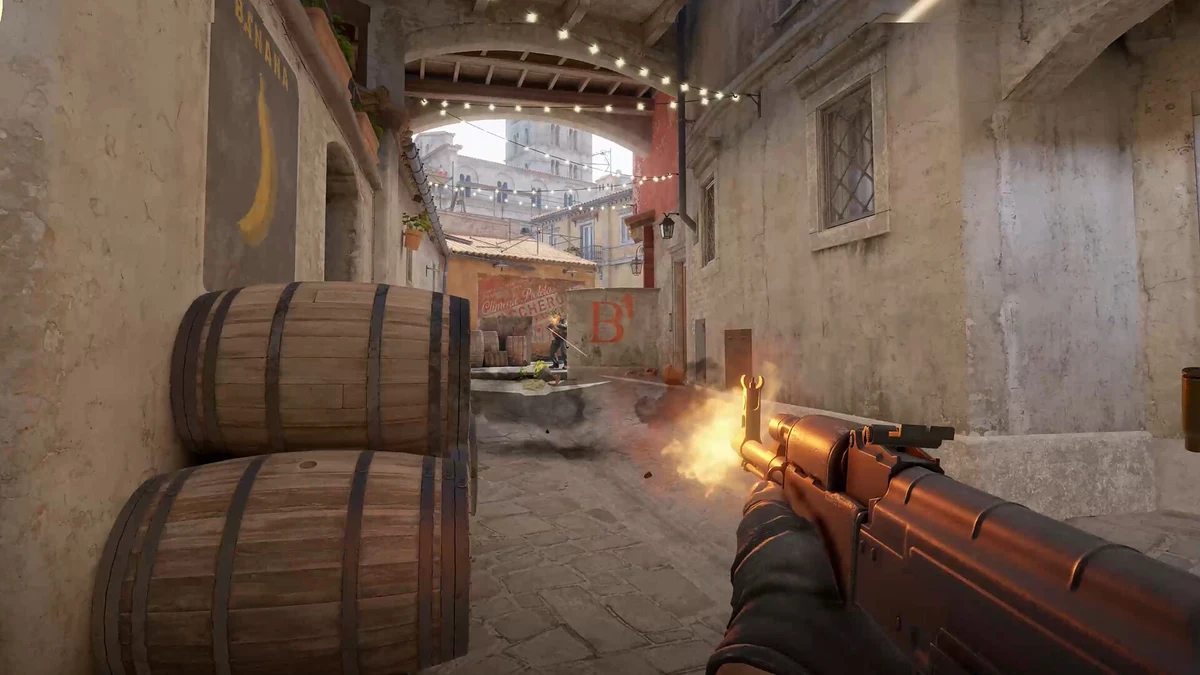
CS2’s weapon skins are cosmetic — they don’t change a gun’s damage, accuracy, or recoil pattern in any way — and yet they’ve built one of the largest virtual item economies in gaming. Understanding how that economy actually works will save new players from expensive mistakes and help everyone make sense of why some skins look identical but function completely differently in terms of value and trade.
This guide covers how the Steam Marketplace handles CS2 items, the rarity system that determines what drops from where, and how cases stack up against direct trading. We’ll deliberately avoid quoting specific price figures, since skin values shift constantly and any number we wrote today would likely be outdated within weeks — instead, we’ll focus on the mechanics and tiers that actually determine value, which stay consistent regardless of market conditions. For the broader CS2 picture, our complete CS2 guide is a good starting point, and if you’re brand new to the game itself, check out our CS2 beginner’s guide first.
How the Steam Marketplace Skin Economy Works
Every CS2 skin is technically a Steam Community Market item tied to your Steam account. When you unlock, trade, or buy a skin, it lives in your Steam inventory and can generally be sold on the Steam Marketplace, traded directly with other players, or used in-game — with a few important restrictions.
Trade holds and Marketplace restrictions are the first thing new players run into. Items received through trades are typically locked for a period before they can be traded again, and Marketplace listings can only be purchased for use within Steam’s ecosystem (Marketplace-purchased items generally can’t be traded again immediately). This is Valve’s way of discouraging account theft and scam trades, and it’s worth understanding before you buy or trade anything valuable.
Wear and float value are the next core concept. Every skin has a “float value,” a hidden number between 0 and 1 that determines its exact wear condition, grouped into five visible categories:
- Factory New
- Minimal Wear
- Field-Tested
- Well-Worn
- Battle-Scarred
The same skin design can look pristine (Factory New) or heavily scratched and faded (Battle-Scarred) purely based on this float number, and it’s a major factor in how a skin is valued — generally, cleaner wear conditions are worth more, though some skin patterns actually look more visually interesting with heavier wear, which occasionally flips that assumption.
StatTrak is a separate attribute, unrelated to wear, that adds a built-in kill counter to a weapon. StatTrak versions of a skin are always separate items from their non-StatTrak counterparts and are generally rarer and more sought-after as a result.
CS2 Skin Rarity Tiers Explained
Every weapon skin belongs to a rarity tier, color-coded and displayed directly on the item. Rarity determines drop likelihood from cases, not necessarily final market value on its own — a common-tier skin with a popular design can still be more desirable than a rare-tier skin nobody likes the look of.
| Rarity Tier | Color | Typical Source | Notes |
|---|---|---|---|
| Consumer Grade | White | Cases, drops | The most common tier, simple designs |
| Industrial Grade | Light Blue | Cases, drops | Slightly more detailed than Consumer Grade |
| Mil-Spec | Blue | Cases | The baseline “case skin” rarity most players recognize |
| Restricted | Purple | Cases | Noticeably rarer than Mil-Spec, more detailed patterns |
| Classified | Pink | Cases | Rare pulls, usually only one or two designs per case |
| Covert | Red | Cases | The rarest standard weapon tier in most cases, headline skins |
| Contraband | Gold/Orange | Legacy items only | An extremely rare, discontinued tier no longer added to new cases |
| Extraordinary (Knives & Gloves) | Gold | Cases | Not a weapon skin tier at all — this is the rare “big pull” category covering knives and gloves |
Case odds are weighted heavily toward the common end: the overwhelming majority of case openings land on Consumer or Industrial Grade, with each tier above that dropping in probability, down to a fraction of a percent for knives and gloves. This is exactly why case opening carries real financial risk — the average outcome across enough openings is worth meaningfully less than the cost of the case and key combined, which is effectively how the case system generates revenue.
Cases, Keys, and Trade-Up Contracts
Cases are containers holding a pool of possible skins, tied to specific collections released alongside major updates. Opening one requires a case key, and the contents are randomized according to the rarity odds above.
Trade-up contracts offer an alternative path: combine ten skins of the same rarity tier (and matching StatTrak/non-StatTrak status) to receive one random skin from the next rarity tier up. It’s a way to consolidate a pile of lower-value skins into a chance at something better, though the math generally favors the house here too, similar to case opening — it’s best understood as a way to potentially upgrade skins you already have and don’t want, rather than a reliable profit strategy.
Cases vs Trading: Which Is Better for New Players
New players often ask whether they should open cases or just buy/trade for skins directly. The honest answer is that direct trading or Marketplace purchases are almost always the more predictable option.
Case opening is essentially a gamble — you’re paying a fixed cost for a randomized outcome that is, on average, worth less than what you paid. It can be fun as entertainment, similar to a claw machine or a pack of trading cards, but it shouldn’t be approached as a way to acquire value efficiently.
Direct trading or Marketplace purchases let you see exactly what you’re getting before you commit anything. If you have a specific skin in mind, buying it directly (or trading for it) guarantees the outcome, while case opening does not.
The practical takeaway: if you enjoy the gambling aspect and are comfortable spending money purely for entertainment, cases can be fun in moderation. If you actually want a specific skin, buying or trading for it directly is the more rational path.
Tips for New Players Navigating the Skin Economy
- Set a budget and stick to it. Skins are entirely optional cosmetics — treat any spending here the same way you’d treat entertainment spending, not an investment.
- Understand that “value” fluctuates. Skin prices move with community trends, supply changes, and game updates. Anything you read about relative value today could shift, so avoid treating skins as guaranteed to hold or increase in worth.
- Watch out for scam trades. Common scams include fake trade offer links, impersonated Steam support messages, and “middleman” scams on unofficial trading sites. Only trade through Steam’s official trade offer system and verify trade partners carefully.
- Learn to read item pages before buying. Wear condition, StatTrak status, and any special pattern or sticker details are all listed on an item’s page — always check before purchasing.
- Third-party marketplaces exist but carry more risk. Some players use third-party sites for better prices than Steam’s Marketplace, but these come with counterparty risk that the official Marketplace doesn’t have. Research thoroughly before using any third-party trading site.
- Skins don’t affect gameplay. It’s worth repeating: no skin changes your hit registration, recoil, or accuracy. Don’t let inventory value distract from actually improving at the game — our CS2 beginner’s guide and our CS2 best crosshair settings guide will do far more for your win rate than any skin will.
Frequently Asked Questions
Q: Do CS2 skins affect gameplay or hitboxes? No. Skins are purely cosmetic reskins of existing weapon models. They don’t change damage, recoil, accuracy, or hitboxes in any way.
Q: What’s the difference between a case and a collection? A case is a purchasable container tied to a specific collection of skins. The collection is the pool of possible skins; the case is the mechanism you use to gamble for one of them.
Q: Is it worth opening cases in CS2? Statistically, no — the average value returned is lower than the cost of the case and key combined, which is how the system is designed to function. It’s best treated as entertainment spending rather than a way to acquire value.
Q: How do I know if a skin listing is a scam? Only trade through Steam’s official trade offer system, never click external trade links from strangers, and be suspicious of any deal that seems significantly better than what you see elsewhere. Verify Steam profile authenticity before trading with unfamiliar accounts.
Q: What does StatTrak actually do? It adds a visible kill counter to the weapon that increases as you get kills with it in matchmaking-eligible modes. It has no effect on the weapon’s actual performance.
The Bottom Line
The CS2 skin economy is a genuinely fascinating system once you understand the mechanics behind it, but it’s worth approaching with a clear head — set a budget, understand the odds, and never confuse cosmetic value with actual gameplay advantage. If you’re focused on getting better at the game itself rather than your inventory, our complete CS2 guide and our CS2 beginner’s guide are the better next stops.