
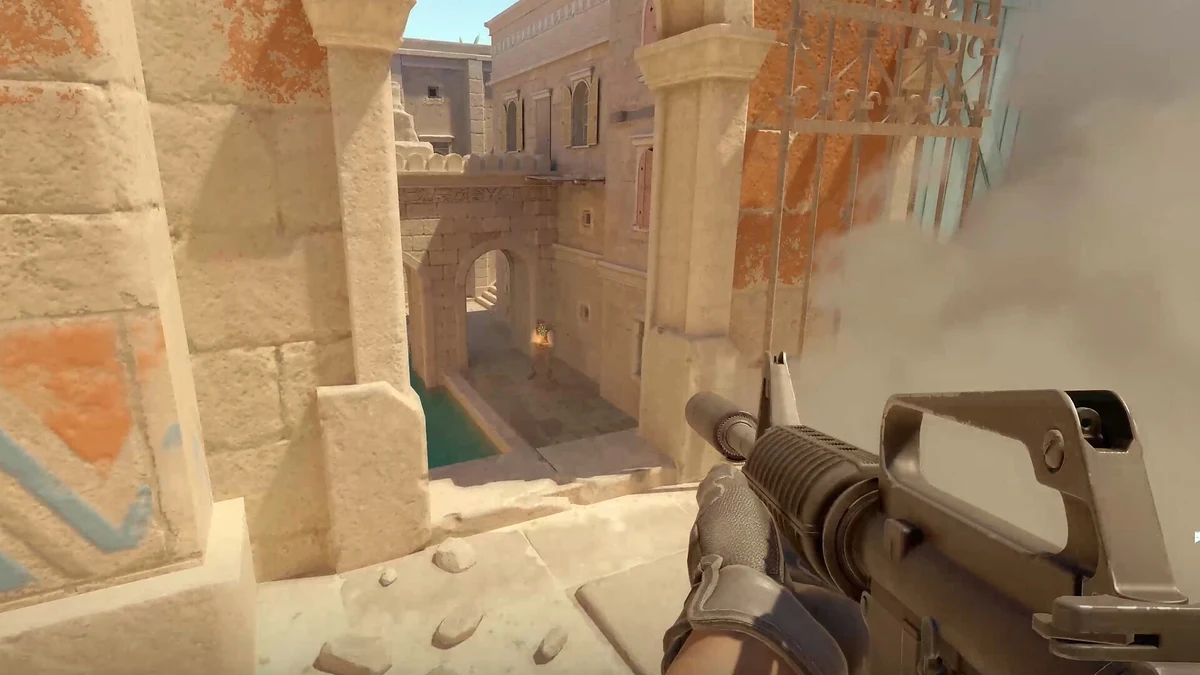
Every CS2 player who now drops 30 kills a match once stood in spawn wondering why their gun sprayed sideways into the sky. Counter-Strike 2 has one of the steepest learning curves in competitive gaming, but it rewards fundamentals more than almost any other shooter. Get the basics right early, and the climb up the ranks gets a lot less painful.
This guide walks through the four things every new player needs to understand before queuing up: how the economy works, how recoil actually behaves, how to use utility without wasting it, and which game mode you should even be playing. If you want the full picture of the game beyond the basics, our complete CS2 guide covers everything from the switch to the Source 2 engine through to the current competitive scene.
Understanding the Buy Phase
The buy phase is the 20 seconds (or so) at the start of every round where you spend the money you’ve earned to gear up. It sounds simple, but economy management is one of the biggest separators between players who climb ranks and players who stall out.
Here’s the core loop: you earn money for kills, round wins, round losses (a smaller amount, with bonus money for consecutive losses), and bomb plants. That money carries over round to round, which means every purchase is really a decision about the next three or four rounds, not just the current one.
The four buy types you’ll cycle through:
- Full buy — Rifle, full armor, utility, and often a defuse kit on the CT side. This is your ideal round when the team economy allows it.
- Force buy — Spending money you can’t really afford, usually to avoid falling too far behind or to punish an opponent’s weak buy. Common after a pistol round loss.
- Half buy (or “eco+”) — A cheaper rifle or SMG with partial armor, aiming to stay competitive without draining the bank.
- Eco round — Buying little to nothing so your economy resets and you can afford a full buy the following round.
New players lose enormous value by ignoring team economy entirely and buying whatever they can afford every single round. Watch the top-left economy indicators, communicate buys with your team (“I’m eco,” “let’s force”), and remember that a team that all half-buys is often worse off than a team that commits to a full eco and comes back swinging with rifles two rounds later.
Recoil Control Basics
CS2’s spray patterns are fixed — every gun fires the same recoil sequence every time, which means recoil control is a memorizable skill, not luck. The two habits worth building from day one are counter-strafing and pattern control.
Counter-strafing is tapping the opposite movement key briefly to cancel your momentum before shooting, since CS2 penalizes accuracy heavily while moving. Run right, then tap A for a fraction of a second, and your crosshair will be accurate almost instantly instead of after a long deceleration. Practice this in an offline server or Aim Botz workshop map until it’s automatic.
Spray control means pulling your mouse down (and slightly left, then right, depending on the gun) to counteract the way a rifle’s bullets climb and drift the longer you hold the trigger. The AK-47 and M4 patterns are the two to learn first since they cover the vast majority of rifle rounds you’ll play. Rather than memorizing the entire pattern from a diagram, load into a practice server, hold your crosshair on a wall, and hold down fire — you’ll see your own bullet spray form on the wall in real time and can adjust your mouse movement to flatten it.
A few habits to layer on top:
- Tap or burst at range. Full sprays are only reliable at close-to-medium distance. Past that, tap single shots or short bursts with resets in between.
- Crosshair placement matters more than reflexes. Keep your crosshair at head height on likely angles before you peek, rather than dragging it up from the floor after you see an enemy.
- Don’t spray through smoke or walls blindly as a beginner — it wastes ammo and gives away your position for little payoff until you understand sound cues better.
Utility Usage for New Players
CS2’s four grenade types — flashbang, smoke, HE grenade, and molotov/incendiary — are what separate a team that wins duels from a team that wins rounds. New players tend to either hoard utility until it’s useless or throw it randomly without a plan. Neither works.
| Utility | Core Use | Beginner Mistake to Avoid |
|---|---|---|
| Smoke Grenade | Block sightlines, cut off an angle, cover a bomb plant/defuse | Throwing it too early so it fades before your team executes |
| Flashbang | Blind enemies before entering a site or corner | Flashing yourself or blinding a teammate who’s about to peek |
| HE Grenade | Chip damage on stacked enemies, punishing predictable positions | Throwing it as your first grenade instead of saving it for value |
| Molotov / Incendiary | Deny a position, flush enemies out of a corner, delay a plant/defuse | Wasting it on an empty area with no information |
The single biggest improvement a beginner can make with utility is learning a handful of smoke and flashbang lineups for the maps in the current active duty pool — a lineup is just a specific spot to stand and a specific way to throw so the grenade lands exactly where you want it every time. You don’t need fifty; three or four reliable smokes per map will noticeably improve your round impact. For a full breakdown of what to learn on each competitive map, see our CS2 maps guide.
Premier vs Competitive vs Casual for New Players
CS2 offers several ways to play ranked and unranked matches, and picking the right one early makes learning far less frustrating.
| Mode | Best For | What to Expect |
|---|---|---|
| Casual | Absolute beginners | No economy penalties for team damage, auto team balancing, forgiving spawns — a low-pressure way to learn maps and gunplay |
| Competitive | Players ready for real 5v5 structure | Skill groups, single-map matches, standard economy and bomb rules, matchmaking against similarly ranked players |
| Premier | Players who want the “real” ranked experience | Map veto/pick system like esports matches, a numerical CS Rating instead of a rank icon, and matches that feel closest to how the game is actually played competitively |
For a brand-new player, the honest recommendation is to spend real time in Casual or against bots first to get comfortable with movement, spray control, and map layouts before jumping into ranked modes. Once you’re consistently landing headshots and understand basic rotations, Competitive is a gentler ranked entry point than Premier because it doesn’t require you to draft an entire map pool as a team. Premier has become Valve’s flagship competitive mode, with global leaderboards and seasonal resets tied to your CS Rating, so it’s worth moving into once you’ve got a few dozen hours under your belt and want your rank to actually reflect your skill.
Basic Strategy Tips for New Players
Beyond mechanics, a handful of strategic habits will improve your win rate faster than almost anything else:
- Play with your team, not around them. Trading kills — immediately punishing whoever killed your teammate — wins far more rounds than solo heroics.
- Use your ears. Footsteps, reloads, and grenade pin sounds tell you where enemies are before you see them. Turn on stereo sound if you’re using headphones.
- Don’t peek angles you don’t need to. If your team already has a pick, there’s often no reason to take a risky duel.
- Communicate simply and often. “One left mid,” “he’s low,” “rotating B” — short, clear callouts win more rounds than silence.
- Review your deaths. Watching your own killcam after a round tells you whether you were caught off guard, out of position, or simply lost a fair gunfight.
None of this replaces mechanical practice, but strategy is where beginners can close the gap on more experienced players fastest, since it doesn’t require years of aim training to apply.
Frequently Asked Questions
Q: How long does it take to get good at CS2 as a beginner? Most players start feeling comfortable with movement, basic recoil control, and map layouts after 40-60 hours of focused play. Genuine competitive competence — consistent crosshair placement, spray control, and game sense — usually takes several hundred hours, which is normal for a game this mechanically deep.
Q: Should I play with bots before jumping into online matches? It’s a solid way to learn a map’s layout and practice basic aim without pressure, but bots don’t teach you real positioning or utility usage since their behavior isn’t representative of human opponents. Use bot matches sparingly and move to Casual or Deathmatch once you’re comfortable with the controls.
Q: What settings should a beginner change first? Sensitivity and crosshair are the two settings worth dialing in immediately, since fighting your own setup makes everything harder to learn. Our guide to the best CS2 crosshair settings walks through sensitivity, DPI, and crosshair customization for new and experienced players alike.
Q: Is CS2 free to play? Yes. CS2 is free-to-play on Steam, though a Prime status upgrade (tied to account trust and a one-time purchase or reaching a certain rank) improves matchmaking quality and unlocks some cosmetic drops.
Q: What’s the fastest way to improve at CS2? Combine deliberate aim practice (workshop maps like Aim Botz), a handful of memorized grenade lineups per map, and reviewing your own demos after competitive matches. Mechanical practice without reviewing your decision-making tends to plateau quickly.
The Bottom Line
CS2 rewards patience more than any twitch shooter has a right to — every fixed spray pattern, every buy-phase decision, and every lineup you memorize compounds over time. Start with the fundamentals in this guide, pick a game mode that matches your current skill level, and build up from there. For a deeper dive into everything CS2 has to offer, from ranks to the pro scene, check out our complete CS2 guide, and once your mechanics feel solid, head over to our breakdown of the best CS2 crosshair and settings to fine-tune your setup for competitive play.