
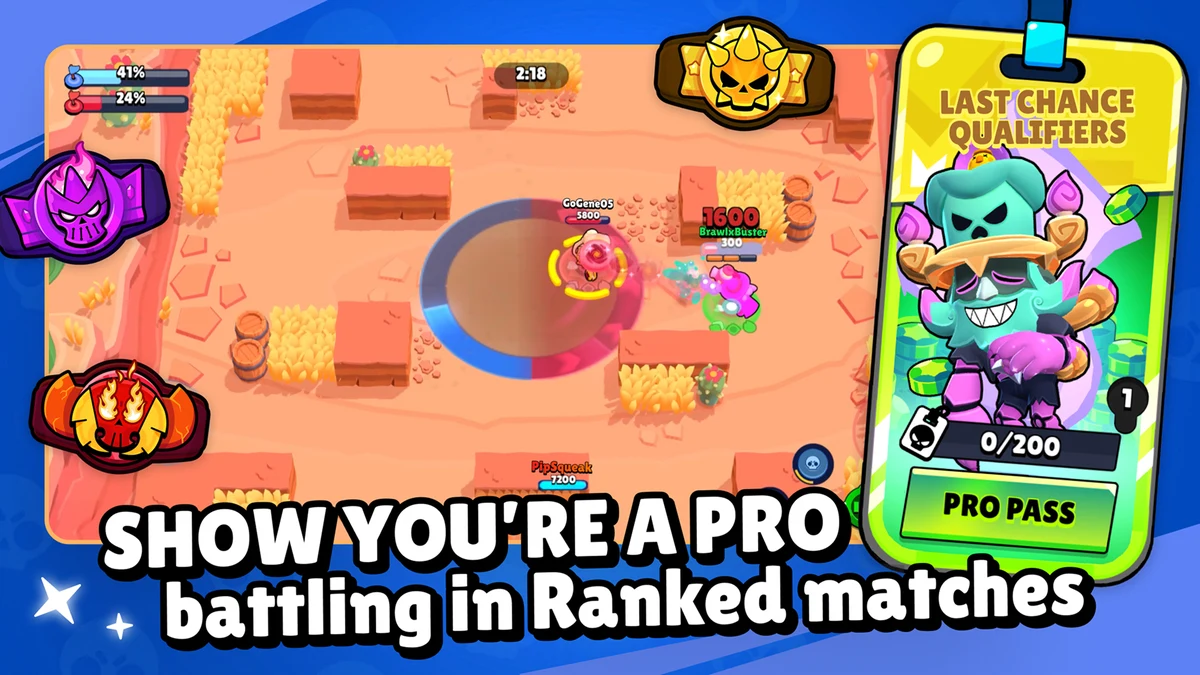
Trophies and Ranked points might look similar on the surface, since both measure competitive progress, but they are two completely separate systems with different rules, different rewards, and different strategies for climbing efficiently. This guide breaks down how each system actually works and what it takes to consistently move upward in both.
Ranked Mode vs Trophy Road: What’s the Difference
Trophy Road is the game’s long-running progression system tied to each individual brawler; every brawler you own has its own trophy count, and total account trophies are simply the sum of all of them. Ranked mode, by contrast, runs on a completely separate Rank Score, similar to an Elo rating, that is shared across your account rather than tied to a single brawler. Winning trophies unlocks rewards, cosmetics, and Power League-style content along Trophy Road, while climbing Rank Score in Ranked earns season-specific rewards and, more importantly, competitive bragging rights and pathway toward higher-level play. Because the two systems don’t share progress, a player can be extremely strong in Ranked while still working through Trophy Road on less-developed brawlers, or vice versa.
Rank Tiers and How Rank Score Works
Ranked mode is structured around seven major tiers: Bronze, Silver, Gold, Diamond, Mythic, Legendary, and Masters, with most tiers further broken into three sub-ranks, plus a Pro tier for the very top of the ladder. You move between these tiers by earning Rank Score through wins, with the amount of Rank Score required to advance increasing as you climb, roughly starting around 250 points per tier through Gold and stepping up toward 750 to 1,000 points per tier by Legendary and Masters. This scaling requirement means climbing gets meaningfully harder the higher you go, since higher tiers also mean tougher, more coordinated opponents.
The Draft and Ban System in Ranked
Below Diamond, Ranked matches are largely free-pick, but from Diamond upward the mode shifts to a structured draft-and-ban format, where both teams alternate banning brawlers before picking their own. This changes the entire strategic layer of the mode, since knowing which brawlers are strong enough on the current map to warrant a ban is just as important as knowing what to pick yourself. Power level also matters here: until Mythic rank, only brawlers above Power Level 9 are usable in Ranked, and that requirement rises to Power Level 11 once you reach Mythic and above. This means Ranked mode isn’t accessible with a freshly unlocked, unleveled brawler, and building a small roster of well-upgraded brawlers before pushing Ranked seriously pays off.
Trophy Pushing Fundamentals on Trophy Road
Trophy pushing means intentionally grinding wins with a specific brawler to raise its individual trophy count, usually to unlock the higher reward milestones on that brawler’s Trophy Road or to boost overall account trophies. The fundamental rule of efficient trophy pushing is playing brawlers you have already leveled up with a completed or near-complete Gadget, Star Power, and Gear loadout, since undercooked brawlers lose trophies faster than they gain them once matchmaking starts pairing you against stronger opposition. Playing during off-peak hours can also soften matchmaking difficulty slightly, though this effect is inconsistent and shouldn’t be relied on as a core strategy.
Choosing Mains for Trophy Pushing
Not every strong brawler is a good trophy-pushing pick. The ideal trophy pusher is a brawler with a forgiving kit that doesn’t punish small mistakes too harshly, since trophy pushing usually means playing dozens of matches in a row and fatigue-driven errors are inevitable. Brawlers with strong solo-carry potential, reliable damage output, and some form of self-sustain or escape tool tend to hold trophies better over a long grinding session than glass-cannon brawlers that require perfect positioning every single fight. It’s also worth pushing two or three different brawlers that cover different roles, so you always have a strong option regardless of which mode you’re matched into.
Avoiding Trophy Drops and Tilt
Losing trophies is an inevitable part of pushing, but consistent trophy drops often come from playing while tilted after a string of losses rather than from being genuinely outmatched. Recognizing when to step away from a session, rather than immediately queuing into another match after a frustrating loss, is one of the most underrated skills in competitive Brawl Stars. It also helps to review what went wrong in a loss, whether that’s poor positioning, a bad matchup, or a rushed objective play, rather than blaming teammates and queuing again with the same mistakes. For strategy specific to each objective mode, check out our complete Brawl Stars guide, which covers mode-by-mode tactics that directly affect how consistently you hold trophies.
Seasonal Resets and Rank Boosts
Ranked mode runs on monthly seasons that align with the Brawl Pass calendar, and at the start of each new season, every player’s rank resets back down to Bronze I. To offset the grind of climbing back up, players receive a Rank Boost that accelerates progress based on their rank from the previous season, meaning a Legendary-rank player from last season will climb back through the lower tiers noticeably faster than a brand-new Ranked player. Trophy Road, unlike Ranked, does not reset each season, so trophies earned on Trophy Road are permanent progress, while Ranked achievements reset and must be re-earned every month. Understanding this difference helps you plan when to focus on Ranked climbing versus long-term trophy pushing, since the two reward different kinds of consistency over time.
Both systems ultimately reward the same underlying skills: smart brawler selection, disciplined positioning, and understanding when to fight versus when to fall back. Whether you’re chasing Masters rank or simply trying to push a favorite brawler further up Trophy Road, treating each match with intention rather than pure aggression is what separates players who climb steadily from those who plateau.