
Table of Contents
- What Is Gears 5?
- Story and Setting: Kait Diaz’s Journey
- Cover-Based Combat and Weapons
- Campaign and Co-Op
- Horde Mode
- Escape Mode
- Versus Multiplayer
- Platforms, Game Pass, and Performance
- Franchise Context: From Gears of War to E-Day
- Tips for New Players
- Who Is Gears 5 For?
- FAQ
- Conclusion
- External Authority Sources
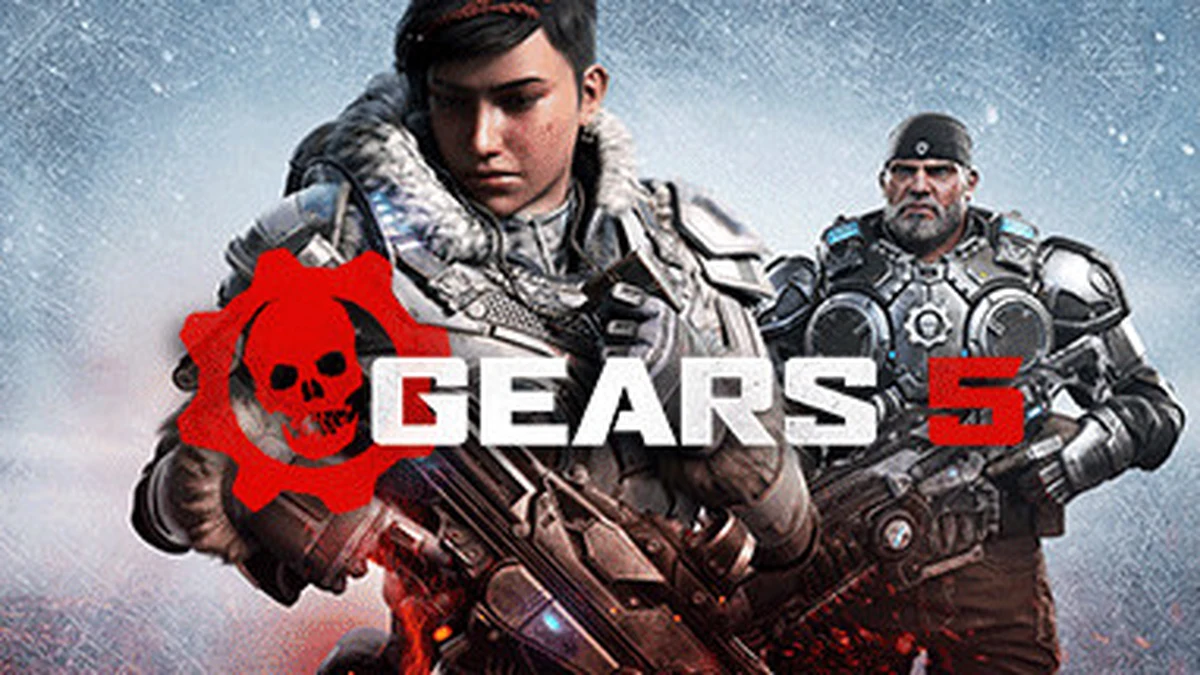
Few franchises have defined a console generation the way Gears of War defined the Xbox 360, and few sequels have carried as much pressure as Gears 5 did when it arrived in September 2019. Developed by The Coalition and published by Xbox Game Studios, Gears 5 picked up the story Gears of War 4 had restarted three years earlier and pushed it somewhere the series had never gone: away from Marcus Fenix and squarely onto Kait Diaz, a soldier whose bloodline turns out to be tangled up with the origins of the Locust Horde itself. The result is a third-person cover shooter that still delivers the chainsaw-Lancer brutality longtime fans expect, but wraps it around a more personal story, a genuinely expanded co-op campaign, and a multiplayer suite built to keep players coming back for years. Gears 5 also arrived at a pivotal moment for Xbox, launching day one on Game Pass and serving as one of the platform’s flagship showcases for cross-play between console and PC. This guide covers everything a player needs to know: the story and Kait’s arc, how combat and weapons work, campaign co-op, Horde, Escape, versus multiplayer, platform availability, how the game holds up critically, and where it fits in a franchise now heading toward the 2026 prequel Gears of War: E-Day.
What Is Gears 5?
Gears 5 is a third-person, cover-based shooter developed by The Coalition and released on September 10, 2019, for Xbox One, Windows PC, and later enhanced for Xbox Series X|S. It is the fifth mainline entry in the Gears of War franchise, following Gears of War (2006), Gears of War 2 (2008), Gears of War 3 (2011), Gears of War: Judgment (2013), and Gears of War 4 (2016). Notably, the game dropped “of War” from its title for the mainline numbered entry, a branding choice The Coalition made to signal a fresh chapter while keeping the “Gears” identity intact.
At its core, Gears 5 is built around squad-based combat against the Swarm, a new enemy faction that has overrun the planet Sera, and the remnants of the robotic DeeBees left over from the previous game’s civil unrest. The game is best understood as four connected experiences bundled into one package: a story-driven campaign playable solo or in co-op, Horde, a wave-survival mode, Escape, a new three-player mode introduced specifically for this entry, and Versus, the competitive multiplayer suite that has anchored Gears’ esports scene since the original game. Layered on top of all of that is a semi-open structure in select campaign acts, letting players explore hub areas with side content and collectibles rather than moving through purely linear corridors, a first for the series.
Story and Setting: Kait Diaz’s Journey
Gears 5 continues directly from the events of Gears of War 4, set 25 years after the original Locust War and roughly a generation after the Coalition of Ordered Governments defeated the Locust Horde and, later, the Lambent. Where Gears of War 4 introduced JD Fenix (son of series protagonist Marcus Fenix) as the new lead, Gears 5 makes a deliberate pivot: Kait Diaz, previously a supporting character and member of the Outsiders, a resistance faction living outside COG control, becomes the protagonist.
The story is set in motion by the reappearance of the Swarm, a horrifying new threat that has been abducting and infecting humans, converting them into monstrous soldiers. During the opening acts, Kait is forced to confront a mystery that has followed her since childhood: a strange connection to the Locust Queen Myrrah, the Locust Horde’s ruler from the earlier games. Kait’s mother, Reyna, is revealed to be Myrrah’s daughter, which makes Kait the granddaughter of the Locust Queen. This revelation reframes Kait’s entire identity. She is not just a soldier fighting an alien horde; she is biologically tied to the very origin of that horde, and her exposure to Swarm forces triggers visions and a growing telepathic sensitivity that the Swarm’s hive mind can detect and exploit.
That personal mystery is inseparable from the game’s larger reveal about the Locust themselves. Gears 5 finally answers a question the franchise had teased for over a decade: where did the Locust Horde actually come from? The answer, delivered through old COG records and environmental storytelling in the game’s underground “Hollow” sequences, is that the Locust were not an ancient alien species but the result of covert human experimentation. Sera’s early government secretly manipulated the DNA of children who had been exposed to Imulsion (the series’ volatile, glowing energy resource) and hybridized them with the strange indigenous life of the Hollow, the vast subterranean cave network beneath Sera’s surface. The Locust, in other words, are a manufactured horror: victims of human experimentation turned into a genocidal army that nearly ended civilization. That reveal recontextualizes the entire original trilogy and gives Kait’s bloodline a tragic weight; she is descended from the queen of a species humanity effectively created.
Structurally, the campaign takes Kait, her partner Del Walker, and the reprogrammed robot companion JACK across a mix of ruined COG settlements, frozen wastelands, and descents into the Hollow itself, chasing leads that connect Reyna’s past to the source of the Swarm. Along the way, Kait is captured by a Swarm creature called a Snatcher and begins experiencing visions of commanding Swarm forces from within, unable to stop the death of her adoptive father figure, Oscar Diaz. These sequences push the story into genuinely unsettling territory, using Kait’s psychic link to the Swarm as both a narrative device and, mechanically, an opportunity for a handful of unique sections where players briefly see combat from a different, disorienting perspective. By the campaign’s end, Kait must decide how to use her connection to the Swarm hive mind, setting up consequences the franchise continues to explore in the Gears 5: Hivebusters campaign expansion and beyond.
Cover-Based Combat and Weapons
Gears 5 does not reinvent the combat system that made the original Gears of War influential in 2006; it refines it. The core loop is still built around the “roadie run” sprint between chest-high cover, blind-firing, mantling over obstacles, and the tactical use of cover to bait enemies into flanking positions. What has changed since the original trilogy is pacing and enemy variety: The Coalition’s enemy AI is designed to actively push players out of static cover, forcing more aggressive repositioning than the stop-and-pop shooting galleries of the earliest games.
Players can carry two primary weapons at a time alongside a sidearm and grenades, and loadout choice meaningfully changes how a fight plays out. The signature weapon of the franchise remains the Lancer Assault Rifle, an accurate, high-ammo-capacity rifle fitted with a revving chainsaw bayonet that lets players execute enemies in brutal melee finishers at close range. The Lancer GL swaps the chainsaw for an underslung grenade launcher and a laser sight, trading melee utility for area damage and precision at range.
At close range, the Gnasher Shotgun remains the weapon most associated with high-skill Gears play. It is a lever-action shotgun capable of one-shotting enemies at point-blank range, and mastering it means mastering the wall-bounce and dodge-roll movement tech that lets skilled players juke shots while closing distance, a mechanic that has effectively defined competitive Gears since launch. The Overkill, a double-barreled shotgun variant, offers a slower but harder-hitting alternative for players who prefer a single devastating shot over the Gnasher’s faster follow-up.
Beyond these staples, Gears 5 fields a wide arsenal that includes the Boltok pistol for long-range precision kills, the Markza and Longshot for sniping, the Torque Bow for skewering enemies with explosive-tipped arrows, the Boomshot for area-of-effect devastation, and faction-specific tech weapons like the Breaker Mace and Talon pistol tied to Horde-mode character classes. Grenades (frag, smoke, and incendiary) round out the toolkit, and the recommended approach for most encounters is pairing a long-range weapon like the Lancer or Lancer GL with a close-range option like the Gnasher or Overkill, so players can adapt as enemies close distance. The combination of methodical cover play and the constant risk of a rushing Gnasher opponent or Swarm melee unit is what gives Gears combat its distinct rhythm compared to other cover shooters.
Campaign and Co-Op
Gears 5’s campaign is the longest in the franchise’s history and the first to support three-player co-op, including three-player split-screen on a single console, a technically demanding feature that was notable at the time given how few games still supported local multiplayer at that scale. Two players take control of Kait and Del, the human protagonists, while a third player controls JACK, the small flying robot companion who has traditionally been an AI-controlled support unit in earlier games.
Playing as JACK is a deliberate departure from the run-and-gun format of the other two slots. JACK cannot take cover or wield conventional weapons in the same way; instead, the character functions as a support and utility role with an RPG-style upgrade system. Players unlock and customize JACK’s abilities across the campaign, including a stealth cloak that can be shared with teammates, a stun ability that disables enemies, a shock ability, a decoy hologram to distract enemies, and a battery-draining vacuum that damages foes and refills JACK’s own energy. This gives three-player groups a genuinely different set of roles to coordinate rather than three players doing the same thing in parallel, and it’s a big part of why the campaign holds up well in co-op compared to earlier Gears entries where a third or fourth player historically just meant more guns pointed the same direction.
The campaign also introduces the series’ first foray into a semi-open structure. Several mid-game acts take place across large, traversable regions that players cross using the Skiff, a hoverboat-like vehicle, letting them detour to side objectives, collectible caches, optional lore terminals, and small side-story vignettes away from the main critical path. This isn’t an open-world game in the way that term gets used elsewhere, but it’s a meaningful structural shift from the corridor-based level design of Gears of War 4 and the original trilogy, giving the campaign more room to breathe between its tightly scripted set-piece battles.
Difficulty options range from Beginner up through Insane and the harder-still Inconceivable tier unlocked after a first playthrough, and the campaign supports drop-in, drop-out co-op both locally and online, meaning a solo player can have friends join mid-mission without restarting. For players who want the story experience without the shooter’s toughest challenges, Gears 5 also includes an assist-heavy accessibility pass, continuing The Coalition’s well-regarded work on making the series more approachable for players with different ability levels.
Horde Mode
Horde returns in Gears 5 as one of the game’s most replayed features, and it’s been meaningfully overhauled since Gears of War 4. Up to five players cooperate to survive escalating waves of Swarm and DeeBee enemies, working through a structure that culminates in a boss encounter at round 50, with the option to keep pushing further into extended, harder rounds beyond that for players chasing leaderboard placement and cosmetic rewards.
The headline addition is a class system. Rather than every player using an identical, generic loadout, Gears 5 lets each player pick from a roster of classes built around specific playable characters, each with distinct passive perks and a unique Ultimate ability on a cooldown. JD Fenix, for example, can call in an airstrike; Kait has an ultimate cloak that lets her and nearby teammates turn invisible; other characters bring turret deployments, healing auras, or crowd-control abilities. Jack, the same flying companion from the campaign, is also playable in Horde with a unique hijacking ability, letting the player commandeer enemy vehicles and turn them against the Swarm.
Between waves, players earn in-game currency to build and upgrade fortifications, turrets, and barriers at a base of operations, a system carried over and refined from Gears of War 4’s fortification mechanics. Coordinating who builds defenses, who plays support classes, and who plays aggressive damage-dealing roles is central to surviving the later waves, which is why Horde in Gears 5 rewards planning and communication far more than simply having good aim. The mode has continued to receive content support since launch, including new maps, characters, and seasonal content tied to the game’s broader content update schedule.
Escape Mode
Escape is Gears 5’s brand-new mode, introduced specifically for this entry and not present in any prior Gears game. It is a tense, three-player cooperative mode with an entirely different objective than Horde’s wave survival: rather than holding a position, players are dropped directly into a Swarm hive and must fight their way out before a spreading toxic gas cloud, released by the player’s own team at the mission’s start, catches up and kills them.
The three playable characters in Escape are the Hivebusters: Lahni Kaliso, Mac Dylan, and Keegan Cole, each with a distinct active and passive ability that reinforces a specific role. Mac can deploy a portable shield that grants temporary invulnerability, useful for holding a chokepoint or reviving a downed teammate under fire. Keegan can conjure a resupply zone that replenishes ammunition for the squad, keeping the team stocked as they push forward. Lahni carries an electrified blade capable of stunning and damaging enemies in melee range, giving her a more aggressive, close-quarters playstyle. Coordinating these abilities well is essential, since Escape’s toxic gas mechanic removes the option to simply hunker down: forward momentum is mandatory, and mistakes compound quickly once the gas closes in.
Escape also includes a hive-building tool called the Escape Hive Builder, which lets players design and share their own custom Escape maps with the community, adding a layer of user-generated content that extends the mode’s replay value well past the maps The Coalition shipped at launch. The Hivebusters themselves later became the stars of their own campaign expansion, Gears 5: Hivebusters, released in December 2020, which tells the story of how this three-person strike team came together and ties directly into the fallout of the main campaign’s ending.
Versus Multiplayer
Versus is Gears 5’s competitive multiplayer suite, and it remains the mode most closely tied to the franchise’s esports history and its most dedicated, skill-focused community. Matches typically pit two teams of five against each other across a rotating set of maps and match types, including Team Deathmatch, King of the Hill, Execution, Escalation, Guardian, and other objective-based modes that have appeared and rotated through the game’s seasonal content over its lifespan, along with more casual variants like Arms Race and Dodgeball for players who want lower-stakes matches.
Versus is where Gears’ movement-and-gunplay identity is most fully expressed. The Gnasher shotgun’s wall-bounce and dodge-roll tech, mentioned earlier, is the backbone of high-level Versus play, and matches tend to reward players who can weave cover, bait opponents into bad positions, and win close-range shotgun duels under pressure. Ranked play uses a skill-based matchmaking and ranking system, and The Coalition has continued to run competitive seasons, balance patches, and esports events built around Versus well after launch, including support for the game at various points in the Gears Esports circuit.
Character customization in Versus draws from a large roster of skins and characters unlocked through gameplay progression and the game’s content drops, spanning COG soldiers, Locust and Swarm-aligned characters, and crossover cosmetics added over time. Versus also supports cross-play between Xbox and PC players, with the option for Xbox players to opt out of cross-play specifically in ranked matches if they prefer to compete only against other console players.
Platforms, Game Pass, and Performance
Gears 5 launched on September 10, 2019, for Xbox One and Windows PC, and was available day one on Xbox Game Pass, a launch strategy that made it one of the highest-profile day-one Game Pass releases of that console generation and helped drive early subscriptions to the service. It was also a Play Anywhere title, meaning a single purchase grants both the Xbox and Windows 10/11 PC versions along with shared cross-save progress between them.
When Xbox Series X and Series S launched in November 2020, Gears 5 received a free next-generation update. On Xbox Series X, the game supports 4K resolution with HDR, along with performance improvements including significantly reduced load times and support for the Xbox Series X|S Quick Resume feature. Versus multiplayer specifically was updated to support up to 120 frames per second on compatible displays, a meaningful upgrade for a mode where movement precision and reaction time matter as much as they do in Gears’ competitive shotgun duels. Xbox Series S also received a tailored, optimized version of the update suited to its hardware profile.
Cross-play support spans Xbox One, Xbox Series X|S, and PC across the Microsoft Store and Steam (the game later came to Steam directly, having originally launched exclusively through the Microsoft Store on PC), and it covers Campaign, Horde, Escape, and Versus modes, letting friends on different platforms and different Xbox generations play together. For players evaluating whether to pick the game up now, it remains included with an active Xbox Game Pass subscription (console, PC, or Ultimate tiers) as of this writing, alongside standalone purchase options and the Game of the Year Edition, which bundles the base game with its major campaign and character content additions, including Hivebusters.
Franchise Context: From Gears of War to E-Day
Gears 5 sits at an important hinge point in the Gears of War timeline. The original trilogy (2006 to 2011) told the story of Marcus Fenix and Delta Squad defeating the Locust Horde and, subsequently, the mutated Lambent threat that grew out of Imulsion. Gears of War: Judgment (2013) served as a prequel focused on Baird and Cole during the early days of the Locust War. Gears of War 4 (2016), developed by The Coalition after Microsoft acquired the franchise from original studio Epic Games, then jumped forward 25 years to introduce JD Fenix, Kait Diaz, and Del Walker as a new generation of soldiers facing the robotic DeeBees and the first stirrings of the Swarm.
Gears 5 is the direct continuation of that reboot, and its ending, along with the Hivebusters campaign expansion released in December 2020, sets up unresolved threads around Kait’s connection to the Swarm hive mind and the fate of the human-Locust conflict that the franchise has yet to fully close out. The series also branched into other genres during this period, with Gears Tactics (2020) delivering a turn-based strategy spin-off set before the original trilogy, and Gears POP! serving as a mobile collectible title, though the mainline shooter series itself has been quiet on new numbered entries since Gears 5.
The next major chapter is Gears of War: E-Day, announced at the Xbox Games Showcase in the summer of 2024 and set for release on October 6, 2026, for Xbox Series X|S and PC, with premium and collector’s editions granting five days of early access starting October 1, 2026. Rather than continuing Kait’s story forward, E-Day is a prequel set 14 years before the original 2006 Gears of War, dramatizing Emergence Day itself, the first Locust attack on Sera, and the origin story of Marcus Fenix and Dom Santiago before they became the hardened veterans players first controlled nearly two decades ago. The game is confirmed for day-one availability on Xbox Game Pass Ultimate. Separately, The Coalition also released Gears of War: Reloaded, a remaster of the original 2006 game, expanding the franchise’s footprint to PlayStation 5 for the first time in the series’ history. Taken together, these releases suggest a franchise using its past to rebuild momentum, revisiting Emergence Day and the original trilogy in remastered and prequel form while Kait Diaz’s story from Gears 5 remains, for now, on pause.
Tips for New Players
Players coming to Gears 5 for the first time, whether through Game Pass or a standalone purchase, benefit from a few practical adjustments before diving in.
Play the campaign in co-op if possible. Gears 5’s story and pacing were built around a two-to-three-player experience, and the JACK role in particular is far more interesting with a human player controlling its ability kit than it would be to simply skip. If friends aren’t available, the campaign is fully playable solo with AI-controlled squadmates, but co-op is where the mission design shines.
Learn the Gnasher before judging Versus multiplayer. New players often bounce off competitive Gears because close-range shotgun duels feel unfair until the wall-bounce and dodge-roll movement tech clicks. Spending time in a private match or against bots to practice canceling sprint animations into shotgun blasts pays off enormously once played against real opponents.
Start Horde on a lower difficulty with a defined team composition. Horde’s class system rewards a team that has at least one support-oriented class (healing, resupply, or fortification-focused) alongside damage dealers; going in with five identical aggressive loadouts tends to collapse once waves scale up in difficulty.
Use Escape’s difficulty settings to learn hive layouts before pushing for speed. Since the toxic gas mechanic punishes hesitation, it’s worth playing a hive once on Normal to learn its layout and enemy placements before attempting it on Hard or Insane, where reaction windows shrink considerably.
Check settings for accessibility options. The Coalition built a wide range of assist features into Gears 5, including aim assistance, camera and reticle adjustments, and colorblind support, and new players who find the base difficulty punishing should look there before assuming the game isn’t for them.
Who Is Gears 5 For?
Gears 5 is aimed squarely at players who enjoy tactical, cover-based third-person shooting with a strong emphasis on positioning and weapon choice over twitch-only reflexes, though it rewards fast reactions too, particularly in Versus and Escape. Longtime Gears of War fans get a story that finally answers a decade-old question about the Locust origins and meaningfully deepens Kait Diaz as a protagonist, making it essential for anyone invested in the series’ lore.
Players who primarily care about co-op will find Gears 5 to be one of the stronger three-player campaign experiences available on Xbox and PC, and Horde mode offers dozens of hours of replayable content for groups who enjoy structured, class-based survival games in the vein of other wave-defense shooters. Competitive players will find a Versus mode with real depth and a skill ceiling built around movement tech, though it asks for a real time investment to feel rewarding.
Newcomers to the franchise can jump in without having played the earlier games; Gears 5 recaps enough of the prior story through in-game codex entries and character dialogue to be followed on its own, though the emotional weight of certain reveals lands harder with knowledge of the original trilogy and Gears of War 4. Given its day-one and ongoing presence on Xbox Game Pass, it’s also a low-risk way for subscribers to sample the franchise before committing to a purchase elsewhere in the series.
FAQ
Is Gears 5 a direct sequel to Gears of War 4? Yes. Gears 5 continues the story introduced in Gears of War 4, following the same core cast, including Kait Diaz, JD Fenix, and Del Walker, while shifting its central focus and protagonist role to Kait as she investigates her family’s connection to the Locust Horde’s origins.
Do I need to have played the earlier Gears of War games to understand Gears 5? No, though prior knowledge deepens the experience. Gears 5 provides enough context through dialogue and optional lore entries for new players to follow the plot, but the emotional impact of the Locust origin reveal and Kait’s connection to Queen Myrrah is stronger with knowledge of the original trilogy and Gears of War 4.
Is Gears 5 on Xbox Game Pass? Yes. Gears 5 launched day one on Xbox Game Pass in September 2019 and has remained part of the Game Pass library, available across console, PC, and Ultimate subscription tiers as of this writing.
Can Xbox and PC players play together in Gears 5? Yes. Gears 5 supports cross-play between Xbox One, Xbox Series X|S, and PC across Campaign, Horde, Escape, and Versus modes. Xbox players have the option to disable cross-play specifically for ranked Versus matches if they prefer console-only opponents.
What is the difference between Horde and Escape mode? Horde is a five-player wave-survival mode where teams defend a base against escalating enemy waves using fortifications and class-based abilities. Escape is a three-player mode where a squad must fight through a Swarm hive to escape before a spreading toxic gas catches them, emphasizing forward momentum over defensive holding.
Is there a sequel to Gears 5, or a new Gears of War game coming? The next major entry is Gears of War: E-Day, a prequel set 14 years before the original 2006 Gears of War, focused on the first Locust attack on Sera and the origin story of Marcus Fenix and Dom Santiago. It is scheduled for release on October 6, 2026, on Xbox Series X|S and PC, with day-one availability on Xbox Game Pass Ultimate.
Conclusion
Gears 5 earns its place as one of the more significant entries in a franchise nearing its twentieth anniversary. It resolves a mystery the series had teased since 2006, hands the narrative reins to Kait Diaz with a personal, well-constructed arc, and backs that story up with four distinct, well-supported modes: a co-op campaign with genuine structural ambition, a deep Horde mode, an entirely new Escape mode, and a Versus suite with real competitive depth. Its day-one Game Pass launch and continued cross-play support have also made it one of the more accessible entry points into modern Gears for players who never touched the Xbox 360 originals. With Gears of War: E-Day now confirmed for October 2026 and set to rewind the clock to Emergence Day itself, Gears 5 currently stands as the most recent chapter in Kait Diaz’s story, and the game to understand before the franchise turns back toward its origins.