
With League of Legends’ roster sitting at more than 170 champions as of 2026, picking your first one can feel like choosing a language to learn without knowing which are actually easy to speak. Some champions look simple and punish you constantly for small mistakes (looking at you, Yasuo). Others look flashy but are genuinely forgiving once you know the combo.
This list focuses on champions that are low-risk to learn, teach real fundamentals instead of masking them, and still perform well when you eventually take them into ranked. If you haven’t read it yet, start with our League of Legends beginner’s guide for the lane and objective basics — this article assumes you already know what a gank is.
What Makes a Champion “Beginner-Friendly”?
Not every simple-looking champion is actually good to learn on. The best beginner picks share a few traits:
- Forgiving mechanics – abilities that are point-and-click or wide skillshots rather than tight, reaction-based combos.
- Built-in safety – healing, shields, or tankiness that covers for the mistakes you will absolutely make.
- Clear feedback – you can tell immediately whether you played a fight well or poorly, which speeds up learning.
- Relevance past level 30 – a champion that’s still viable once you’re climbing ranked, so you’re not relearning your main from scratch.
Best Top Lane Champions for Beginners
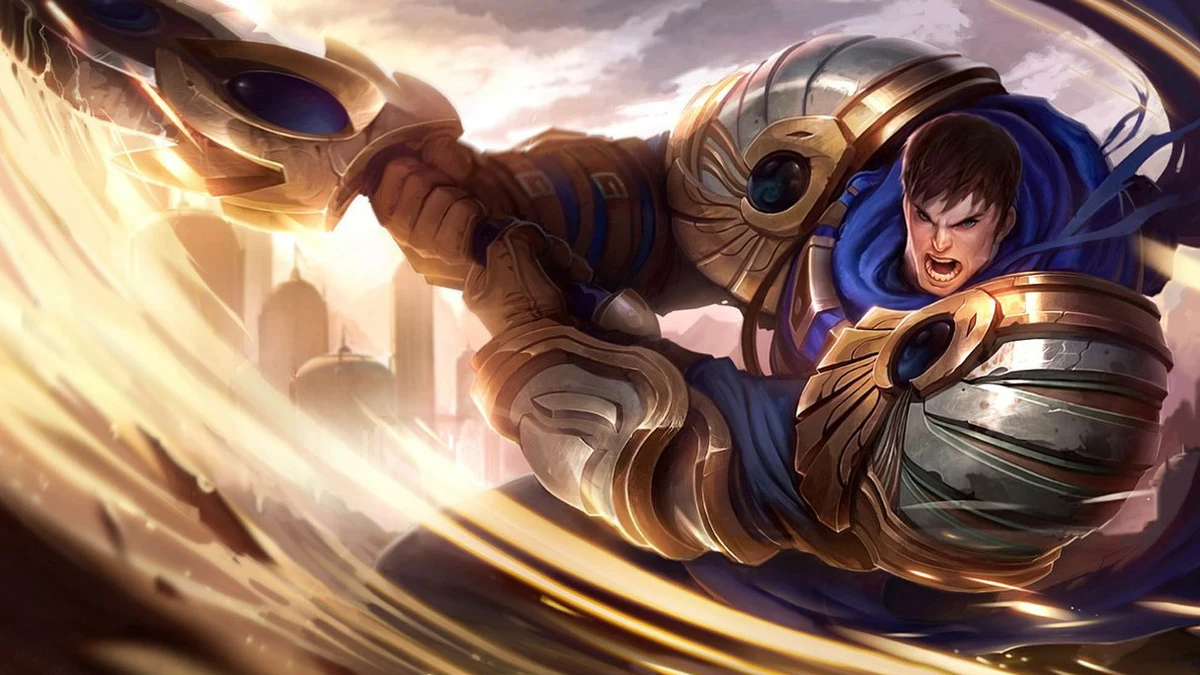
Garen is close to a tutorial champion that also happens to win games — he consistently posts win rates above 50% even at higher ranks. His entire kit is three buttons: silence and slow with Q, spin for damage with E, then execute with his ultimate. He has no mana bar, passive out-of-combat healing that punishes opponents for poor trading, and enough base tankiness to survive early mistakes while you learn matchups.
Malphite is the other classic beginner top pick. He’s a rock-solid tank whose ultimate is a long-range engage that instantly turns bad fights into good ones for your team, and his kit doesn’t ask much of your mechanical execution — just good timing on one big button.
Best Jungle Champions for Beginners
Warwick might be the most forgiving jungler in the game. His passive heals him based on missing health, his ultimate is a guaranteed suppress-and-execute on low-health targets, and his Q lets him smell (literally) low-health enemies through fog of war, which teaches new junglers when a gank is worth taking.
Master Yi simplifies farming and dueling into two buttons: Q to clear jungle camps quickly, and his ultimate to become nearly unkillable in extended fights. He’s a great teacher of efficient jungle pathing, even if his teamfighting ceiling is lower than more complex junglers.
Best Mid Lane Champions for Beginners
Annie is one of the most mechanically simple mages in the game — most of her damage is point-and-click rather than skillshot-based, and her stun is a resource you build up through casting spells, which teaches new players to track a cooldown-like mechanic without punishing misaimed skillshots.
Lux is the natural next step. Her abilities are skillshots, but generous, slow-moving ones that are genuinely learnable, and her ultimate deals real damage across a huge chunk of the map. She teaches the core mid-lane skill of landing abilities to win trades without demanding elite precision.
Best ADC Champions for Beginners
Ashe strips away a lot of the mechanical noise that makes marksman play intimidating. Her passive gives free crit chance without needing perfect itemization timing, her arrow is a long-range engage/pick tool, and her kit rewards positioning and auto-attacking over combo execution.
Miss Fortune is another strong starting point — her abilities are mostly point-and-click, her ultimate deals huge team-wide damage in grouped fights, and she’s forgiving of imperfect kiting compared to many other marksmen.
Best Support Champions for Beginners
Leona teaches beginners how to engage fights and survive doing it. She’s built around heavy armor and multiple ways to lock down a single target, so even if your combo isn’t perfect, you’ll usually walk away from the trade.
Nautilus is the other go-to beginner engage support: land a hook, watch the follow-up crowd control chain, and let your team clean up. His tankiness also means aggressive plays rarely end in a support death.
Quick Reference Table
| Role | Beginner Picks | Why |
|---|---|---|
| Top | Garen, Malphite | Simple combos, high base tankiness, strong even at high ranks |
| Jungle | Warwick, Master Yi | Easy clears, forgiving duels, clear signals for when to gank |
| Mid | Annie, Lux | Point-and-click or generous skillshots, real damage output |
| ADC | Ashe, Miss Fortune | Low mechanical demand, strong teamfight ultimates |
| Support | Leona, Nautilus | Engage-focused, tanky enough to survive mistakes |
Use the In-Client Difficulty Rating
If you’re browsing the full champion roster and feeling overwhelmed, the League client itself has a built-in shortcut: every champion’s collection page shows a difficulty rating alongside their damage, toughness, and utility ratings. Champions marked “low” difficulty are generally safe entry points, while “high” difficulty champions (Azir, Yasuo, Aphelios, Qiyana, and similar) are worth avoiding until you’ve got a few dozen games under your belt, regardless of how appealing their kit or splash art looks. It’s not a perfect system, but it’s a genuinely useful filter when you’re staring at 170-plus options with no other frame of reference.
Mistakes to Avoid When Learning a New Champion
- Watching a pro one-trick and copying their build blindly. High-level players make reads based on years of experience; a build that works for a Challenger player facing a specific comp won’t automatically work for you.
- Abandoning a champion after two or three rough games. A handful of losses rarely tells you anything meaningful about whether a champion fits you — judge after 15-20 games minimum.
- Ignoring your champion’s mana or resource bar. New players on mana-based champions frequently go oom (out of mana) mid-fight because they weren’t tracking it, which is an easy habit to fix early.
- Skipping the tutorial abilities’ tooltips. Hover over every ability in champion select at least once during your first several games on a new pick — the tooltip math (ratios, cooldowns, ranges) explains a lot of “why did that happen” moments.
How to Actually Pick One
Don’t try to learn all ten. Pick the role that sounded most appealing when you read our beginner’s guide, then commit to one champion from that role for at least 15-20 games before judging whether it’s for you. Switching champions every match teaches you almost nothing — repetition against different opponents is what actually builds game sense.
Once you’ve settled on a main, it’s worth understanding the systems around them. Our runes guide for beginners explains how to build a rune page that actually complements these champions, and our rank system explained article covers what you’re climbing toward once you start queuing ranked.
Frequently Asked Questions
Q: Should beginners play tanks or damage dealers first? Tanks and bruisers (Garen, Malphite, Warwick) are generally the most forgiving because their kits cover for positioning mistakes with raw durability. It’s easier to learn game sense on a champion that survives your errors.
Q: Are these champions still good in higher ranks, or just for beginners? All of the champions listed here remain viable well beyond the early ranks. Garen, Ashe, and Nautilus in particular see consistent play at high Elo and in professional contexts, so you won’t outgrow them the moment you leave Bronze.
Q: How many champions should I own as a new player? Focus on five to eight champions total — one or two per role you enjoy — rather than spreading yourself across the full roster. You unlock champions naturally through the in-game currency you earn just by playing.
Q: What champions should beginners avoid early on? High-mechanical-skill-ceiling champions like Yasuo, Zed, Riven, or Azir are exciting to watch but punish small mistakes severely and are best saved until your fundamentals (last-hitting, positioning, cooldown tracking) are solid.
Q: Is it bad to only play one champion? Not at all in the early stages — “one-tricking” a single champion is a legitimate and common strategy, even at high ranks. It just becomes limiting later if the champion gets banned in ranked or countered hard in a specific matchup.
The Bottom Line
The “best” beginner champion isn’t the flashiest one on your friend’s screen — it’s the one that teaches you fundamentals while forgiving the mistakes you’re guaranteed to make early on. Start with the picks above, give each one a real sample size of games, and check out our complete League of Legends guide for the wider context of how these champions fit into the current meta.